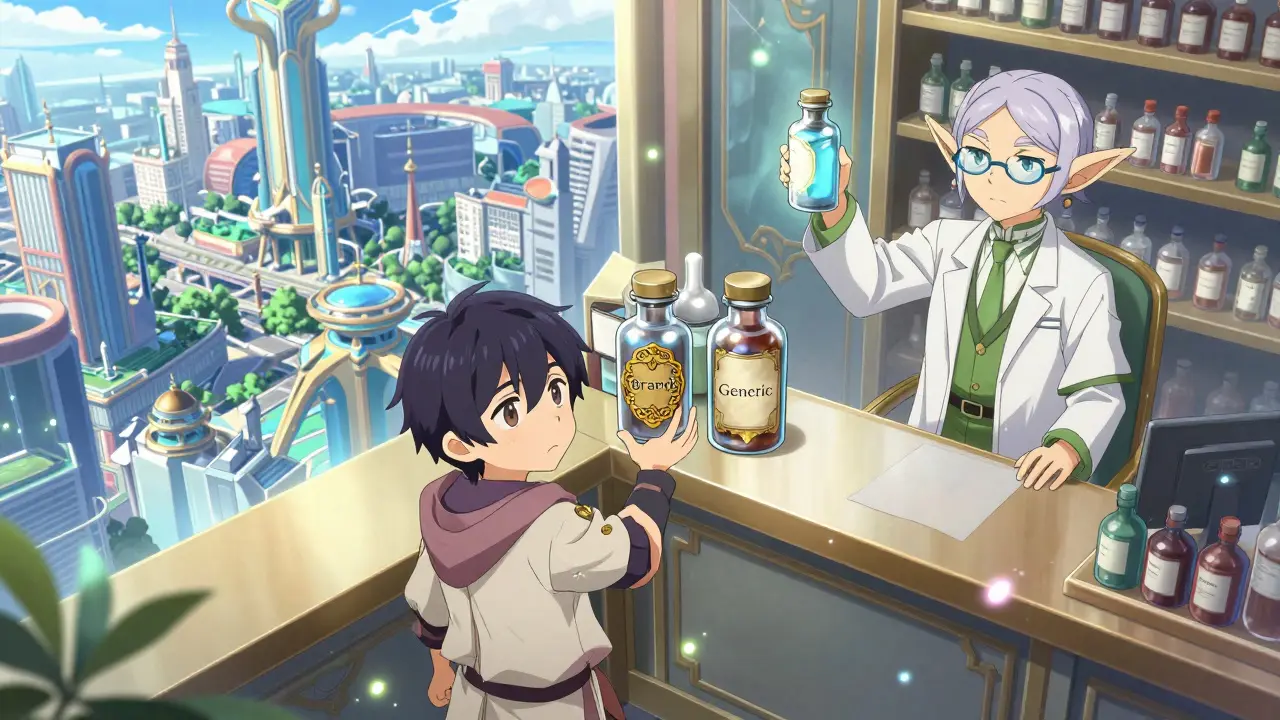
You're at the pharmacy counter, and the pharmacist asks if you'd like the generic version of your prescription. It's significantly cheaper, but a small voice in your head wonders: Is it actually as good as the brand name? This is one of the most common dilemmas in healthcare. While the price difference can be staggering-sometimes hundreds of dollars per month-the real question is whether the clinical outcome remains the same.
For most people, the answer is a resounding yes. However, there are a few specific scenarios where the choice becomes more complex. Making an informed decision-making process about your medication involves understanding how these drugs are regulated, why they cost so much less, and where you might actually need to stick with the original brand.
The Bottom Line on Generics
- Same Active Ingredient: Generics must have the same active chemical as the brand.
- Bioequivalence: They must deliver the drug into your system at the same rate and extent.
- Massive Savings: Generics often cost 80-85% less than brand names.
- FDA Approved: They meet the same rigorous quality and purity standards.
What Exactly Is a Generic Medication?
A Generic Medication is a pharmaceutical equivalent of a brand-name drug that becomes available after the original company's patent expires. Think of it like a store-brand cereal; the ingredients are the same, but the packaging and the name on the box are different.
The modern system for this started with the Hatch-Waxman Act of 1984. Before this, generic drug approval was a messy process. This law created the Abbreviated New Drug Application (ANDA), which allows generic makers to prove their drug works without repeating the massive, multi-year clinical trials the original brand company already did. They only have to prove bioequivalence.
What does bioequivalence actually mean? The FDA (U.S. Food and Drug Administration) requires that a generic drug delivers the same amount of active ingredient into your bloodstream within the same timeframe as the brand. In reality, the variation is tiny. While the FDA allows a technical range, a study in The American Journal of Medicine found that actual differences are usually around 3.5%-well within the range where your body won't notice a difference.
Why the Huge Price Difference?
If the drugs are essentially the same, why does a brand-name version of sertraline (Zoloft) cost $400 while the generic costs about $4? It comes down to research and development (R&D).
The original company spends millions on lab research, clinical trials, and marketing. They are granted a patent to recoup those costs. Once that patent expires, other companies can enter the market. Since these generic companies didn't have to spend a decade discovering the molecule, they can sell it for a fraction of the price. This competition drives costs down for everyone. In fact, the Generic Pharmaceutical Association reported that generics saved the healthcare system $1.67 trillion between 2010 and 2019.
| Feature | Brand-Name Drug | Generic Drug |
|---|---|---|
| Active Ingredient | Original Formula | Identical |
| Inactive Ingredients | Specific proprietary blend | May vary (fillers, colors) |
| FDA Quality Standard | Strict Compliance | Strict Compliance |
| Average Price | High (covers R&D) | Low (competitive market) |
| Appearance | Consistent | Varies by manufacturer |

When Should You Be Cautious?
While 98.5% of the time generics work identically, there are "edge cases" where the brand name is still the gold standard. You should talk to your doctor about the following:
Narrow Therapeutic Index (NTI) Drugs
Some drugs have what's called a Narrow Therapeutic Index. This means the difference between a dose that works and a dose that is toxic (or ineffective) is very small. For these, a 4% difference in absorption actually matters.
- Levothyroxine: Used for thyroid issues. Some patients need to stick to one specific brand to keep their TSH levels stable.
- Warfarin: A blood thinner where precise dosing is critical to avoid bleeding or clotting.
- Phenytoin: An anti-epileptic where small changes can trigger a breakthrough seizure.
Complex Delivery Systems
If the medication is a pill you swallow, the delivery is simple. But if it's an inhaler or a patch, the device matters as much as the drug. A study in Chest found that about 12% of patients switched from brand Advair Diskus to a generic version experienced therapeutic failure. The drug was the same, but the inhaler technique required for the generic device was different, meaning the medicine didn't actually reach their lungs.
Inactive Ingredient Allergies
The active drug is the same, but the excipients (inactive ingredients like fillers or dyes) can differ. If you have a severe allergy to a specific dye or a filler like lactose, you need to check which version of the drug uses those ingredients.
Navigating the Switch: Practical Tips
Switching to a generic can feel risky, but it's usually a smart financial move that improves your health by making your meds affordable. If you're worried, here is a plan to handle the transition:
- Ask for the 'AB' Rating: In the FDA's "Orange Book," drugs rated 'AB' are considered therapeutically equivalent and can be substituted without a new prescription.
- Stick to One Pharmacy: Generic manufacturers can change. If you use three different pharmacies, you might get three different generic versions of the same drug. Using one pharmacy helps ensure you get the same manufacturer's batch every time.
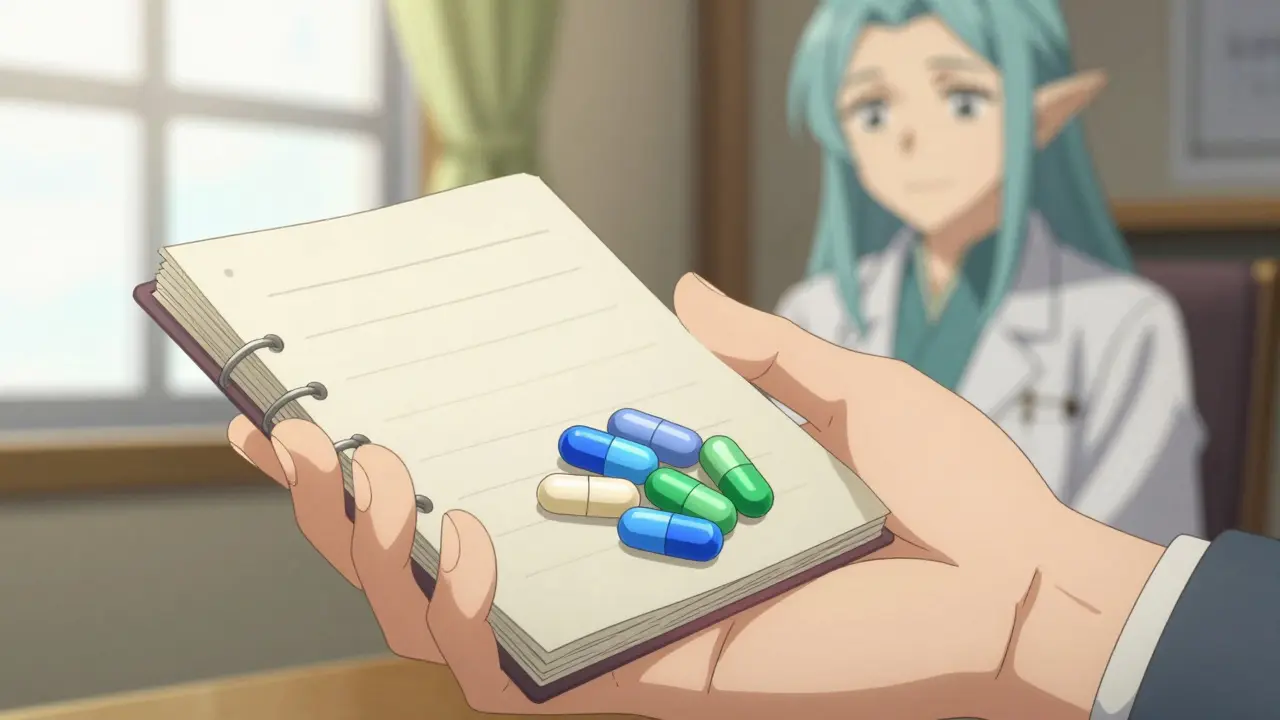
- Use Visual Aids: Because generics look different (a blue pill vs. a white pill), keep a list of what each one is. This reduces the risk of medication errors.
- Monitor Your Symptoms: When switching, keep a simple diary for two weeks. If you feel a change in effectiveness, contact your doctor immediately rather than just stopping the med.
The Psychology of the 'Brand Name'
Why do we feel that the brand is better? It's often the "placebo effect" or a psychological trust in the original creator. However, the data shows that cost-related stress is a bigger health risk. According to the American College of Physicians, 29% of people on brand-only drugs skip doses because they can't afford them, compared to only 14% of those using generics. Skipping your medication is far more dangerous than taking a bioequivalent generic.
If you are still hesitant, you can look into Authorized Generics. These are generics sold by the original brand company. They are identical in every way (including inactive ingredients) but are sold under a generic name at a lower price. It's a middle-ground option for those who want brand-level certainty with generic-level pricing.
Are generic drugs less effective than brand-name drugs?
No. For the vast majority of medications, generics are just as effective. The FDA requires them to be bioequivalent, meaning they deliver the same active ingredient to your blood in the same amount of time. A meta-analysis in JAMA Internal Medicine found they perform identically in 98.5% of cases.
Why does my generic pill look different from my brand pill?
Trademark laws prevent generic drugs from looking exactly like the brand-name version. While the active ingredient is identical, the color, shape, and inactive fillers can vary between different manufacturers.
Can I switch my medications to generics without a new prescription?
In 49 U.S. states, pharmacists can automatically substitute a generic if the drug is therapeutically equivalent, unless your doctor specifically wrote "Dispense as Written" (DAW) on the prescription.
What is a 'biosimilar' and is it the same as a generic?
Not exactly. Generics are copies of simple chemical drugs. Biosimilars are versions of complex biological drugs (made from living cells). Because biologics are so complex, biosimilars are "highly similar" rather than identical, and they go through a different regulatory path.
Should I worry about the 'wiggle room' the FDA allows in bioequivalence?
While the FDA allows a theoretical range of 80-125% for the confidence interval, real-world observed variations are typically around 4%. For most patients, this difference is clinically insignificant and does not change how the medicine works.