Medication & Driving Risk Calculator
Assess Your Driving Risk
Select a medication to see its impact on your driving ability and legal implications.
Your Driving Risk Assessment
Medication:
Risk Level:
Recommended Wait Time:
Legal Implications:
Important Safety Note: Even if you feel fine, these medications can impair your ability to drive safely. The FDA and NHTSA warn against driving after taking these products, especially within the recommended waiting period.
Legal Note: In all 50 U.S. states, driving while impaired by any substance—including legally prescribed drugs—is illegal. You don't need to be "high" or over a legal limit. If the drug affects your ability to drive safely and you're caught, you can be charged with DUI.
What should you do? If you're unsure, wait. Call your pharmacist. Talk to your doctor. Take the bus. Sleep it off. Your safety—and the safety of everyone else on the road—depends on it.
Driving While on Medication Isn’t Just Risky - It’s Often Illegal
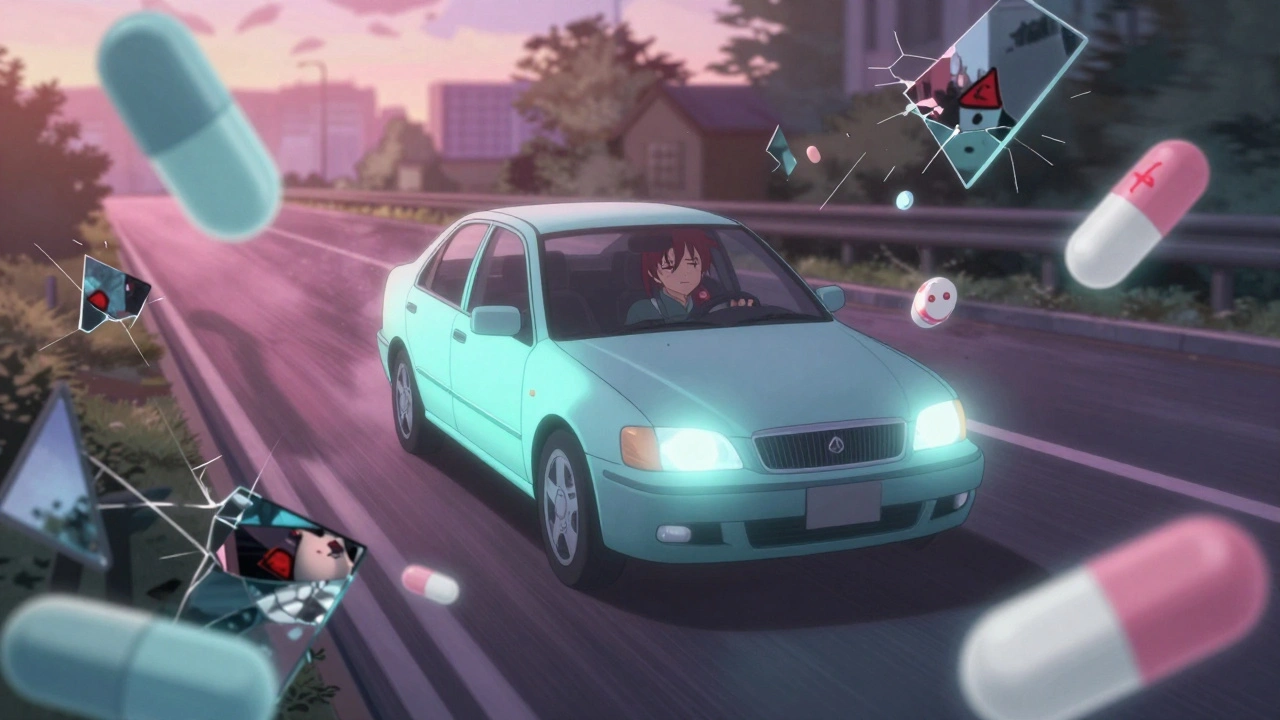
You take your pill like clockwork. Maybe it’s the sleep aid you need to function, the painkiller after surgery, or the allergy medicine you grab off the shelf. But what happens when you get behind the wheel? Many people assume that if they feel fine, they’re safe to drive. That’s a dangerous myth. The truth is, dozens of common medications - even ones you can buy without a prescription - can slow your reactions, blur your vision, or make you drowsy enough to crash. And in most places, driving under their influence is treated just like drunk driving.
In 2022, nearly 18% of all fatal car crashes in the U.S. involved drugs - prescription, over-the-counter, or both. That’s more than twice the number caused by marijuana alone. And it’s not just opioids or sedatives. Even something as simple as ibuprofen or diphenhydramine (the active ingredient in Benadryl and Tylenol PM) can put you at risk. A study by McGwin and colleagues found that people taking NSAIDs like ibuprofen were 70% more likely to be at fault in a crash. Another study showed that diphenhydramine impairs driving as badly as a blood alcohol level of 0.10% - higher than the legal limit of 0.08% in every U.S. state.
Which Medications Are Most Dangerous Behind the Wheel?
Not all meds are created equal when it comes to driving risk. Some are clearly labeled. Others slip under the radar. Here’s what actually matters:
- Benzodiazepines (like alprazolam, diazepam): These are prescribed for anxiety and insomnia, but they slow brain processing by 25-40%. Drivers on these drugs are 40-60% more likely to crash. Combine them with alcohol, and the risk skyrockets.
- Opioids (oxycodone, fentanyl, hydrocodone): They cause drowsiness, narrowed pupils, and delayed reaction times - up to 300 milliseconds slower. That’s enough to miss a stop sign or fail to brake in time.
- First-generation antihistamines (diphenhydramine, chlorpheniramine): Found in cold and allergy meds, these cause drowsiness that lasts hours. A 2021 AAA study found that 70% of drivers who took three or more impairing drugs still got behind the wheel within two hours.
- Tricyclic antidepressants (amitriptyline, nortriptyline) and mirtazapine: These aren’t just for mood. They increase motor vehicle accident rates by 40% compared to non-users.
- NSAIDs (ibuprofen, naproxen): Surprisingly, these common painkillers carry a 58% higher crash risk. The reason? They may affect attention and coordination even without obvious drowsiness.
- Zolpidem (Ambien): This sleep pill can impair driving for up to 11 hours after taking it. Most people think they’re fine by morning. They’re not.
Second-generation antihistamines like loratadine (Claritin) and cetirizine (Zyrtec) are much safer - minimal impairment. But if your medicine says "may cause drowsiness" and doesn’t name the active ingredient, assume it’s risky.
The Legal Reality: You Can Get a DUI for Taking Prescribed Pills
Many people believe that because a doctor prescribed it, they’re legally protected. That’s not true. In 2023, 47 states had active Drug Evaluation and Classification Programs (DECP), and all 50 states include prescription drugs in their DUI laws. You don’t need to be high or intoxicated in the way people think. If a drug impairs your ability to drive safely - even slightly - and you’re caught, you can be charged.
Unlike alcohol, there’s no universal legal limit for most prescription drugs. Only 28 states have set specific blood concentration thresholds for medications. That means police and prosecutors rely on behavior - slurred speech, poor coordination, failed field sobriety tests - to prove impairment. A driver in Iowa was convicted of DUI after taking Tylenol PM at 10 p.m. and driving at 9 a.m. the next day. The diphenhydramine was still in his system. He failed the sobriety test. He lost his license.
And it’s not just about getting caught. Insurance companies can deny claims if they find any impairing drug in your system - even if it was legally prescribed. A 2022 study by Shane Smith Law showed that over 60% of drug-impaired crash claims were denied or reduced because of medication use.

Why Doctors and Pharmacists Don’t Always Warn You
Here’s the uncomfortable truth: most people aren’t told. In a 2022 survey of 2,657 drivers by the AAA Foundation, 68% said they received no driving-related advice from their doctor when prescribed a potentially impairing medication. Only 41% of physicians routinely discuss driving risks during consultations.
Pharmacists are better - 89% now include driving warnings when dispensing, according to the 2023 National Community Pharmacists Association report. But even then, the warnings are vague. "May cause drowsiness" doesn’t tell you how long the effect lasts. It doesn’t say whether you should wait 4 hours or 12. It doesn’t warn you that mixing two meds - say, a sleep pill and a painkiller - can multiply the danger.
Drug labels are improving. In May 2023, the FDA began requiring "Driving Risk Scores" on all CNS-acting medications - rated from 1 (minimal risk) to 5 (severe). But most people don’t read the fine print. And if you’re over 65, you’re at even higher risk. Your body processes drugs slower. Your brain responds more strongly. The Beers Criteria, updated in 2019, lists over 30 medications that should be avoided in older adults because they increase fall and crash risk.
What You Can Do - Practical Steps to Stay Safe
You don’t have to stop taking your meds. But you do need to take control.
- Ask the right questions. When you get a new prescription, ask: "Will this make me drowsy or slow my reactions? How long will the effect last? Is it safe to drive after taking it?" Don’t accept "probably not" - get specifics.
- Check the label. Look for active ingredients. If you see diphenhydramine, chlorpheniramine, hydroxyzine, or any sedating antihistamine, assume it’s unsafe to drive for at least 6-8 hours. For sleep aids like zolpidem, wait 8-12 hours.
- Never mix meds with alcohol or marijuana. The combination multiplies impairment. A 2020 study found that 22% of drivers at trauma centers had multiple drugs in their system - and the effect was worse than the sum of each drug alone.
- Use a self-assessment tool. The University of Iowa developed a simple driving simulator test. Try it: sit in your car, turn on the engine, and try to complete 15 basic maneuvers - lane changes, braking, steering - without drifting more than 1.5 feet from center. If you struggle, don’t drive.
- Plan ahead. If you know you’ll be on a new med, take the day off. Or use public transport. Ride-share. Ask someone to drive you. It’s not weakness - it’s responsibility.

The Future Is Here - But It Won’t Save You
Technology is catching up. The NHTSA launched a $22 million initiative in 2023 to develop saliva tests that can detect 12 common impairing drugs on the roadside. By 2027, 85% of new cars will have biometric systems that track eye movement and steering patterns to detect drowsiness or cognitive slowing. That sounds promising - but it won’t help you today.
And here’s the kicker: medication-related crashes are projected to rise 24% by 2026. Why? More older drivers, more prescriptions, and more people driving while unaware of the risk. The tools are coming. But right now, the only thing that keeps you safe is your own awareness.
It’s Not About Being Perfect - It’s About Being Honest
You’re not a bad person for taking medication. You’re not reckless for needing help to sleep or manage pain. But pretending you’re fine to drive when you’re not? That’s where the danger lies. The data doesn’t lie. The laws don’t bend. And the consequences - a crash, a conviction, a life changed - are real.
If you’re unsure, don’t guess. Wait. Call your pharmacist. Talk to your doctor. Take the bus. Sleep it off. Your safety - and the safety of everyone else on the road - depends on it.
Can I get a DUI for taking prescribed medication?
Yes. In all 50 U.S. states, driving while impaired by any substance - including legally prescribed drugs - is illegal. You don’t need to be "high" or over a legal limit. If the drug affects your ability to drive safely and you’re caught, you can be charged with DUI. Insurance claims may also be denied if a prescribed medication is found in your system after a crash.
Is it safe to drive after taking Benadryl or Tylenol PM?
No. Both contain diphenhydramine, a first-generation antihistamine that impairs driving as badly as a 0.10% blood alcohol level - higher than the legal limit in every state. Even if you feel awake, the drug can linger in your system for 8-12 hours. The FDA and NHTSA both warn against driving after taking these products. Many people get pulled over and fail sobriety tests hours after taking them.
Do doctors always warn patients about driving risks?
No. A 2022 survey found that 68% of patients received no driving-related advice from their doctor when prescribed a potentially impairing medication. Only 41% of physicians routinely discuss this risk. Pharmacists are better - 89% now include driving warnings - but even then, the advice is often vague. Don’t assume you’ve been warned. Always ask.
Are over-the-counter drugs as dangerous as prescription ones?
Yes - and sometimes more dangerous because people don’t expect them to be risky. Diphenhydramine (in allergy and sleep meds), NSAIDs like ibuprofen, and even some cough syrups can impair driving. Studies show NSAID users have a 58% higher crash risk. OTC meds are not regulated for driving safety, and many people don’t read the labels. Treat them with the same caution as prescription drugs.
What should I do if I’m on multiple medications?
Combine multiple impairing drugs - even if each one is legal - and you create a synergistic effect that’s far more dangerous than any single drug. A 2020 study found that 22% of drivers at trauma centers had multiple drugs in their system. If you’re taking three or more medications, especially those with sedating effects, avoid driving entirely. Talk to your pharmacist about interactions. Use a driving simulator test or wait 12+ hours after your last dose before getting behind the wheel.
Is it safe to drive if I’ve been on the same medication for years?
Not necessarily. Your body changes over time - especially after age 65. Your metabolism slows, your brain becomes more sensitive to drugs, and side effects can appear even if you’ve never had them before. A medication that was fine five years ago might now make you drowsy or slow your reactions. Reassess your fitness to drive every time you refill a prescription, especially if you’re older or have new health conditions.
Next Steps: What to Do Right Now
- Look at your medicine cabinet. Find any pills with "drowsiness" on the label. Write down the active ingredients.
- Call your pharmacist. Ask: "Which of these medications could impair my driving? How long should I wait before getting behind the wheel?"
- If you’re over 65, ask your doctor if any of your meds are on the Beers Criteria list of high-risk drugs for older adults.
- Next time you take a new medication, plan your day. Don’t drive the first day. Test how you feel. If you’re unsure, wait.
Driving is a privilege - not a right. And when medication is involved, safety isn’t optional. It’s the only thing that keeps you - and everyone else - alive.





Lara Tobin
14 December, 2025 . 05:30 AM
I never realized how many common meds can mess with driving. I take Benadryl for allergies and thought I was fine as long as I didn't feel sleepy. This post scared me a little... thanks for the wake-up call. 😔
Alvin Montanez
15 December, 2025 . 09:47 AM
Look, I'm not one to mince words, but this is a national disaster waiting to happen. People pop pills like candy and then hop behind the wheel like it's no big deal. We're talking about drugs that impair you worse than alcohol, and yet nobody talks about it. The FDA only just started requiring driving risk scores? That's 20 years too late. And don't even get me started on how doctors just shrug and say 'probably fine'-they're not even trying. This isn't about personal freedom; it's about public safety. Every time someone drives after taking diphenhydramine, they're rolling the dice with someone else's life. We need mandatory counseling with every prescription. We need warning labels that scream, not whisper. And we need to stop treating this like a suggestion and start treating it like the public health crisis it is. Stop being passive. Start being responsible. Your neighbors, your kids, your coworkers-they're not asking for this risk.
Hamza Laassili
15 December, 2025 . 12:12 PM
I took tylenol pm last night at 11 and drove to work at 7 am... thought i was fine. then got pulled over for swerving. cop said my eyes were glassy. i told him i just took sleep meds. he laughed. lost my license for 6 months. dont be me.
Constantine Vigderman
15 December, 2025 . 23:45 PM
This is so important!! 💪 I just started a new med and immediately checked the label-yep, 'may cause drowsiness.' So I took the day off, called my pharmacist, and used a ride-share. Best decision ever! You don’t need to be 'high' to be dangerous-just a little slow. Stay smart, stay safe! 🚗🚫💊
Cole Newman
17 December, 2025 . 10:09 AM
So you're telling me I can't take my allergy meds and drive? But I've been doing it for 10 years! My grandma took diphenhydramine every day and drove to bingo every Thursday. She lived to 94. Maybe the real problem is people are too lazy to just... drive slower?
Casey Mellish
18 December, 2025 . 06:37 AM
Fascinating stuff. In Australia, we’ve had mandatory pharmacist counseling for impairing meds for over a decade. It’s not perfect, but it’s a start. We also have roadside saliva testing in major cities-detects benzodiazepines, opioids, you name it. The culture here is slowly shifting: people don’t just assume they’re fine. They ask. They test. They wait. It’s not about fear-it’s about accountability. Maybe the U.S. needs to stop treating this like a personal choice and start treating it like a public health protocol.
Donna Hammond
19 December, 2025 . 18:41 PM
I’m a pharmacist and I see this every day. Patients come in with 5 prescriptions and say, 'I’m fine to drive.' I ask if they’ve read the labels. 90% say no. I tell them: if it says 'may cause drowsiness,' it doesn’t mean 'maybe.' It means 'yes, it will.' And if you’re on more than two sedating meds? Don’t drive. Period. I wish more doctors would refer patients to us. We’re trained for this. We’re here to help. Please don’t wait until you’re in an accident to realize you needed this advice.
Richard Ayres
20 December, 2025 . 14:10 PM
This is a deeply important conversation that needs to move beyond individual responsibility and into systemic reform. The burden of awareness is currently placed entirely on the patient, but the system-pharmaceutical companies, prescribing practices, labeling standards-is not designed to prioritize driving safety. We need standardized, mandatory, and easily understandable risk communication. We need insurance incentives for non-driving behavior after new prescriptions. We need public awareness campaigns that aren’t just posters in clinics. This isn’t a fringe issue. It’s a silent epidemic.
Sheldon Bird
21 December, 2025 . 04:56 AM
You got this. 🙌 Seriously, if you’re on meds and you’re unsure, just don’t drive. It’s not weak-it’s wise. I used to think I was fine after my anxiety meds, but then I almost rear-ended a guy at a red light. Turned out I was still foggy. Now I take the bus on med days. No shame. Just safety. You’re not alone in this.
Willie Onst
22 December, 2025 . 08:46 AM
I get it-meds help us live. But driving? That’s a whole other beast. I used to think 'I feel fine' meant 'I’m fine to drive.' Now I know that’s like saying 'I feel fine' after drinking three beers. Your brain doesn’t always tell you the truth. I started using the Iowa simulator test after reading this. Surprised how bad I was. Took me 3 tries to pass. Now I only drive after I pass it. Small step. Big difference.
Jennifer Taylor
22 December, 2025 . 12:40 PM
This is all part of the pharmaceutical-industrial complex. They don’t want you to know how dangerous these drugs are. Why? Because if people stopped driving after taking them, sales would drop. They know people won’t read labels. They know doctors won’t warn them. They know the system is broken. And they’re cashing in. They even lobby against stronger labeling laws. This isn’t an accident-it’s profit. Wake up. This isn’t about your meds. It’s about who controls your health.
Shelby Ume
22 December, 2025 . 13:55 PM
As someone who works in geriatric care, I see this daily. Older adults are the most vulnerable-not because they’re reckless, but because their bodies process drugs differently. And yet, they’re often told, 'You’ve been on this for years, it’s fine.' But 'fine' five years ago isn't 'fine' now. I encourage all my patients to keep a med log and review it with their pharmacist every 6 months. Small habits save lives. Don’t assume. Verify.
Lauren Scrima
23 December, 2025 . 00:05 AM
So... I take ibuprofen for my back, and now I'm a danger to society? 😏 Guess I'll just drive like a grandma with a cane. Seriously though-this is the kind of info that should be on every bottle. Not buried in 12-point font next to 'store at room temperature.'
sharon soila
24 December, 2025 . 23:43 PM
If you are taking medicine, and you are not sure if it is safe to drive, then do not drive. That is the rule. It is simple. It is clear. It is not complicated. Your life and the lives of others matter more than your schedule. Wait. Call. Ask. Be safe.
Scott Butler
26 December, 2025 . 17:49 PM
America’s getting soft. Back in my day, if you took a pill and felt a little sleepy, you drank coffee and drove anyway. Nobody sued you. Nobody took your license. You just dealt with it. Now we treat every little side effect like a death sentence. You want to drive after Benadryl? Fine. But don’t cry when you get pulled over. And don’t blame the doctor. Blame yourself for being lazy. This country is turning into a lawsuit factory.