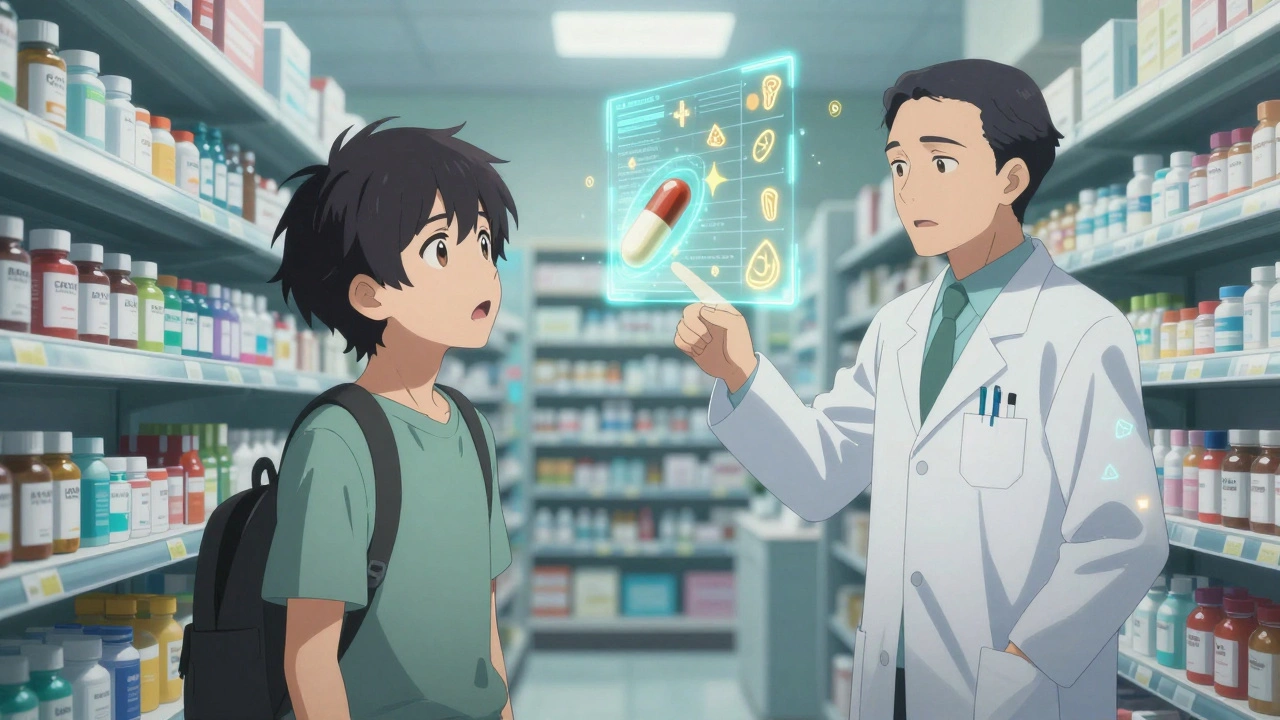
When you pick up a prescription and see a pill that looks completely different from what you’ve been taking, it’s normal to pause. Maybe it’s a smaller tablet. Maybe it’s a different color. Maybe it has a strange marking you’ve never seen before. You might think: Is this the same drug? Is it weaker? Will it even work?
That’s where pharmacy counseling comes in. It’s not just a formality. It’s your chance to get clear, honest answers from the pharmacist - the one person in the healthcare system trained to explain exactly what’s in your medicine and why it’s safe to switch.
Why generics aren’t ‘cheap versions’
The biggest myth about generic drugs is that they’re inferior. They’re not. Every generic drug approved by the FDA must contain the exact same active ingredient, in the same strength, and work the same way in your body as the brand-name version. That’s not a guess. It’s a legal requirement.
The FDA tests generics using strict bioequivalence standards. That means the amount of medicine your body absorbs from a generic pill must be within 80-125% of the brand-name version. In real terms? If your brand-name pill delivers 100 units of medicine, the generic will deliver between 80 and 125. That’s a tiny, clinically meaningless range - far less than the natural variation your body experiences day to day.
Think of it like two identical cars with the same engine. One is made by Toyota, the other by a different company that copies the design exactly. They both run on the same fuel, have the same horsepower, and get the same mileage. The only difference? The logo on the hood and the price tag.
What you need to ask when you get a generic
Don’t assume the pharmacist will volunteer all the details. Many are busy. But you have a right to know. Here’s what to ask - and what you should hear in return.
- “Is this the same as my old pill?” - The answer should be: Yes, it has the same active ingredient and works the same way. The FDA requires it.
- “Why does it look different?” - The answer: The shape, color, or markings are changed because of trademark laws. The medicine inside is identical.
- “Could it affect me differently?” - The answer: It might if you’re allergic to one of the inactive ingredients - like lactose, dye, or gluten. Let me check the label.
- “Will it work as well?” - The answer: For 99.5% of people, yes. Studies show no difference in how well it works.
One of the most effective tools pharmacists use is called the “teach-back” method. They’ll ask you: “Can you tell me how you’ll take this?” If you can repeat the instructions in your own words, they know you understand. If not, they’ll explain again - no rush, no judgment.
When you should be extra careful
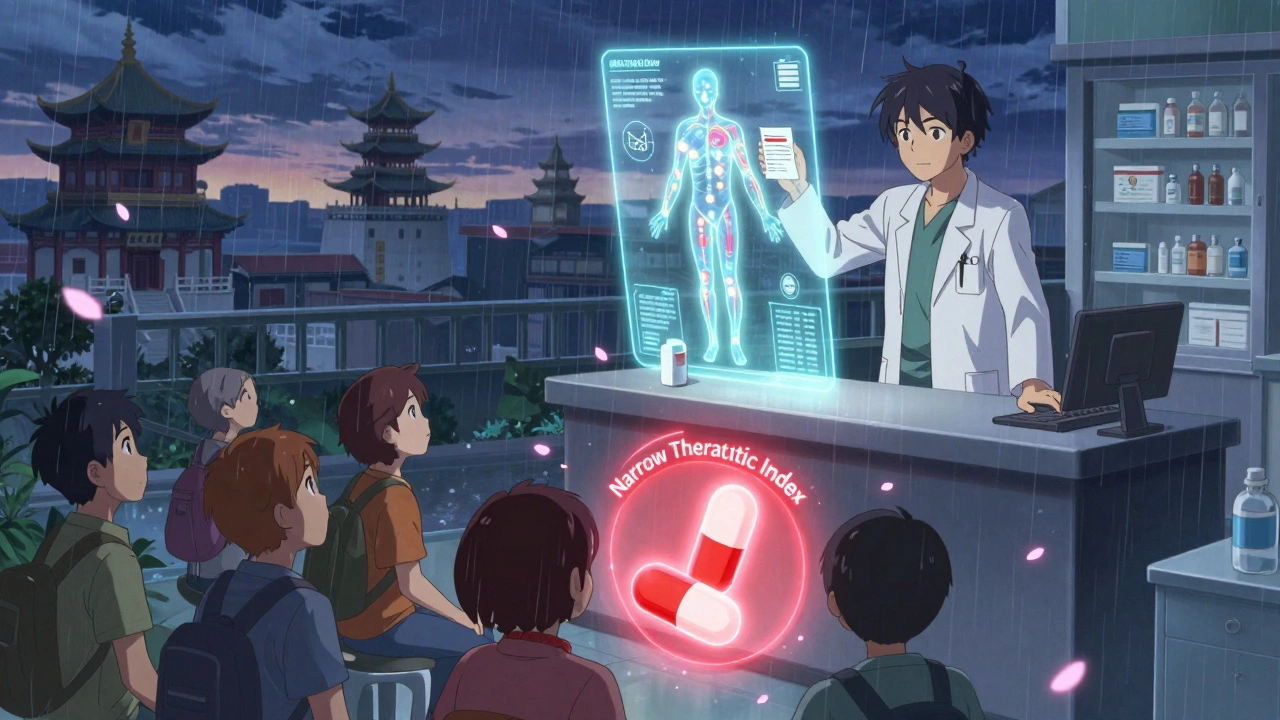
Most generics are perfectly safe. But there are exceptions. Some drugs have what’s called a narrow therapeutic index - meaning the difference between a dose that works and one that’s dangerous is very small.
These include:
- Warfarin (blood thinner)
- Levothyroxine (thyroid hormone)
- Phenytoin (seizure medication)
- Lithium (mood stabilizer)
In these cases, even tiny differences in how your body absorbs the drug can matter. That’s why many states - including California, Texas, and Florida - require your doctor to specifically approve any switch to a generic for these drugs. If your pharmacist tries to substitute one without your doctor’s okay, say no. Ask them to call your prescriber.
Also, if you’ve ever had a reaction to a generic - even something minor like a rash or upset stomach - tell your pharmacist. It’s not common, but inactive ingredients can trigger allergies. One patient in Melbourne reported a severe reaction after switching to a generic blood pressure pill because it contained lactose. He had no idea his brand-name version was lactose-free. That’s why pharmacists are now required to check for allergies before dispensing any generic.
Cost savings aren’t just numbers - they’re real life
Switching to a generic isn’t just about saving money. It’s about being able to stick with your treatment.
A 2018 study of 12.7 million people found that when patients were switched to generics, their adherence - meaning how consistently they took their medicine - went up by 8.2%. Why? Because they could afford it. A $300 monthly pill becomes a $30 generic. That’s not a small difference. It’s the difference between taking your medicine and skipping doses because you can’t pay.
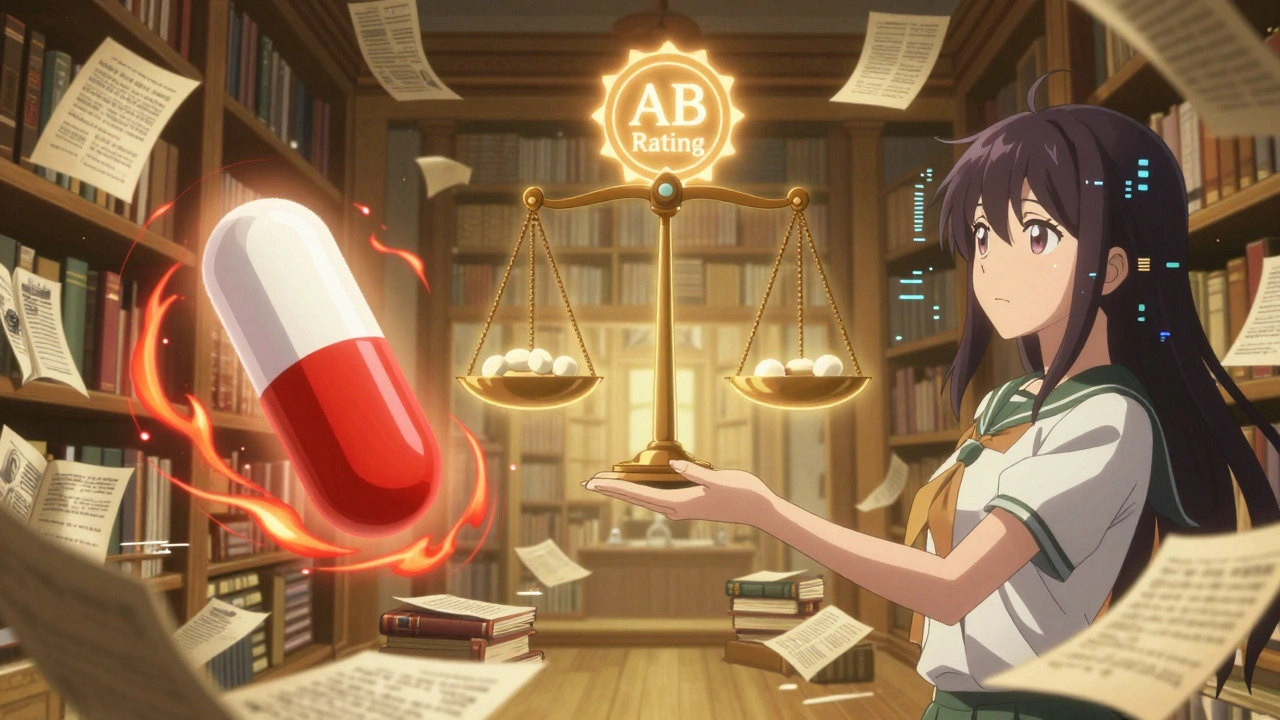
One woman on PatientsLikeMe wrote: “My pharmacist showed me the FDA’s Orange Book entry for my medication. I switched to the generic and saved $300 a month - with zero change in how I felt.” That’s the power of good counseling.
What if you’re still unsure?
You don’t have to accept a switch just because it’s cheaper. If you’re nervous, ask for your original brand. Some insurance plans allow it if you document your concern. Others may require a prior authorization - but it’s worth asking.
Or, ask your pharmacist for a sample of the generic to try for a few days. Many pharmacies will give you one or two pills to test before you commit to a full prescription.
And if you’re still not convinced? Request a printed handout. Most pharmacies now have FDA-approved fact sheets on generics. You can read them at home, show them to your doctor, or even share them with family.
What’s changing in pharmacy counseling
Pharmacy counseling isn’t stuck in the past. In 2022, the FDA updated its Orange Book to make therapeutic equivalence ratings clearer. Now, generics are labeled with “AB” ratings - meaning they’re fully interchangeable. You can look these up yourself on the FDA website if you want to double-check.
Also, more pharmacies are using short video clips to explain generics. One study found that patients who watched a 90-second video about how generics work were 37% more likely to accept them. The videos show real pills side by side, explain bioequivalence in plain language, and even show how the body absorbs the medicine.
In Australia, while the TGA (Therapeutic Goods Administration) has similar rules to the FDA, counseling practices vary. But the same principles apply: if you’re unsure, ask. If you’re not given a clear answer, ask again. Your health isn’t a gamble.
Final reminder: You’re not alone
Over 90% of prescriptions in the U.S. are filled with generics. That’s 8.2 billion pills a year. Most people take them without issue. But that doesn’t mean your concerns are silly. They’re valid. And you have every right to understand what you’re taking.
Pharmacists aren’t salespeople. They’re your last line of defense against medication errors. If they don’t take the time to explain your generic, find one who does. Your body deserves nothing less.





Jennifer Anderson
7 December, 2025 . 07:40 AM
so i got my generic blood pressure pill last week and at first i was like wtf is this?? looked nothing like my old one. but then i asked the pharmacist and she showed me the FDA stuff and i was like ohhhhhhh. now i save like $200 a month and my bp is the same. pharma is wild but this part? solid.
Sadie Nastor
9 December, 2025 . 05:56 AM
thank you for this 🙏 i used to panic every time my pill changed color. now i just ask the pharmacist and they always explain it like i’m 5. also, i started saving enough to buy my cat more treats. she’s so proud of me 😺
Nicholas Heer
11 December, 2025 . 02:57 AM
you think the FDA is protecting you? nah. they’re just letting Big Pharma off the hook. generics are made in China, India, and some factory in a basement in Ohio that’s not even inspected. the ‘80-125%’ range? that’s a loophole. they’re playing you. i’ve seen people crash after switching. it’s not coincidence. it’s corporate sabotage. ask yourself: who benefits? not you.
Sangram Lavte
12 December, 2025 . 00:53 AM
in india, generics are the norm and everyone uses them without issue. the science is clear: same active ingredient, same effect. the only difference is the price. if you’re worried, ask for the batch number and check the manufacturer. most are FDA-approved anyway. no drama needed.
Oliver Damon
13 December, 2025 . 08:42 AM
the real question isn’t whether generics work - it’s whether our healthcare system trusts patients enough to explain why. the ‘teach-back’ method is brilliant because it flips the power dynamic. you’re not a passive recipient of medicine; you’re a participant in your own care. that’s the quiet revolution here - not the pill, but the conversation.
Louis Llaine
13 December, 2025 . 17:39 PM
so you’re telling me i’m supposed to trust a pill that looks like a neon Lego piece now? cool. next they’ll be putting QR codes on my insulin that say ‘scan for motivational quote’.
Jane Quitain
15 December, 2025 . 09:13 AM
OMG YES!! i switched to generic levothyroxine and was terrified but my pharmacist gave me a little printed sheet with a drawing of a body absorbing the pill 😭 it made me feel so seen. now i tell all my friends to ASK. you got this!! 💪
Kyle Oksten
15 December, 2025 . 11:54 AM
the narrow therapeutic index drugs are the real issue. warfarin isn’t like ibuprofen. small absorption differences can be lethal. if your pharmacist tries to swap it without your doctor’s explicit approval, push back. hard. this isn’t about fear - it’s about precision medicine.
Sam Mathew Cheriyan
16 December, 2025 . 03:41 AM
lol you guys are so naive. the FDA is just a front for the pharmaceutical cartel. generics are designed to fail slowly so you keep coming back for more. they even change the color to mess with your mind. i switched back to brand name and now i feel… different. like my thoughts are clearer. coincidence? i think not.
Ernie Blevins
17 December, 2025 . 14:53 PM
generic = bad. brand = good. that’s it. you think you’re saving money? you’re just risking your life. i saw a guy on the news. his heart stopped after switching. his family cried. your ‘pharmacist’ doesn’t care. they get paid per pill.
Nancy Carlsen
18 December, 2025 . 01:16 AM
my grandma in Texas switched to generic and cried because she thought she was being replaced 😭 then the pharmacist gave her a hug and a lollipop and explained everything. now she’s the one telling everyone at church to ask questions. love this community ❤️
Ted Rosenwasser
19 December, 2025 . 18:05 PM
the bioequivalence range of 80-125% is statistically meaningless only if you’ve never taken a pharmacokinetics course. the FDA’s ‘AB’ rating is a marketing tool. real clinicians know that even a 5% variance in absorption can trigger subtherapeutic effects in sensitive populations. you’re being sold a fairy tale wrapped in a pill.
Helen Maples
20 December, 2025 . 00:25 AM
STOP. JUST STOP. If you’re worried about your generic, ASK. Don’t assume. Don’t panic. Don’t post conspiracy theories. Go to the pharmacy. Say, ‘I need to understand this.’ If they don’t take 5 minutes to explain, find a new one. Your health isn’t a suggestion. It’s your responsibility. And you’re worth the effort.
Ashley Farmer
20 December, 2025 . 18:46 PM
i used to be terrified of generics too. then i started asking questions - and realized most pharmacists are amazing. one even sat with me for 20 minutes to go over my entire med list. no rush. no judgment. just care. if you feel dismissed, find a new pharmacy. you deserve someone who treats you like a person, not a transaction.