
When you pick up a prescription, you might see two very different-looking pills in the bottle. One has a familiar brand name like Lyrica or Prozac. The other is plain, maybe just a color and shape with no name on it. You might think, Is this the same thing? The answer is yes - if it’s an authorized generic.
What Exactly Is an Authorized Generic?
An authorized generic is the exact same drug as the brand-name version, down to the last ingredient. It’s made by the same company, in the same factory, on the same生产线. The only difference? No brand name on the label. No fancy packaging. No marketing. Just the medicine. The U.S. Food and Drug Administration (FDA) defines it clearly: an authorized generic is a brand-name drug sold without the brand name. That means the active ingredient, the fillers, the coating, the size, the shape - everything - matches the original. There’s no testing required to prove it works. Why? Because it’s already been approved under the brand’s original New Drug Application (NDA). It doesn’t need a separate FDA review. This isn’t some loophole. It’s a legal, regulated path created by the Hatch-Waxman Act of 1984. When a brand drug’s patent expires, the manufacturer can launch an authorized generic to compete with other generics. It’s a way to keep control of the market without losing customers to cheaper alternatives.How Is It Different From Regular Generic Drugs?
Regular generics are not the same. They must prove they’re bioequivalent - meaning they deliver the same amount of active ingredient into your bloodstream as the brand. But they can have different inactive ingredients. That’s where problems sometimes show up. Think about someone with a wheat allergy or a lactose intolerance. A regular generic might use a filler containing those substances. The brand version doesn’t. But an authorized generic? Same filler. Same everything. For patients who’ve had bad reactions to generics before, this matters. A 2018 study of over 5,000 patients found no real difference in hospital visits or medication adherence between those taking brand drugs and those taking authorized generics. But traditional generics? Some patients stopped taking them because they felt different - even when the active ingredient was identical. Often, it’s the inactive ingredients causing the issue. The FDA says authorized generics are therapeutically equivalent to brand drugs. No ifs, ands, or buts. They’re not just similar. They’re identical.Why Do Authorized Generics Cost More Than Regular Generics?
Here’s the tricky part. Even though authorized generics are identical to brand drugs, they usually cost less. But not always by much. Regular generics can be 80-85% cheaper than the brand. Authorized generics? Often only 15-30% cheaper. Sometimes even less. Why? Because the brand company is selling it. They’re not trying to undercut themselves. They’re trying to keep market share. If a generic competitor drops the price to $5, the brand company might launch an authorized generic at $12 instead of letting the brand drug stay at $60. It’s not always bad for consumers. If you’ve had bad experiences with regular generics - stomach upset, rashes, weird side effects - an authorized generic might be your best bet. And if your insurance covers it at the same tier as a regular generic, you’re getting the same medicine for less than the brand. But if you’re just looking for the cheapest option? A regular generic will almost always be cheaper.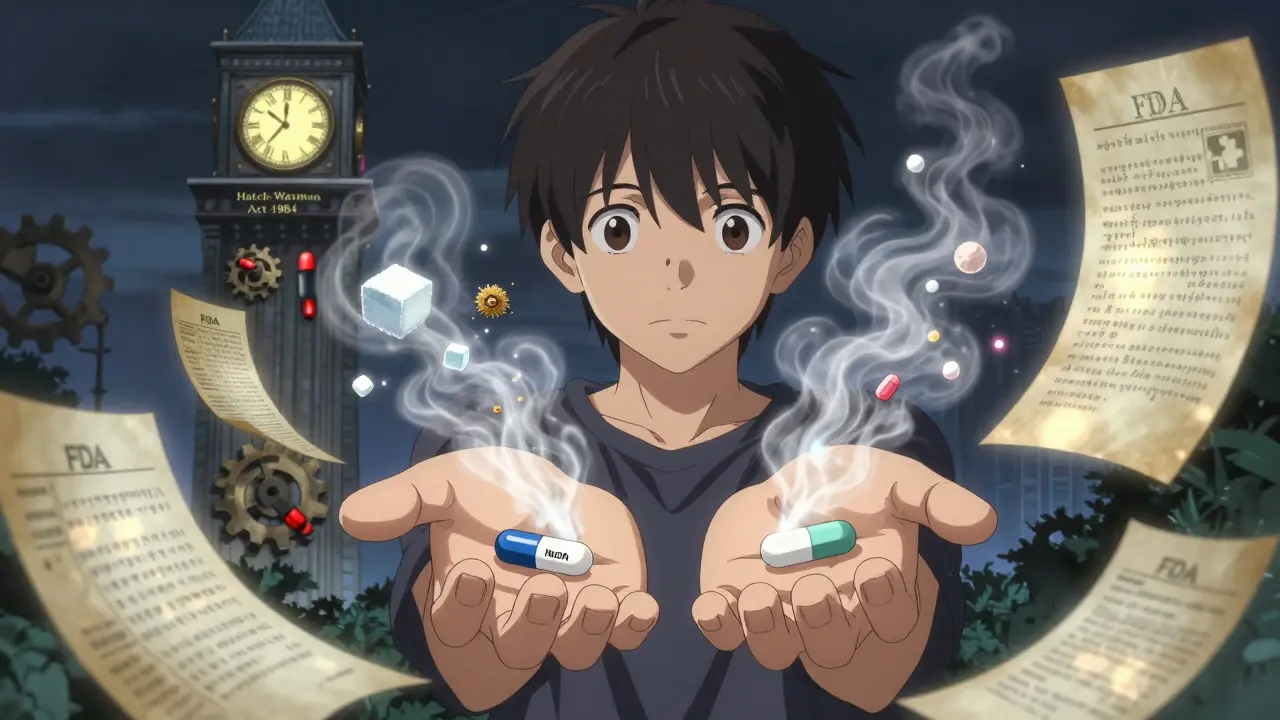
Do Pharmacists Know the Difference?
Many don’t - and that’s a problem. Pharmacists are trained to substitute generics for brand drugs unless the doctor says “dispense as written” (DAW). But they’re not always told whether the generic they’re dispensing is an authorized generic or a regular one. The label doesn’t say. The system doesn’t flag it. A 2023 survey found that about 30% of patients question the switch when they get a plain pill instead of the branded one. They worry it’s fake, or weaker, or expired. Pharmacists end up spending extra time explaining that yes, it’s the same. Sometimes they use FDA handouts. Sometimes they just say, “Trust me.” If you’ve been switched to a new pill and you’re unsure, ask: “Is this an authorized generic?” If they don’t know, ask for the manufacturer’s name. If it’s the same as the brand - like Pfizer, AbbVie, or Johnson & Johnson - it’s likely an authorized generic.Who Benefits the Most From Authorized Generics?
Not everyone needs them. But certain people benefit significantly:- Patients with allergies or sensitivities to common fillers (like lactose, gluten, or dyes)
- People who switched to a regular generic and noticed side effects - headaches, nausea, mood changes
- Those on long-term medications like blood pressure pills, antidepressants, or seizure drugs, where consistency matters
- People whose insurance won’t cover the brand but will cover authorized generics at a low copay
How to Find an Authorized Generic
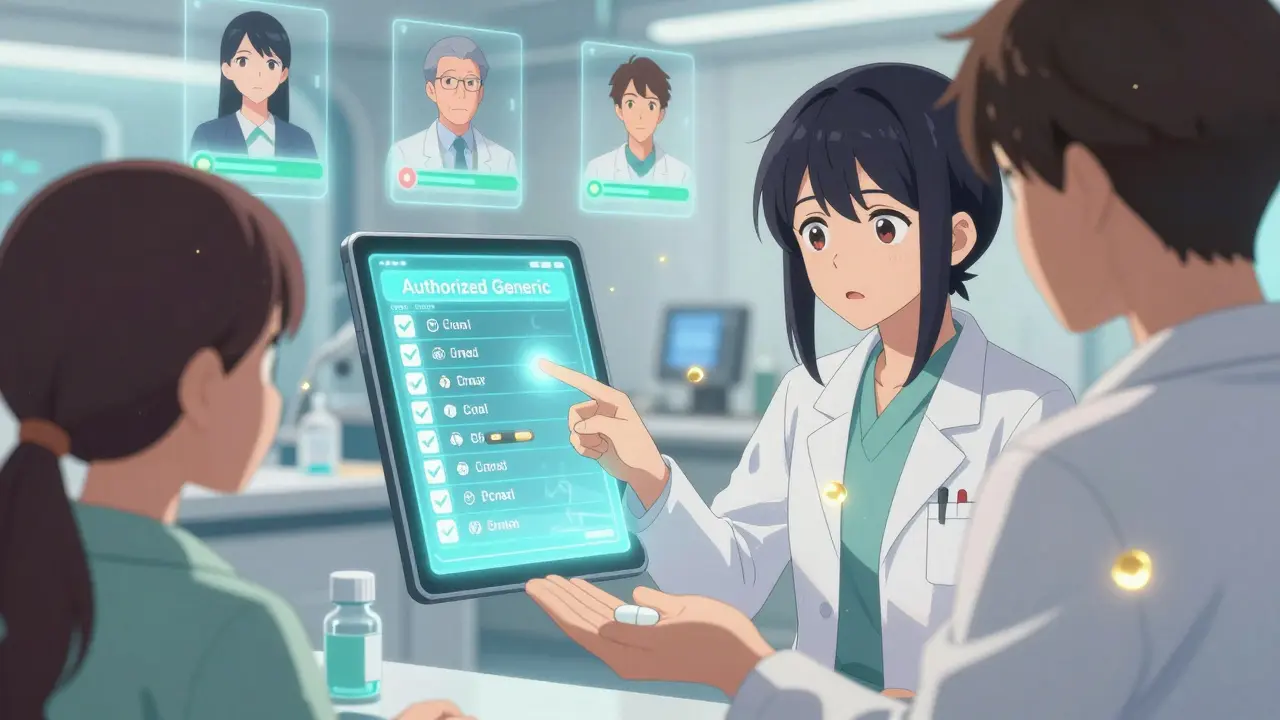
You can’t always tell by looking at the bottle. But here’s how to find out:- Ask your pharmacist: “Is this an authorized generic?”
- Check the manufacturer name on the label. If it matches the brand name, it’s likely authorized.
- Look up the drug on the FDA’s website. They maintain a list of authorized generics updated through 2023.
- Use GoodRx or SingleCare. These apps often label authorized generics separately.
- Lyrica (pregabalin)
- Prozac (fluoxetine)
- Simvastatin (Zocor)
- Viagra (sildenafil)
- Abilify (aripiprazole)
What’s the Future of Authorized Generics?
The market for authorized generics is small - about 5-7% of the total generic drug market - but growing. More manufacturers are using them to protect profits after patent expiry. Some lawmakers are pushing to limit this practice, calling it anti-competitive. The FDA is considering requiring authorized generics to be listed in the Orange Book, which tracks therapeutic equivalence. Right now, they’re invisible there. That makes it harder for doctors and pharmacists to know what they’re prescribing or dispensing. There’s also pressure to make pricing more transparent. Right now, you might pay $15 for an authorized generic when a regular generic costs $5. That’s confusing for patients trying to save money. But for those who need consistency - especially with chronic conditions - authorized generics offer something no other option can: perfect replication.Final Thoughts: Is It Worth It?
If you’re healthy, stable, and your regular generic works fine? Stick with it. It’s cheaper. But if you’ve ever thought, “This generic doesn’t feel right,” or your doctor said, “Stick with the brand,” ask about the authorized generic. It’s the same drug. No guesswork. No risk of different fillers. Just the medicine you’ve been taking - without the brand price tag. It’s not magic. It’s chemistry. And sometimes, that’s enough.Are authorized generics as safe as brand-name drugs?
Yes. Authorized generics are made by the same company, in the same facility, using the same formula as the brand-name drug. The FDA confirms they are therapeutically equivalent. The only difference is the label. If your brand drug is safe for you, so is its authorized generic.
Why would a pharmacy give me an authorized generic instead of a regular generic?
Your insurance plan may prefer it, or your doctor may have requested it. Sometimes, pharmacies stock authorized generics because they’re more reliable for patients who’ve had bad reactions to traditional generics. It’s not random - it’s often based on your history or your prescriber’s instructions.
Can I ask my doctor to prescribe an authorized generic specifically?
Yes. You can ask your doctor to write “dispense as written” and specify the manufacturer name if you want the authorized version. Some doctors are familiar with this option, especially if you’ve had issues with other generics. You can also ask your pharmacist to check if an authorized version exists for your medication.
Do authorized generics work faster or slower than brand drugs?
No. Since they’re chemically identical, they work at the same rate and in the same way. There’s no difference in how quickly they’re absorbed or how long they last in your body.
Are authorized generics available in Australia?
Australia doesn’t have an official “authorized generic” system like the U.S. The Therapeutic Goods Administration (TGA) allows generic drugs to be marketed under the same name as the brand if they’re identical, but there’s no formal category for authorized generics. Patients in Australia typically get regular generics, which may have different inactive ingredients.



Gregory Clayton
10 January, 2026 . 05:33 AM
This is some BS corporate manipulation. They’re just milking the system-same pill, same factory, but now they charge $15 instead of $5 to keep you hooked. It’s not medicine, it’s a scam with a FDA stamp on it. 🤡
Ashley Kronenwetter
12 January, 2026 . 05:15 AM
While the article provides a thorough overview, I must emphasize the importance of verifying the manufacturer and consulting with your pharmacist before switching medications. Patient safety should always take precedence over cost savings.
Aron Veldhuizen
13 January, 2026 . 09:08 AM
Let’s deconstruct this. The FDA’s definition of ‘therapeutic equivalence’ is a legal fiction. Bioequivalence ≠ biochemical identity. The body isn’t a test tube-it’s a sentient ecosystem. If your serotonin receptors react differently to a different filler, is that not a difference in therapeutic outcome? The system calls it ‘identical,’ but the patient’s experience says otherwise. This isn’t science-it’s capitalism dressed in lab coats.
Heather Wilson
14 January, 2026 . 12:03 PM
The data presented is misleading. The 2018 study cited measured hospital visits and adherence, but failed to account for subjective symptom variance, patient-reported side effects, or long-term metabolic changes. Furthermore, the claim that authorized generics are ‘identical’ ignores pharmacokinetic variability in inactive ingredients, which can alter absorption rates in 12-18% of patients with comorbid GI conditions. This is not a neutral fact-it’s a dangerous oversimplification.
Micheal Murdoch
15 January, 2026 . 20:54 PM
For anyone who’s ever felt ‘off’ after switching generics-this is your lifeline. You’re not crazy. Your body remembers. And if you’ve got allergies, sensitivities, or just a gut feeling that something’s wrong-ask for the authorized version. It’s not about being fancy. It’s about being heard. Your health isn’t a spreadsheet.
Jeffrey Hu
17 January, 2026 . 18:49 PM
Everyone’s missing the real issue. Authorized generics aren’t the problem-it’s the lack of transparency in the Orange Book. If the FDA doesn’t label them properly, pharmacists can’t inform patients. And if pharmacists can’t inform patients, then insurance companies are just playing Russian roulette with your health. This isn’t about price-it’s about accountability. Fix the database, not the blame game.
Meghan Hammack
18 January, 2026 . 09:19 AM
I switched to an authorized generic for my anxiety med last year and my panic attacks dropped by 70%. I used to hate the regular generic-it made me feel like I was floating underwater. The authorized one? Same exact feeling as the brand. I’m so glad I asked. 💙
Matthew Maxwell
19 January, 2026 . 16:40 PM
It’s morally indefensible that pharmaceutical companies exploit regulatory loopholes to maintain profit margins under the guise of patient care. This isn’t innovation-it’s predation. Patients are being manipulated into believing they’re getting a ‘better’ option when in reality, they’re being priced into a corporate loyalty program. Shame on the FDA for enabling this.
Lindsey Wellmann
20 January, 2026 . 11:11 AM
OMG I JUST REALIZED MY PROZAC IS AN AUTHORIZED GENERIC?? 😱 I thought I was being scammed!! But now I’m like… wait, this is actually the SAME THING?? I feel like I’ve been lied to my whole life. Also, I love my new pill. It’s smooth. No weird brain zaps. 🙌💊
Johanna Baxter
22 January, 2026 . 05:05 AM
I’ve been on the same med for 12 years. Switched to generic once. Felt like I was dying. Then they gave me the authorized one. I cried. Not because it was cheap. Because it was the same. The same. After all this time, they finally gave me back the version that didn’t make me feel like a ghost.
Phil Kemling
22 January, 2026 . 18:40 PM
The deeper question isn’t whether authorized generics are identical-it’s why we’ve allowed our healthcare system to reduce human physiology to interchangeable components. If the body responds differently to a change in filler, then identity isn’t just chemical-it’s experiential. And if we ignore that, we’re not treating patients. We’re treating data points.