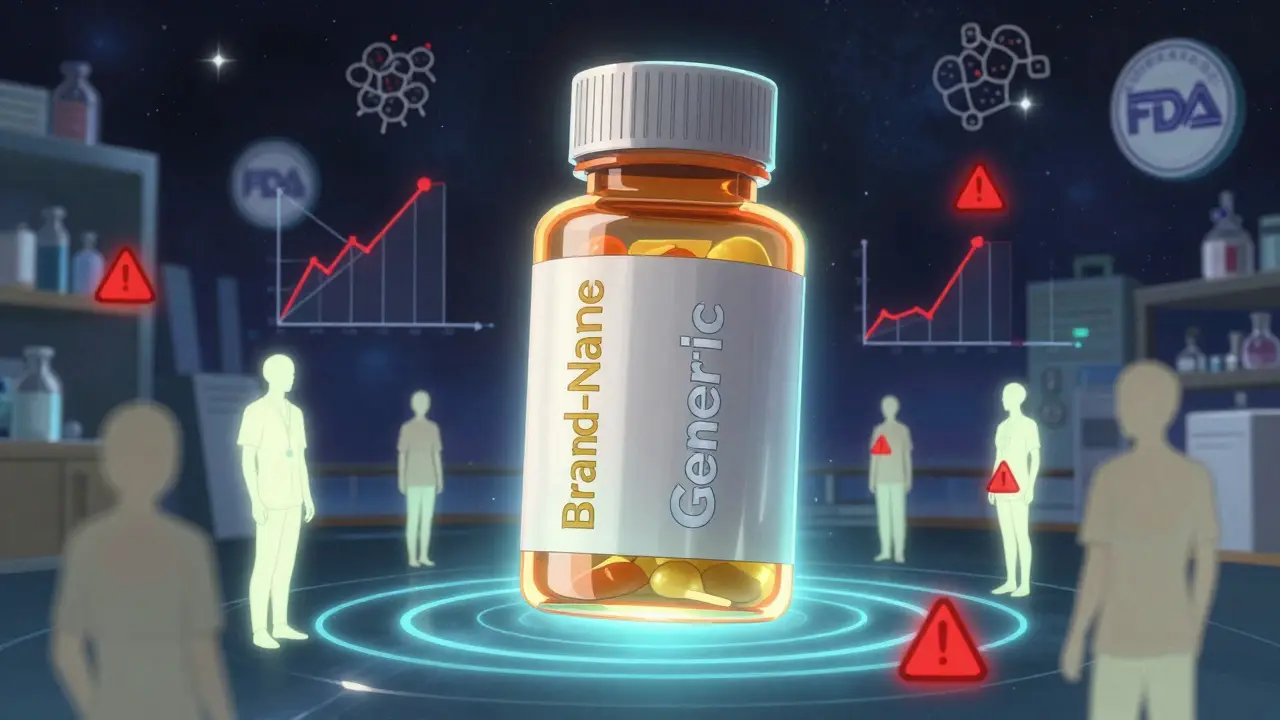
When your pharmacist hands you a pill bottle with a different name than what your doctor wrote, you might wonder: is this the same drug? The answer isn’t as simple as it sounds. Behind every generic prescription is a complex web of medical society guidelines, regulatory standards, and real-world clinical concerns that shape whether doctors support substitution - or fight against it.
Why Generic Drugs Are Everywhere
Generic drugs make up 90% of all prescriptions filled in the U.S., yet they cost only about 23% of what brand-name drugs do. That’s not magic - it’s science. The FDA requires generics to have the same active ingredient, strength, dosage form, and route of administration as the brand-name version. They must also prove bioequivalence: meaning their blood concentration levels fall within 80% to 125% of the original drug’s. That’s the legal standard. And for most medications, it works just fine.But here’s the catch: not all drugs are created equal. Some have what’s called a narrow therapeutic index - meaning the difference between a dose that works and one that’s dangerous is tiny. For these drugs, even small changes in how the body absorbs the medication can lead to treatment failure or serious side effects. That’s where medical societies step in.
Neurology’s Warning: Don’t Swap Anticonvulsants
The American Academy of Neurology (AAN) is one of the few major medical groups that officially opposes generic substitution for antiepileptic drugs. Why? Because seizures don’t wait for paperwork.Approximately 3.4 million Americans live with epilepsy. For many, their medication keeps seizures under control - not perfectly, but well enough to drive, work, or hold a child. Switching from a brand-name drug to a generic - or even between two different generics - can disrupt that balance. Studies and clinical reports suggest that up to 68% of neurologists have seen patients experience breakthrough seizures or increased side effects after a switch. The AAN’s position isn’t about distrust of generics. It’s about precision. In epilepsy, milligrams matter.
Some states have responded by requiring prescriber consent before substituting antiepileptic drugs. Others don’t. That inconsistency creates confusion for pharmacists and anxiety for patients. One neurologist in Ohio told a colleague: “I’ve had patients call me in tears because they had a seizure after a pharmacy switch. They didn’t understand why their ‘same’ medicine didn’t work.”
What About Cancer Drugs?
Oncology takes a different approach. The National Comprehensive Cancer Network (NCCN) doesn’t just accept generic drugs - it actively integrates them into treatment protocols, even for off-label uses. That means if a generic version of a drug is proven safe and effective for one type of cancer, it can be used for another, even if the FDA hasn’t formally approved it for that use.Why the difference? In cancer care, the goal is often to extend life by months or years, and cost is a huge barrier. Many chemotherapy drugs have become generic over time, making them affordable enough for long-term use. The NCCN Compendia, which guides Medicare coverage decisions, treats these generics as interchangeable when bioequivalence is established. For patients, this means access to life-saving treatment they might otherwise not afford.
Still, oncologists don’t take substitution lightly. They monitor blood counts, liver function, and side effects closely - especially when switching between manufacturers. But unlike epilepsy, where a single seizure can be catastrophic, cancer treatment often involves multiple drugs and ongoing adjustments. That makes substitution more manageable.
The Naming Game: How Generic Drugs Get Their Names
You might not think about drug names, but they matter more than you know. The American Medical Association’s United States Adopted Names (USAN) Council decides what generic drugs are called. Their job? To create names that are clear, safe, and reduce errors.For example, all drugs ending in “-pril” are ACE inhibitors. All ending in “-sartan” are angiotensin II blockers. These naming “stems” help doctors and pharmacists quickly identify drug classes - and avoid dangerous mix-ups. The USAN Council avoids names that sound or look too similar to existing drugs. One wrong letter could mean a patient gets the wrong medication.
But here’s the irony: even with these safeguards, pharmacy systems sometimes mislabel generics. A 2023 study found that nearly 12% of electronic prescriptions for generic drugs had incorrect names or dosages entered by staff. That’s why the AMA insists names must be “suitable for routine prescribing, ordering, dispensing, and administering.”
Doctors’ Real Concerns
Most physicians support generic drugs. They’re cheaper, widely available, and effective for the vast majority of conditions - from high blood pressure to depression. But many are frustrated by policies that force substitution without considering the patient’s history.“I’ve prescribed a specific brand for a patient with chronic migraines because they’ve responded to it for five years,” said a primary care doctor in Pennsylvania. “Last month, the insurance company switched them to a generic. They came back with worse headaches and dizziness. I had to fight the insurer to get the original back. It took three weeks.”
That’s not rare. In primary care, endocrinology, and psychiatry, providers often report similar stories. For drugs like levothyroxine (used for thyroid disorders), even minor fluctuations in absorption can throw off hormone levels. Patients may feel fatigued, gain weight, or develop heart palpitations - symptoms they didn’t have before the switch.
Medical societies like the American College of Physicians generally support generics - but they also urge caution. Their position? “Use generics when appropriate. But don’t let cost override clinical judgment.”
What Patients Should Know
If you’re prescribed a generic drug, here’s what to do:- Ask your doctor if the drug has a narrow therapeutic index. If it’s for epilepsy, thyroid disease, blood thinners, or seizure control, substitution may carry risk.
- Don’t assume “same drug = same effect.” If you feel different after a switch - worse symptoms, new side effects - tell your provider immediately.
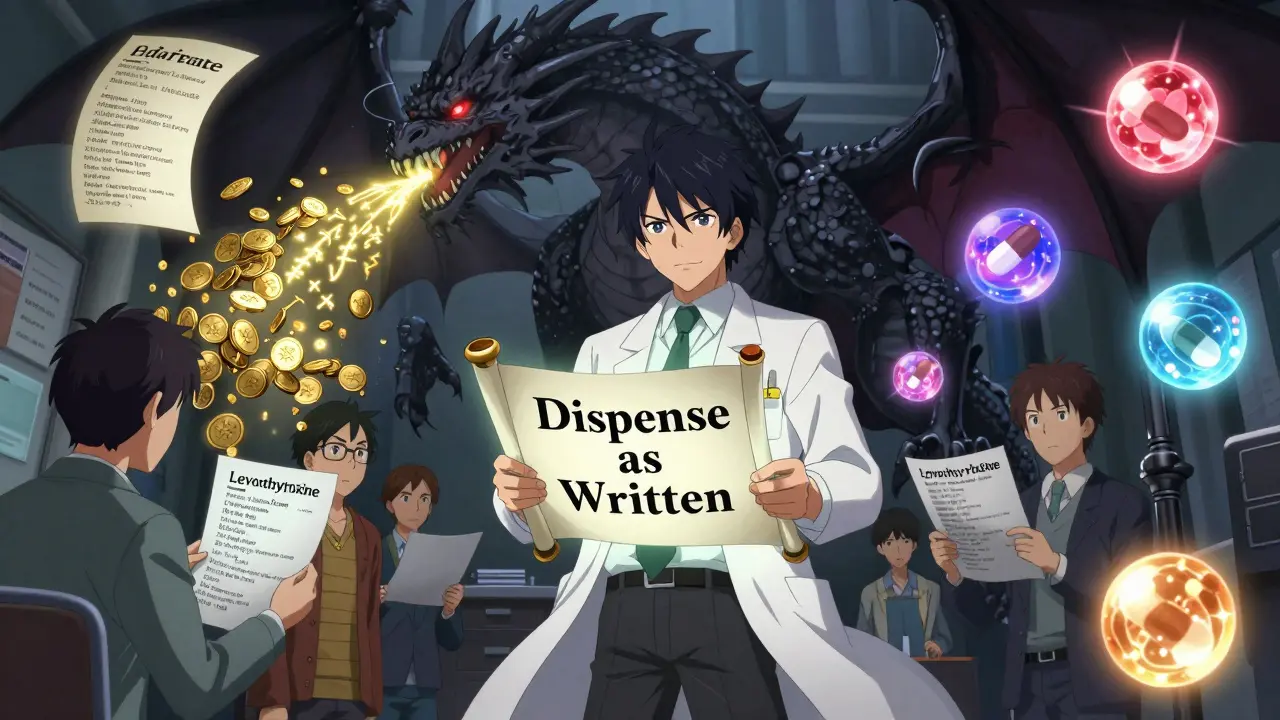
- Request a prescription that says “Dispense as Written” or “Do Not Substitute” if you’ve had problems before.
- Keep a list of every medication you’ve taken, including the manufacturer, especially if you’ve switched generics.
Pharmacists are your allies here. They can tell you if a generic is being substituted and whether it’s the same manufacturer as before. But they can’t override insurance rules - unless you ask.
The Bottom Line
Medical society guidelines on generic drugs aren’t one-size-fits-all. For most people, generics are safe, effective, and a smart choice. But for those on drugs with narrow therapeutic windows, the stakes are higher. The FDA says generics are equivalent. But doctors know: biology isn’t always exact.The real question isn’t whether generics work. It’s: when should they be used - and who gets to decide?
Right now, that decision is often made by insurers, pharmacy benefit managers, or state laws - not always by the person who knows your body best: your doctor.
Are generic drugs really the same as brand-name drugs?
For most medications, yes. The FDA requires generics to contain the same active ingredient, strength, and dosage form as the brand-name drug, and they must prove bioequivalence - meaning they deliver the same amount of medicine into your bloodstream at a similar rate. But for drugs with a narrow therapeutic index - like seizure medications, blood thinners, or thyroid hormones - even small differences in absorption can affect how well they work or increase side effects.
Why do some doctors oppose generic substitution?
Doctors who oppose substitution usually work with patients on drugs where precision matters most. In epilepsy, a tiny change in blood levels can trigger a seizure. In thyroid disease, a small shift can cause fatigue, weight gain, or heart issues. These aren’t theoretical risks - they’re documented in clinical practice. The American Academy of Neurology and other specialty groups have issued formal warnings based on patient outcomes, not theory.
Can I ask my doctor to block generic substitution?
Yes. You can ask your doctor to write “Dispense as Written” or “Do Not Substitute” on your prescription. This tells the pharmacy to give you exactly what’s prescribed, even if a generic is available. Some insurance plans may require prior authorization for brand-name drugs, but your doctor can appeal if there’s a medical reason.
Do generic drugs have different side effects?
The active ingredient is the same, so the expected side effects should be too. But inactive ingredients - like fillers, dyes, or coatings - can vary between manufacturers. For some people, these differences cause stomach upset, allergies, or absorption issues. If you notice new symptoms after switching to a generic, report them. It’s not always the drug - but it’s worth checking.
What’s a narrow therapeutic index, and why does it matter?
A narrow therapeutic index means the difference between a safe, effective dose and a toxic one is very small. Drugs like warfarin (a blood thinner), levothyroxine (for thyroid), and phenytoin (for seizures) fall into this category. Even a 10% change in how much of the drug reaches your bloodstream can cause serious problems. That’s why substitution for these drugs requires extra caution - and often, doctor approval.
Are there any drugs where generics are always safe to use?
Yes. For most common medications - like statins for cholesterol, metformin for diabetes, or lisinopril for high blood pressure - generics are just as safe and effective as brand names. Millions of people use them without issue. The key is knowing which drugs are safe to swap and which ones aren’t. Talk to your doctor or pharmacist if you’re unsure.




Robert Cardoso
27 January, 2026 . 14:13 PM
The FDA's 80-125% bioequivalence window is a joke when you're talking about anticonvulsants. That’s a 45% variance in blood concentration - that’s not equivalence, that’s a gamble. I’ve reviewed pharmacokinetic data from 17 different generic phenytoin manufacturers. The intra-patient variability after switches is statistically significant. And no, the ‘same active ingredient’ argument doesn’t hold when excipients alter dissolution rates in the GI tract. This isn’t about fear-mongering - it’s about pharmacology.
Rose Palmer
29 January, 2026 . 06:08 AM
As a clinical pharmacist with 22 years in oncology, I can tell you that generics are the backbone of accessible cancer care. The NCCN guidelines are clear: when bioequivalence is demonstrated, substitution is not just acceptable - it’s ethical. We’ve seen patients live longer because we could afford to give them three drugs instead of one. The key is monitoring. We track INRs, TSH, and drug levels religiously. It’s not about the label - it’s about the data. And the data says: generics save lives when used properly.
Rhiannon Bosse
30 January, 2026 . 04:44 AM
So let me get this straight - the FDA says generics are fine, but doctors are panicking because a pill looks different? Sounds like Big Pharma’s shadow lobbying to me. You know who profits when you keep paying $500 for a drug that costs $12 to make? Not you. Not the patient. The middlemen. The pharmacy benefit managers. The insurers. The same ones who made you pay $300 for insulin in 2020. This ‘narrow therapeutic index’ thing? It’s a smokescreen. If your body can’t handle a generic, maybe you’re the problem - not the pill.
Bryan Fracchia
31 January, 2026 . 08:19 AM
I get both sides. On one hand, generics let my dad take his blood pressure med every month without choosing between food and medicine. On the other, my cousin had three seizures after her pharmacy switched her levetiracetam brand. She’s fine now, but it took three months and a lawyer to get the original back. Maybe the real issue isn’t the drug - it’s the system that lets a computer decide what medicine you get based on cost, not clinical need. We treat patients like line items in a spreadsheet. That’s the real tragedy.
fiona vaz
1 February, 2026 . 17:29 PM
For most people, generics are perfectly safe. Statins, metformin, lisinopril - millions take them daily without issue. The problem arises when you conflate all drugs into one category. It’s like saying all cars are the same because they all have wheels. No. Some are race cars. Some are tractors. You don’t swap them without understanding the engine. Know your drug’s therapeutic index. Ask your pharmacist about manufacturer changes. Keep a log. Small steps prevent big crises.
Phil Davis
3 February, 2026 . 04:46 AM
Interesting how the article frames this as a medical debate, but the real driver is insurance algorithms. The doctor doesn’t care if it’s generic or brand - they care if the patient has seizures. The pharmacist doesn’t care - they just fill the script. It’s the PBMs and formularies that force the switch. No one’s actually thinking about the human on the other end. The system is broken, and we’re all just arguing over who gets blamed for the mess.
Katie Mccreary
4 February, 2026 . 16:21 PM
My sister switched to a generic thyroid med and gained 20 pounds in 3 months. No one believed her until she brought in her lab results. Now she’s on a $700/month brand name because the system won’t let her have stability. This isn’t science - it’s corporate cruelty wrapped in a white coat.
Jeffrey Carroll
6 February, 2026 . 12:50 PM
It is imperative to recognize that the divergence in medical society guidelines reflects not a failure of generic manufacturing, but rather a nuanced understanding of physiological variability. While the FDA’s regulatory framework is robust, biological systems are not binary. The concept of bioequivalence, though statistically valid at the population level, does not guarantee individual therapeutic equivalence. Therefore, clinical discretion must be preserved as a cornerstone of patient-centered care. The physician’s role is not to resist innovation, but to safeguard against unintended harm.
Lance Long
8 February, 2026 . 03:45 AM
I’ve seen patients cry because their insurance switched their epilepsy med and they had a seizure at work. I’ve seen others cheer because they went from $800/month to $12. The truth? It’s not about the pill. It’s about who’s holding the purse strings. If your doctor says ‘do not substitute,’ fight for it. If your pharmacist says ‘it’s the same,’ ask them to show you the bioequivalence report. And if your insurer says ‘no prior auth,’ escalate. This isn’t just about medicine - it’s about dignity.