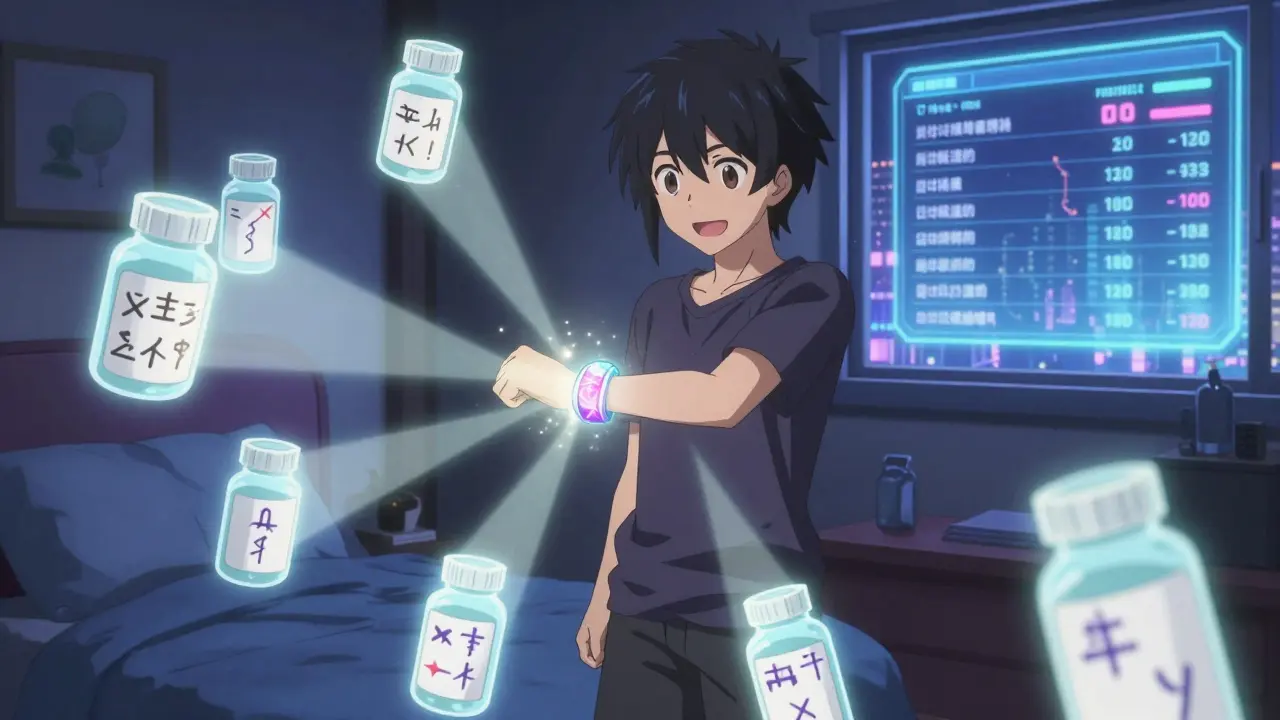
Getting your meds right isn’t just about picking up the prescription. It’s about taking them exactly how your doctor meant you to. And here’s the hard truth: nearly half of people with long-term health conditions don’t. Not because they’re careless. Not because they don’t care. But because life gets in the way - forgetfulness, cost, confusion, or just plain overwhelm.
When you skip doses, take too much, or stop early, it doesn’t just mess with your treatment. It can land you back in the hospital, worsen your condition, or even cost you your life. In the U.S. alone, poor medication adherence leads to about 125,000 deaths every year. That’s more than traffic accidents. And it’s entirely preventable.
Why Do People Skip Their Meds?
It’s not laziness. It’s rarely about willpower. The reasons are practical, personal, and layered.
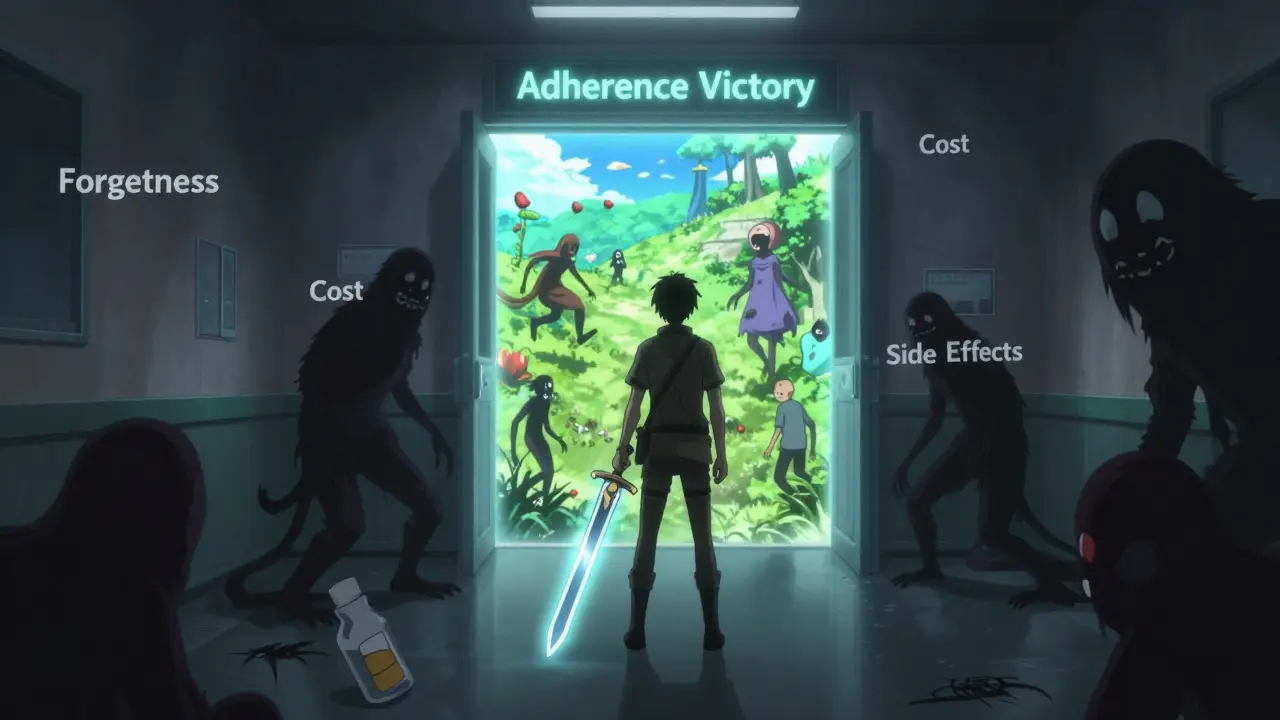
- Too many pills. If you’re on four different meds, taken three times a day, that’s 12 doses daily. One study found adherence drops by 2% for every extra daily dose. Once-a-day pills? 79% take them right. Four times a day? Down to 51%.
- Forgetting. A Farmington Drugs survey of 1,200 people found 68% said forgetting was their biggest issue. Life’s busy. You’re rushing out the door. The pill bottle sits on the counter. Next thing you know - it’s dinner time, and you didn’t take it.
- Cost. One in five Americans skip doses because they can’t afford the meds. Kaiser Family Foundation data shows 61% of non-adherent patients blame price. Even if it’s $5 extra per month, that adds up.
- Side effects. If you feel worse after taking your pill, it’s tempting to stop. You might think, "This isn’t helping. It’s making me sick." But sometimes, side effects fade. And stopping without talking to your doctor can be dangerous.
- Not understanding why. If you don’t know what the pill does, or why it matters, it’s easy to treat it like an optional habit. "I feel fine, why do I need this?" is a common thought - especially with blood pressure or cholesterol meds.
What Actually Works? Real Strategies That Help
There’s no magic bullet. But combining a few simple, proven methods makes a huge difference.
Use a Pill Organizer
Blister packs and weekly pill boxes aren’t just for nursing homes. They’re lifesavers for people juggling multiple prescriptions. A 2022 survey found 73% of people who used them said it helped them stay on track. Look for ones with clear labels, easy-open lids, and alarms built in. Some even send text alerts when it’s time to take a dose.
Link Pills to Daily Habits
Pair your meds with something you do every day - brushing your teeth, morning coffee, or dinner. If you always eat breakfast at 8 a.m., take your pill right after. Your brain starts to associate the habit with the action. No extra reminders needed.
Set Phone Alarms - But Make Them Smart
Simple alarms work, but they’re easy to ignore. Try apps like Medisafe or Mango Health. They don’t just buzz - they show you what the pill is for, how it helps, and even give you a little cheer when you log a dose. One study of diabetics found users improved adherence by 22% just by using these apps. Bonus: they track missed doses and let you share reports with your doctor.
Simplify the Regimen
Ask your doctor: "Can we reduce the number of pills?" Sometimes, switching to a combo pill (like a blood pressure med that includes a diuretic) cuts your daily dose in half. Or switching from twice-daily to once-daily versions. The fewer times you have to remember, the better you’ll stick with it.
Ask for Help - Seriously
Pharmacists aren’t just pill dispensers. They’re adherence experts. Many pharmacies now offer free 15-minute check-ins to review your meds, spot interactions, and suggest tools. If you’re on Medicare, ask if your plan has a medication therapy management (MTM) program. It’s free. And it works.

How Doctors and Pharmacies Are Trying to Help
It’s not just up to you. The system is slowly catching up.
Some clinics now use electronic health records to flag patients who haven’t refilled a prescription in 30 days. That triggers a call from a pharmacy technician - not a doctor, not a nurse, just someone trained to ask, "Is everything okay with your meds?" One study showed this simple step improved adherence by 28%.
Team-based care is making a big difference. In one Mayo Clinic program for heart failure patients, a pharmacist met with each patient monthly, simplified their meds, set up pill boxes, and followed up by phone. Over 18 months, hospital readmissions dropped by 37%.
And here’s something surprising: just knowing someone is tracking your adherence helps. The CDC found that patients who knew their doctor was checking refill records were more likely to take their pills - even if no one ever called them. Awareness changes behavior.
What Doesn’t Work
Not all advice is created equal.
- Shaming. "You really should be taking this." That doesn’t work. It makes people feel guilty, not motivated.
- One-size-fits-all. A 70-year-old with arthritis needs different help than a 25-year-old with diabetes. One person needs a pill box. Another needs help affording meds. One needs a reminder app. Another needs a family member to help.
- Just handing out a pamphlet. If you don’t talk about it, explain it, and check in, it won’t stick.
Interventions that only tackle one problem - like just giving out reminders - improve adherence by only 2-3%. But when you combine tools (pill box + phone call + cost help), gains jump to 15-20%.
What You Can Do Today
You don’t need to overhaul your life. Start small.
- Write down every med you take. Include dose, time, and why. Bring it to your next appointment.
- Ask your pharmacist: "Can I switch to a once-daily version?" or "Is there a cheaper option?"
- Set one phone alarm. Label it with the med name. Put your pill bottle next to your phone.
- Try a weekly pill box. Buy one at any pharmacy for under $5. Fill it on Sunday.
- Use the "teach-back" method. After your doctor explains your meds, say: "So, just to make sure I got it - I take this pill for my blood pressure, once a day, after breakfast, right?"
And if you’re struggling? Say it out loud. "I’m having a hard time keeping up with my meds." Your doctor isn’t judging you. They’re there to help you fix it.
The Bigger Picture
This isn’t just about pills. It’s about control. When you take your meds as prescribed, you’re not just avoiding a hospital visit. You’re staying independent. You’re keeping your routines. You’re living.
And you’re not alone. Millions of people are right there with you - trying, forgetting, struggling, trying again. The system is improving. Tools are getting smarter. But the real power? It’s in your hands. One pill, one day, one reminder at a time.
What does "medication adherence" actually mean?
Medication adherence means taking your medicine exactly as your doctor prescribed - the right dose, at the right time, for the right length of time. It’s not just about picking up the prescription. It’s about actually using it. Experts break it into three parts: starting the medicine (initiation), taking it correctly over time (implementation), and not stopping early (discontinuation). If you miss more than 20% of your doses, you’re considered non-adherent.
Is it really that big of a deal if I skip a dose now and then?
Yes. Even occasional missed doses can cause serious problems. For blood pressure or diabetes meds, skipping doses can spike your numbers, increasing risk of stroke or heart attack. For antibiotics, it can lead to drug-resistant infections. And for chronic conditions like heart failure or epilepsy, missed doses can trigger hospital visits. The CDC says poor adherence causes 125,000 U.S. deaths every year - and it’s preventable.
I can’t afford my meds. What can I do?
Talk to your pharmacist or doctor. Many drug manufacturers offer patient assistance programs that give free or low-cost meds. You can also ask if a generic version exists - they’re often 80% cheaper. Some pharmacies have discount cards (like GoodRx). And if you’re on Medicare, ask about Extra Help or Medicaid. You’re not alone - 61% of non-adherent patients say cost is the issue. There are solutions.
Are pill organizers worth it?
For most people, yes. If you take more than three pills a day, a weekly or monthly pill organizer cuts confusion and forgetfulness. Studies show 73% of users say it helped them stick to their regimen. Look for ones with alarms, large labels, or even Bluetooth that connects to your phone. You can buy a basic one for under $10 at any pharmacy.
Why do some apps work better than others?
The best apps don’t just remind you. They explain why the med matters, let you log how you feel, and give you progress reports. Apps like Medisafe and Mango Health show you what your pill does, track missed doses, and let you share data with your doctor. That feedback loop - seeing your own progress - motivates people more than a simple alarm. One study found users improved adherence by 22% using these tools.





Michaela Jorstad
22 February, 2026 . 02:22 AM
Wow, this is so well-researched-I actually printed this out and taped it to my fridge. I’ve been on five different meds for five years, and honestly? The pill organizer changed everything. I got the one with the alarm, and now I don’t miss a single dose. It’s not about willpower. It’s about systems. And this article nails it.
Caleb Sciannella
24 February, 2026 . 00:10 AM
While I appreciate the practical strategies outlined here, I must emphasize that medication adherence is not merely a behavioral issue-it is a systemic one. The commodification of pharmaceuticals in the United States has created an environment wherein cost barriers are deliberately engineered to exclude low-income populations. The fact that 61% of non-adherent patients cite price as the primary obstacle speaks not to individual negligence, but to the moral failure of a healthcare model that prioritizes profit over human life. We must advocate for universal pharmacare, not merely remind people to set alarms.
Chris Beeley
25 February, 2026 . 07:35 AM
Oh, so we’re just gonna hand out pillboxes and call it a day? Please. This is the same lazy, Band-Aid approach that’s been going on since the 90s. You think a $5 organizer fixes systemic neglect? I’ve seen patients on insulin skip doses because they’re choosing between rent and refills. And you’re telling them to ‘link it to coffee’? That’s not advice-that’s a punchline. Real change requires dismantling the pharmaceutical monopoly, not telling people to use Bluetooth pillboxes. You’re all just rearranging deck chairs on the Titanic.
Arshdeep Singh
26 February, 2026 . 02:29 AM
Bro, I’m from India, and we don’t have this luxury. People here take whatever they can afford, when they can afford it. No alarms, no organizers, no apps. My aunt takes half her blood pressure pill every other day because the full dose costs a day’s wage. You think a text reminder helps when you’re eating one meal a day? This whole post feels like a rich American’s fantasy. Real life doesn’t come with a ‘Medisafe’ button.
Jana Eiffel
27 February, 2026 . 16:57 PM
The conceptual framework presented herein is both cogent and commendable. However, one must interrogate the underlying epistemological assumption that adherence is primarily an individual responsibility. The very notion of ‘taking pills as prescribed’ presumes a level of health literacy, cognitive capacity, and socioeconomic stability that is not universally distributed. To reduce complex pharmacological regimens to behavioral nudges-albeit well-intentioned-is to engage in epistemic violence against those marginalized by structural inequities. The solution, therefore, must be structural, not instrumental.
aine power
27 February, 2026 . 20:28 PM
Pill box. Alarm. Done.
Tommy Chapman
1 March, 2026 . 08:22 AM
Look, I get it. People are lazy. I’ve worked in ER for 15 years. Half the people who come in with heart failure didn’t take their meds because they ‘forgot.’ Or ‘couldn’t afford.’ Bullshit. You got a phone. You got a wallet. You got a damn alarm. If you can’t manage five pills a day, maybe you shouldn’t be living alone. Stop coddling people. This isn’t daycare.
Oana Iordachescu
2 March, 2026 . 02:24 AM
Have you considered that the CDC’s 125,000 death statistic might be inflated? I’ve read studies suggesting that many of these ‘adherence-related deaths’ are actually misclassified comorbidities. Also-why are we not talking about the fact that Big Pharma deliberately designs multi-dose regimens to maximize profit? And what about the NSA’s rumored surveillance of refill patterns? I’m not saying they’re using it to target people… but wouldn’t it be convenient if they could? Just saying. 🤔
Ellen Spiers
3 March, 2026 . 21:15 PM
The ontological framing of medication adherence as a behavioral deficit is profoundly reductive. One must interrogate the hegemonic discourse that naturalizes pharmaceutical compliance as a moral imperative, thereby obscuring the political economy of access. The neoliberal apparatus, through its commodification of therapeutic intervention, constructs the patient as a rational actor who, absent adequate behavioral nudges, fails to optimize utility. This is not merely flawed-it is epistemologically violent. The solution lies not in pill organizers, but in the decommodification of essential therapeutics.