Imagine you take a pill for your heart, and then another for your anxiety. You think you’re doing everything right by following the doctor’s orders. But inside your body, these two pills are having a silent collision. One might be blocking the other from working, or worse, turning it into something toxic. This isn’t just bad luck; it’s science. Specifically, it’s called a pharmacokinetic drug interaction.
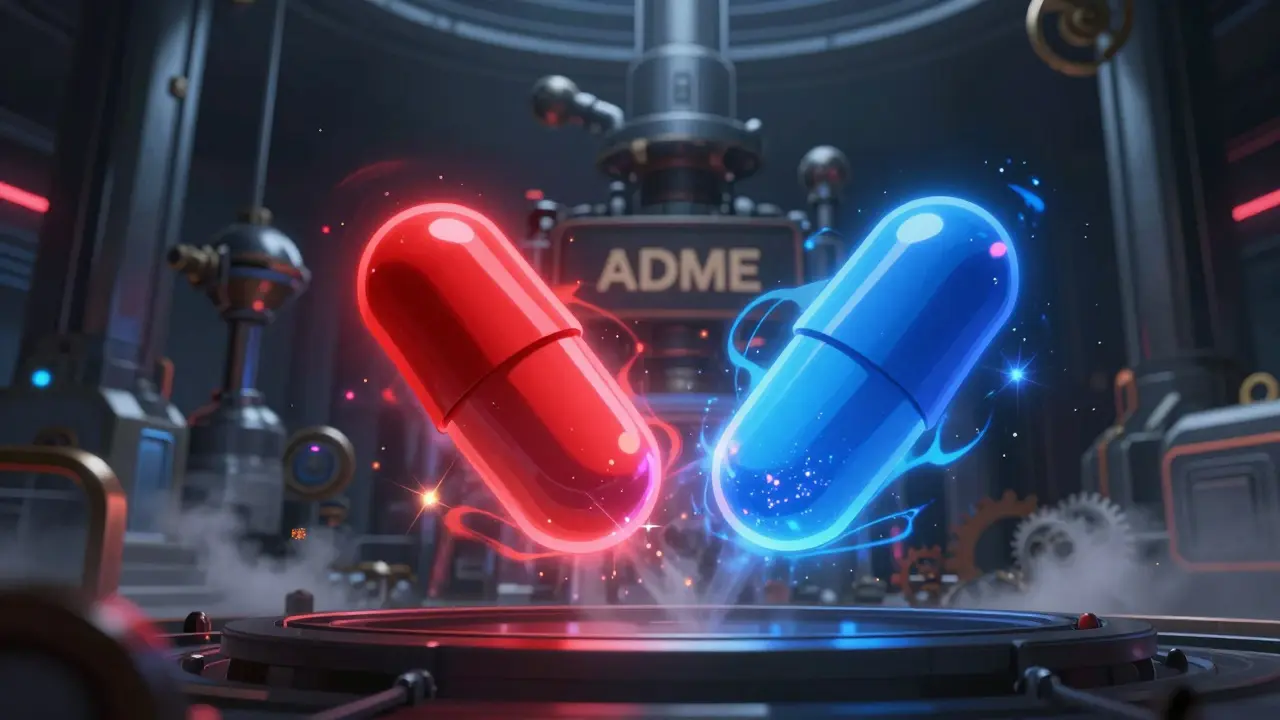
If that term sounds like heavy medical jargon, don’t worry. It simply describes how one medication changes the way your body handles another. Your body processes drugs through four main steps: Absorption, Distribution, Metabolism, and Excretion. Doctors and pharmacists call this the ADME process. When a drug messes with any of these steps, you get an interaction. Understanding this can literally save your life.
The Four Stages of Drug Processing (ADME)
To understand why interactions happen, we first need to look at what your body normally does with a pill. Think of your body as a factory processing raw materials. The material is the drug, and the factory has four stations.
| Stage | What Happens? | Key Body Parts |
|---|---|---|
| Absorption | Drug enters the bloodstream | Gut, Stomach |
| Distribution | Drug travels to target organs | Blood, Proteins |
| Metabolism | Drug is broken down/changed | Liver (Enzymes) |
| Excretion | Drug leaves the body | Kidneys, Urine |
Most people assume that once they swallow a pill, it just works. But if Drug A slows down the "factory line" at the metabolism stage, Drug B might build up to dangerous levels in your blood. Or, if Drug A speeds up the line, Drug B might get flushed out before it ever helps you. Let’s break down each stage so you know where things can go wrong.
Absorption: Getting Into the Bloodstream
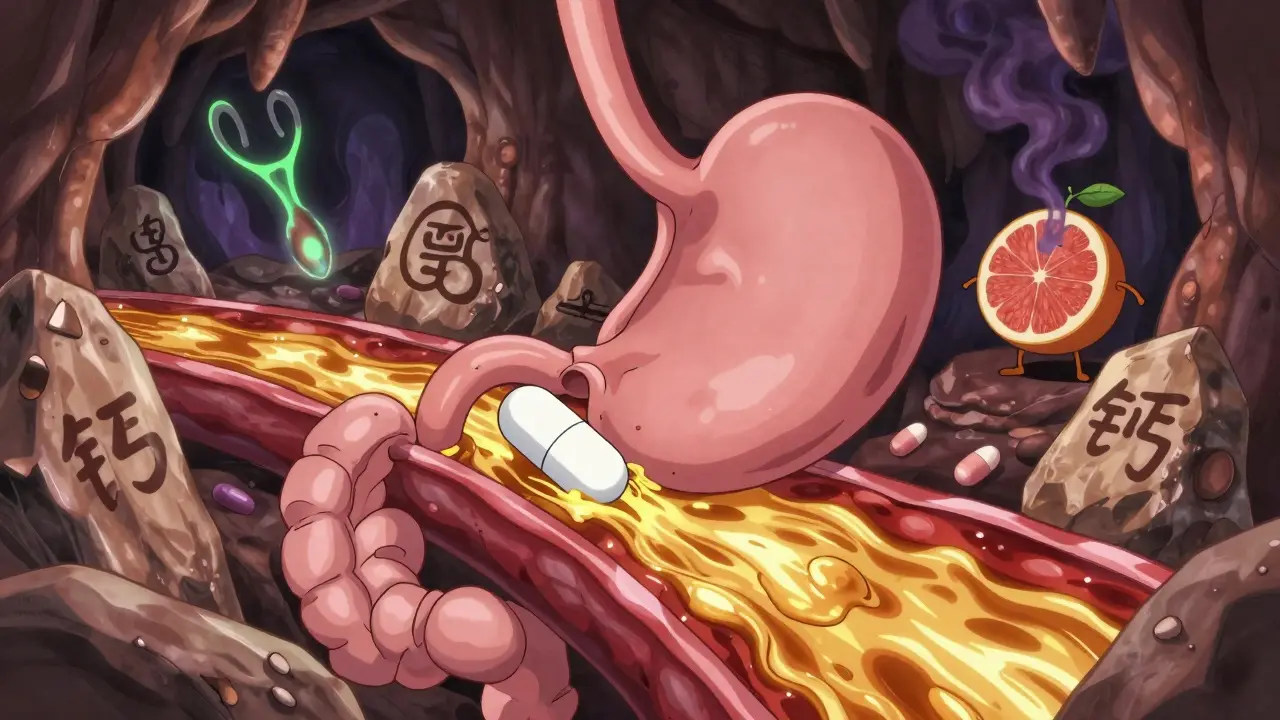
Absorption is the entry point. For oral medications, this usually happens in your stomach or intestines. Some drugs need specific conditions to get absorbed properly. For example, certain antifungal medications like ketoconazole need an acidic environment in your stomach to dissolve and enter your blood. If you take an antacid to soothe heartburn, you neutralize that acid. The result? The antifungal never gets absorbed, and you haven’t actually treated your infection.
Another common issue involves binding. Certain antibiotics, like tetracycline, love to bind with minerals. If you drink milk or take a calcium supplement with them, the drug binds to the calcium instead of entering your bloodstream. Studies show this can reduce absorption by up to 50%. The fix is simple but often ignored: space these medications apart by at least two to three hours. Give your gut time to clear the mineral so the drug can do its job.
Even the speed of your digestion matters. Opioids like morphine slow down gut movement. If you take another painkiller like acetaminophen at the same time, the opioid might delay the acetaminophen from reaching the intestine where it’s best absorbed. You might feel less pain relief than expected, not because the dose was wrong, but because the timing was off.
Distribution: Traveling Through the Body
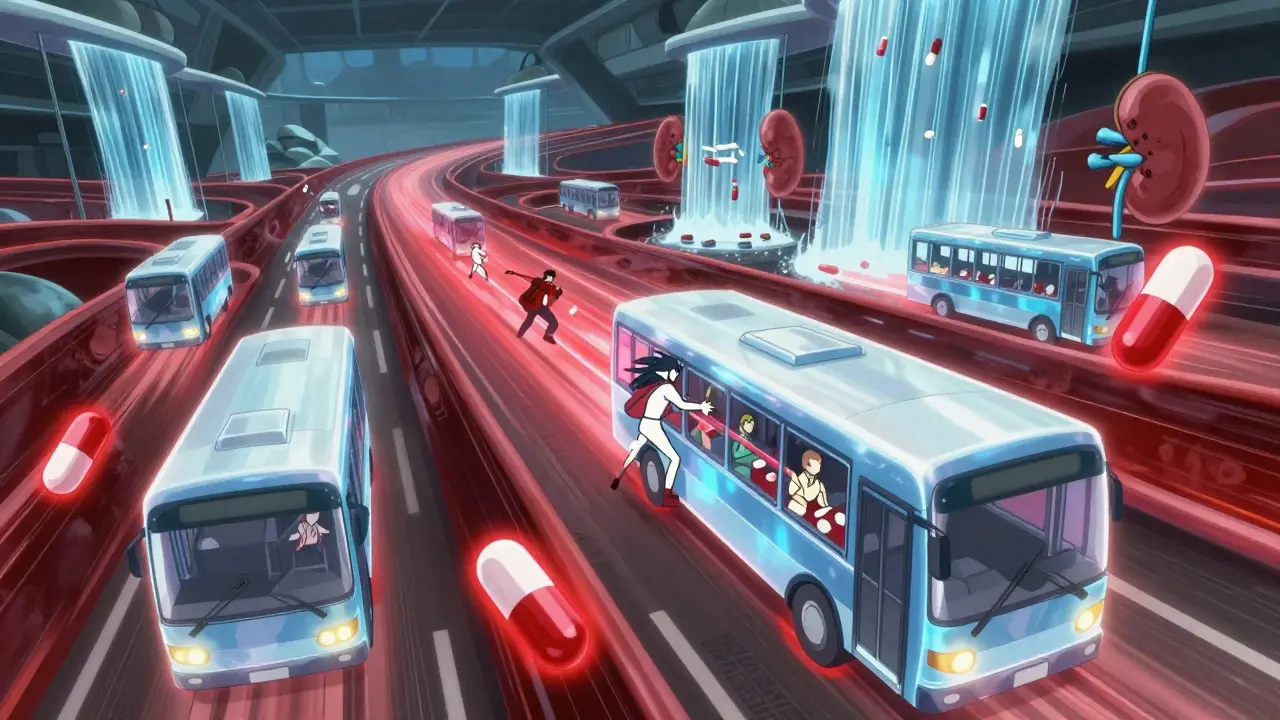
Once a drug is in your blood, it doesn’t float freely. Most drugs hitch a ride on proteins in your blood, mainly albumin. Think of these proteins as buses carrying passengers (the drugs) to their destinations. Only the passengers standing outside the bus (unbound drugs) can actually get off and treat the illness. The ones inside the bus are inactive.
Here is where competition starts. If you take two drugs that both want to ride the same protein bus, one might shove the other off. A classic, dangerous example involves warfarin (a blood thinner) and diclofenac (an anti-inflammatory). Both have a high affinity for albumin. If you start taking diclofenac while on warfarin, the diclofenac can displace warfarin from the protein. Suddenly, there is more "free" warfarin circulating in your blood. Since only free warfarin thins your blood, your risk of serious bleeding spikes dramatically.
Don’t panic every time you take two pills. The body often compensates by metabolizing the displaced drug faster. However, for drugs with a narrow therapeutic index-meaning the difference between a helpful dose and a harmful dose is tiny-this displacement effect is critical. Warfarin, digoxin, and phenytoin fall into this category. For these meds, even small shifts in distribution matter.
Metabolism: The Liver’s Enzyme System
This is the big one. Metabolism interactions account for the majority of clinically significant drug problems. The liver uses a family of enzymes called cytochrome P450 (CYP450) to break down drugs. The most important players here are CYP3A4 and CYP2D6. These enzymes act like scissors, cutting drugs into smaller pieces so they can be eliminated.
Interactions happen when one drug acts as an inhibitor or an inducer of these enzymes.
- Inhibition: Drug A blocks the scissors. Drug B cannot be cut up, so it builds up in your system. Example: Clarithromycin (an antibiotic) inhibits CYP3A4. If you take midazolam (a sedative) with it, the midazolam isn’t broken down. You could end up excessively sedated or stop breathing.
- Induction: Drug A makes the scissors work faster. Drug B is chopped up too quickly and becomes ineffective. Example: Rifampin (for tuberculosis) induces enzymes. If you’re on birth control pills, rifampin can make them fail, leading to unintended pregnancy.
You don’t need to memorize every enzyme. But you should know about grapefruit juice. It contains compounds that inhibit CYP3A4 in the gut and liver. The FDA lists over 85 prescription drugs that interact with grapefruit juice, including some statins for cholesterol and immunosuppressants. Drinking a glass of orange juice is safe; swapping it for grapefruit juice could double the concentration of your medication in your blood.
Excretion: Leaving the Body
Finally, your kidneys filter waste and unused drugs out of your blood. They use transporter proteins, like P-glycoprotein, to pump drugs into your urine. If one drug blocks these pumps, the other drug stays in your body longer than intended.
Consider digoxin, a heart medication used for atrial fibrillation. It has a very narrow safety margin. Itraconazole, an antifungal, inhibits the P-glycoprotein transporter. If you take them together, your kidneys can’t flush out the digoxin efficiently. Levels rise, potentially causing life-threatening heart arrhythmias. Similarly, NSAIDs like ibuprofen can compete with methotrexate for excretion, raising methotrexate levels to toxic ranges that damage bone marrow and kidneys.
Why Pharmacodynamics Are Different
It’s easy to confuse pharmacokinetic interactions with pharmacodynamic ones. Pharmacokinetics is about what the body does to the drug (ADME). Pharmacodynamics is about what the drug does to the body.
If you take a sleeping pill and an antidepressant that also causes drowsiness, that’s a pharmacodynamic interaction. Both drugs affect your central nervous system directly, adding up to excessive sleepiness. No enzyme inhibition or kidney blockage is involved; it’s just two hammers hitting the same nail. While dangerous, pharmacokinetic interactions are often harder to spot because they change the actual amount of drug in your system without changing the drug itself.
Real-World Risks and Statistics
These aren’t just textbook scenarios. The U.S. Food and Drug Administration reports that adverse drug reactions cause about 1.3 million emergency department visits annually in the United States. Among elderly patients, drug interactions account for 6-10% of hospital admissions. A 2022 analysis by the Institute for Safe Medication Practices found that warfarin, insulin, and digoxin were involved in 33% of all interaction-related emergency visits.
Age plays a huge role. As we age, our liver function declines and kidney filtration slows. About 40% of adults over 65 have reduced kidney function. This means drugs stay in their systems longer, making them far more susceptible to pharmacokinetic interactions. Genetics also matter. Some people are "poor metabolizers" due to genetic variations in CYP2C19 or CYP2D6, meaning standard doses can become toxic for them.
How to Protect Yourself
You don’t need a degree in pharmacology to stay safe. Here are practical steps backed by evidence:
- Use One Pharmacy: Keeping all your prescriptions at one pharmacy allows their software to screen for interactions automatically. This practice prevents approximately 150,000 adverse events annually in the U.S., according to the National Community Pharmacists Association.
- Maintain a Master List: Keep a written list of all prescriptions, over-the-counter drugs, and supplements. Bring it to every doctor’s visit. A 2020 study showed this reduces interaction risks by 47%.
- Ask Specific Questions: Don’t just ask, "Is this safe?" Ask, "Could this interact with my other medications?" and "Are there foods I should avoid?" Research from the Mayo Clinic indicates this increases detection of potential issues by 63%.
- Space Out Medications: If you take thyroid medication, calcium, or iron, separate them by at least four hours. This avoids absorption interference.
- Watch the Juice: Avoid grapefruit juice if you are on statins, calcium channel blockers, or immunosuppressants. Stick to orange or apple juice unless told otherwise.
The Role of Technology and Future Care
Healthcare providers are using better tools now. Electronic health records include clinical decision support systems that alert doctors to 85% of major interactions. However, "alert fatigue" is a problem-doctors override nearly half of these warnings because many are minor. That’s why pharmacist-led medication reviews are crucial. They reduce adverse drug events by 22% in Medicare patients.
The future is personalized. Pharmacogenomic testing, which looks at your DNA to see how you metabolize drugs, is becoming more common. The FDA now includes pharmacogenomic information on 340 drug labels. This could eventually reduce interaction-related hospitalizations by 30%, allowing doctors to prescribe based on your unique biology rather than trial and error.
What is the difference between pharmacokinetic and pharmacodynamic interactions?
Pharmacokinetic interactions involve how the body processes a drug (absorption, distribution, metabolism, excretion), changing the drug's concentration in the blood. Pharmacodynamic interactions involve how the drug affects the body, such as two drugs causing similar side effects like drowsiness, regardless of their blood levels.
Can food really cause drug interactions?
Yes. Grapefruit juice inhibits CYP3A4 enzymes, increasing levels of many drugs. Dairy products can bind with antibiotics like tetracycline, reducing absorption. Alcohol can interfere with metabolism and increase toxicity of drugs like metronidazole or acetaminophen.
Which drugs are most likely to have dangerous interactions?
Drugs with a narrow therapeutic index are highest risk. These include warfarin (blood thinner), digoxin (heart rate), lithium (mood stabilizer), and phenytoin (seizures). Small changes in their blood levels can lead to severe harm or death.
How long should I wait between taking different medications?
For absorption issues, spacing medications by 2 to 4 hours is often recommended. For example, take thyroid medication on an empty stomach, wait 4 hours, then take calcium or iron supplements. Always follow your pharmacist’s specific advice for your regimen.
Do herbal supplements cause pharmacokinetic interactions?
Absolutely. St. John’s Wort is a potent enzyme inducer that can reduce the effectiveness of birth control, HIV meds, and transplant drugs. Garlic and ginkgo biloba can affect blood clotting, interacting with warfarin. Always tell your doctor about any supplements you take.