
Bupropion Drug Interaction Checker
Check Your Medications
Enter medications you're currently taking to see if they interact dangerously with bupropion for smoking cessation.
Current Medications:
Quitting smoking isn’t just about willpower. For many, it’s a medical challenge - one that requires the right tools. Bupropion, sold under the brand name Zyban, is one of the most widely used medications for quitting smoking. Unlike nicotine patches or gum, it doesn’t replace nicotine. Instead, it changes how your brain responds to cravings. But here’s the catch: it doesn’t play well with everything. If you’re taking other meds, you could be risking serious side effects - or worse, making bupropion useless.
How Bupropion Helps You Quit Smoking
Bupropion was originally designed as an antidepressant. But doctors noticed something strange: patients who took it for depression often quit smoking without even trying. That led to its repurposing as a smoking cessation aid. Today, it’s FDA-approved specifically for this use.
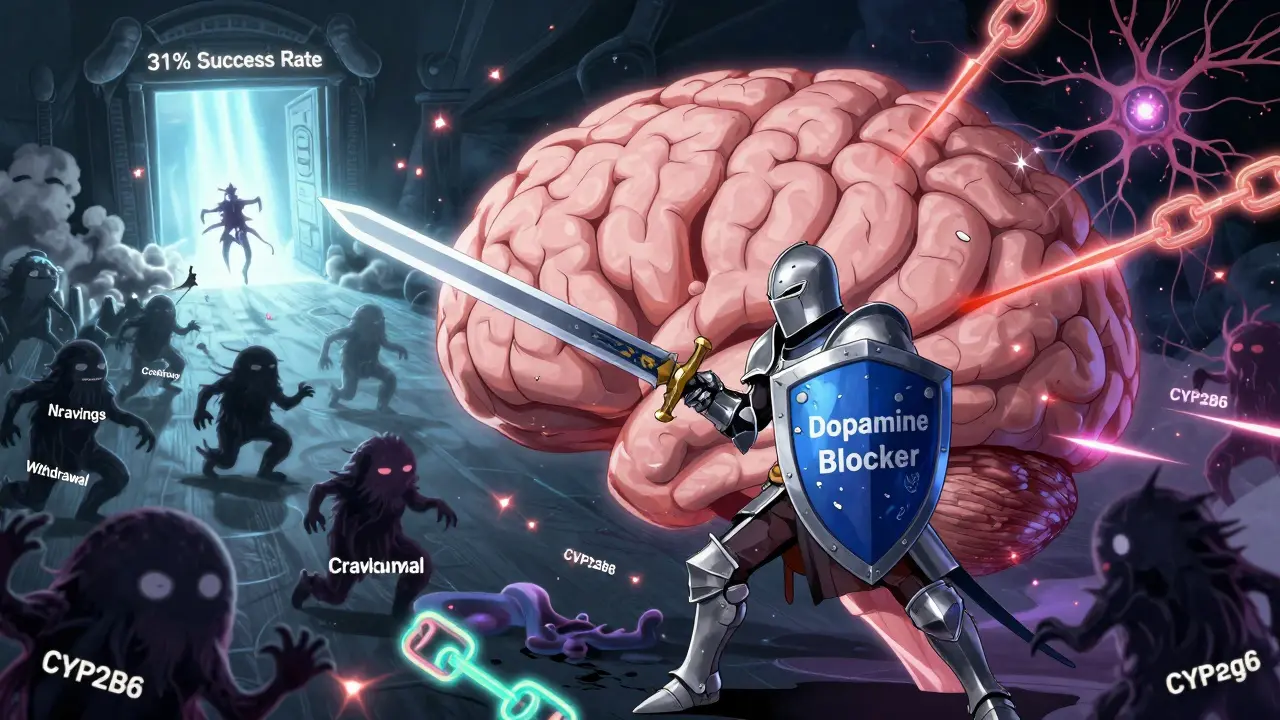
It works in two ways. First, it blocks the reabsorption of dopamine and norepinephrine - the brain chemicals that make smoking feel rewarding. Second, it interferes with nicotine receptors themselves. This dual action cuts cravings and reduces withdrawal symptoms. Studies show people using bupropion are 2 to 3 times more likely to quit successfully than those using a placebo. At six months, about 19-23% of users stay smoke-free, compared to just 7-10% without medication.
But it doesn’t work overnight. You need to start taking it 1-2 weeks before your quit date. Why? Because it takes time for the drug to build up in your system. If you wait until the day you quit, you’ll likely be overwhelmed by cravings with no help from the pill. The standard dose is 150 mg once daily for the first three days, then 150 mg twice daily - at least 8 hours apart. Most people take it for 7-9 weeks total.
What You Can’t Mix With Bupropion
This is where things get dangerous. Bupropion interacts with several common medications - some in life-threatening ways.
- MAO inhibitors (like phenelzine, selegiline): Never, ever take bupropion within 14 days of stopping an MAOI. The combination can cause a deadly spike in blood pressure, seizures, or serotonin syndrome. This isn’t a warning - it’s a hard stop.
- Varenicline (Chantix): The FDA advises against combining bupropion and varenicline. While some studies show it’s safe, others point to increased risk of anxiety, agitation, and mood changes. Most doctors avoid it unless absolutely necessary.
- Other antidepressants (especially SSRIs like fluoxetine or sertraline): Mixing bupropion with these can raise the risk of seizures or serotonin overload. It’s not impossible, but it requires close monitoring.
- Alcohol: Even moderate drinking increases seizure risk. If you’re on bupropion, skip the wine, beer, or cocktails.
- Stimulants (like ADHD meds): Adderall, methylphenidate, or even over-the-counter decongestants (pseudoephedrine) can push your heart rate or blood pressure too high.
There’s also a hidden interaction many don’t know about: CYP2B6 enzyme metabolism. About 25% of people have genetic variations that slow how their body breaks down bupropion. If you’re one of them, the drug builds up faster - increasing side effects like insomnia, dizziness, or seizures. If you’ve had bad reactions before, ask your doctor about genetic testing.
Who Should Avoid Bupropion Altogether
Bupropion isn’t for everyone. Certain health conditions make it too risky:
- History of seizures - even one seizure in your past makes this medication dangerous. The risk is low (about 1 in 1,000), but it’s not zero.
- Eating disorders - anorexia or bulimia increase seizure risk significantly.
- Severe liver disease - your body can’t process the drug properly.
- Current use of other bupropion products - like Wellbutrin for depression. Taking both can lead to overdose.
- Severe allergies to bupropion or any of its ingredients.
If you’ve ever had a reaction to bupropion before - even mild - tell your doctor. Don’t assume it’ll be fine next time.
Side Effects You Need to Watch For
Most side effects are mild - but some are serious. Here’s what to expect:
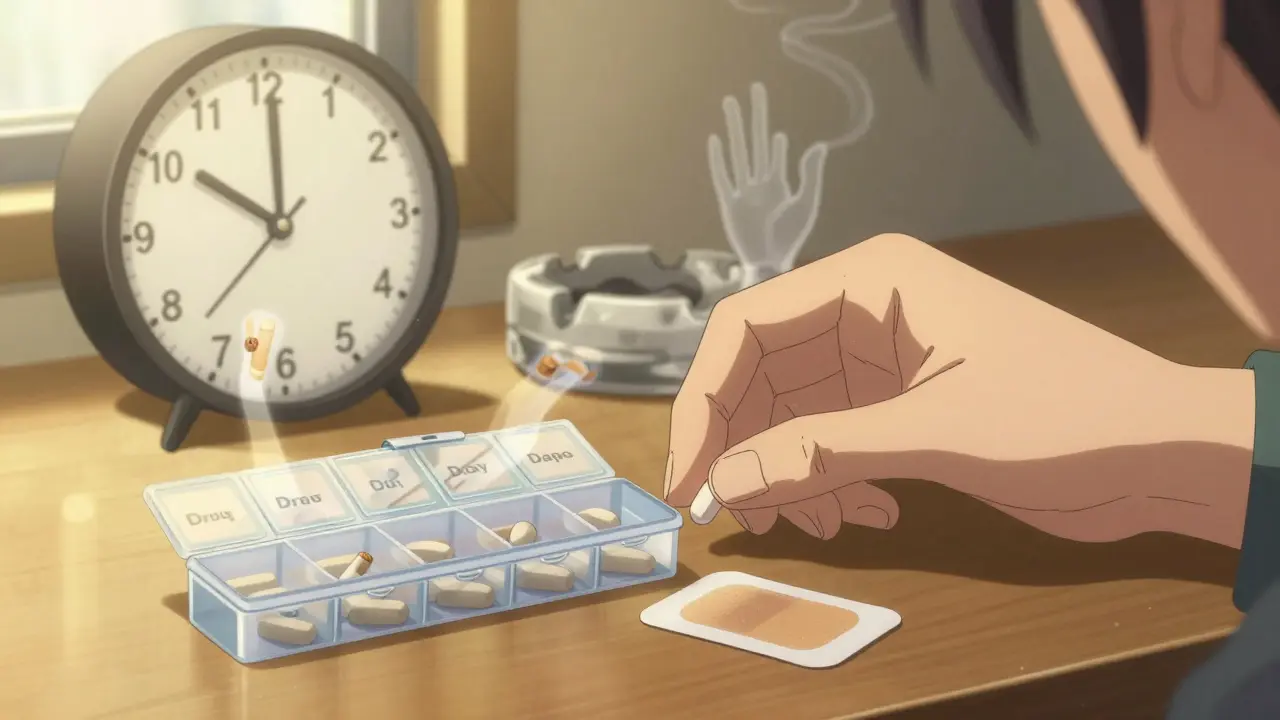
- Insomnia - affects about 24% of users. It’s the #1 reason people quit. Fix it by taking your second dose before 5 p.m.
- Dry mouth - common, but harmless. Drink water. Chew sugar-free gum.
- Headaches - usually fade after the first week.
- Nausea - about 13% of users. Take it with food to reduce it.
- Anxiety, agitation, mood changes - rare, but real. If you feel unusually irritable, anxious, or have thoughts of self-harm, stop taking it and call your doctor immediately.
According to Drugs.com reviews, 52% of users say bupropion helped them quit. But 34% stopped because of side effects. The biggest complaint? “It didn’t work fast enough.” That’s because it takes 7-10 days to kick in. If you quit cold turkey before the drug kicks in, you’ll probably fail. Patience matters.
How It Compares to Other Quitting Aids
Here’s how bupropion stacks up against other options:
| Medication | How It Works | 6-Month Quit Rate | Common Side Effects | Cost (30-day supply) |
|---|---|---|---|---|
| Bupropion (Zyban) | Blocks dopamine/norepinephrine reuptake; antagonizes nicotine receptors | 19-23% | Insomnia, dry mouth, headache | $35 (generic) |
| Varenicline (Chantix) | Partial nicotine receptor agonist | 19-22% | Nausea (22%), vivid dreams, mood changes | $550 |
| Nicotine Replacement (Patch/Gum) | Delivers controlled nicotine | 16-18% | Skin irritation, jaw pain, dizziness | $40-100 |
Bupropion wins on cost and side effect profile. It’s cheaper than varenicline by over 90%. It causes less nausea. And unlike nicotine products, it doesn’t expose you to more nicotine - which matters if you’ve had heart issues or are pregnant.
But varenicline might be better for heavy smokers. And nicotine patches work faster. The best choice? It depends on your history, your body, and what else you’re taking.
What to Do If You’re Already on Other Medications
If you’re on antidepressants, blood pressure meds, ADHD drugs, or anything else - don’t guess. Talk to your doctor. Bring a full list of everything you take, including supplements and OTC painkillers.
Some safe combinations:
- Bupropion + nicotine patch (FDA-approved combo since 2023)
- Bupropion + beta-blockers (for high blood pressure)
- Bupropion + thyroid meds (if monitored)
Some risky combinations:
- Bupropion + tramadol (seizure risk)
- Bupropion + linezolid (antibiotic - MAOI-like effect)
- Bupropion + St. John’s Wort (herbal antidepressant - serotonin overload)
Always wait 14 days after stopping an MAOI before starting bupropion. Always check with your pharmacist before adding any new pill - even a cold medicine.
Real-World Success Stories
One Reddit user wrote: “Zyban eliminated my cravings completely after 10 days. I didn’t miss smoking at all.” Another said: “It helped me avoid the 15-pound weight gain my sister got when she quit.”
But others weren’t so lucky. “I got insomnia so bad I couldn’t sleep for two weeks. Quit after 10 days.”
Here’s the truth: bupropion works best for people who start early, stick with it, and avoid drug clashes. Those who finish the full course have a 63% success rate at 3 months. Those who quit early? Only 41%.
What’s Next for Bupropion?
The future is promising. In 2023, the FDA approved a new combo: bupropion + nicotine patch. Early data shows 31% quit rates - better than either alone.
Researchers are also testing a new version of bupropion with a lower seizure risk. And personalized dosing based on genetics (CYP2B6 status) is coming soon. If you’ve struggled with quitting before, this could be your next option.
For now, stick with what works: start early, avoid dangerous interactions, and don’t give up if side effects pop up. Talk to your doctor. Adjust. Try again. Quitting smoking isn’t a one-shot deal. It’s a process - and bupropion is a powerful tool in that process - if you use it right.
Can I take bupropion if I’ve had seizures before?
No. If you’ve ever had a seizure - even once - bupropion is contraindicated. The risk of another seizure increases significantly with this medication. Talk to your doctor about alternatives like varenicline or nicotine replacement therapy.
How long does it take for bupropion to start working for smoking cessation?
It takes 7 to 10 days for bupropion to build up to effective levels in your body. That’s why you need to start taking it 1-2 weeks before your quit date. If you wait until the day you quit, you won’t get the full benefit. Don’t expect immediate relief - patience is key.
Is bupropion safe to use with alcohol?
No. Alcohol increases the risk of seizures when combined with bupropion. Even moderate drinking - one or two drinks - can be dangerous. If you’re on bupropion, avoid alcohol completely until you’ve finished your treatment.
Can I use bupropion with nicotine patches?
Yes. In fact, the FDA approved this combination in 2023 based on strong clinical data. Using bupropion with a nicotine patch raises quit rates to about 31% at six months - higher than either alone. This is a safe and effective option for heavy smokers who need extra support.
What should I do if I experience mood changes while on bupropion?
If you feel unusually anxious, agitated, depressed, or have thoughts of self-harm, stop taking bupropion immediately and contact your doctor. These are rare but serious side effects. Most occur within the first few weeks of treatment. Don’t ignore them - they’re your body’s warning sign.



Full Scale Webmaster
27 February, 2026 . 16:13 PM
I swear to god, bupropion almost killed me. Started it for smoking, ended up in the ER with a racing heart and hallucinations. My doctor said it was "just anxiety" but I know better. I was on sertraline too. No one warned me. Now I’m off everything. If you’re on antidepressants, don’t be dumb. Google drug interactions. Or better yet, ask your pharmacist. I didn’t. Big mistake. I lost two weeks of my life in a fog of paranoia and insomnia. And don’t even get me started on the dry mouth. It felt like chewing glass. I still can’t drink coffee without wanting to scream. This drug isn’t magic. It’s a chemical grenade with a fuse. And nobody tells you how long the fuse is.
Brandon Vasquez
28 February, 2026 . 01:13 AM
Started bupropion last year. Took it for 8 weeks. Quit smoking. No side effects. Just quiet. No insomnia. No anxiety. Just… calm. I didn’t even notice I wasn’t craving cigarettes. It was subtle. But it worked. Don’t overthink it. Start early. Don’t drink. Don’t mix. Follow the schedule. It’s not complicated.
Miranda Anderson
1 March, 2026 . 02:03 AM
I’ve been on bupropion for over a year now - not for smoking, but for depression. When I decided to quit smoking, my psychiatrist said it was fine to keep it. I started the patch at the same time. Big mistake? No. It actually helped. The cravings were still there, but they felt… distant. Like someone else was craving them. I didn’t have the panic attacks I expected. I also didn’t gain weight. My sister gained 20 pounds. I gained zero. I think the combo of bupropion + patch is underrated. People think it’s too much. But for heavy smokers? It’s a game changer. I’m 14 months smoke-free. I didn’t think I’d make it past week three. I’m still surprised.
Gigi Valdez
1 March, 2026 . 09:33 AM
The CYP2B6 genetic variation is a critical factor often overlooked in clinical guidelines. Approximately 25% of the population exhibits reduced metabolic activity, leading to elevated plasma concentrations of bupropion and its active metabolites. This pharmacokinetic profile significantly increases the risk of seizure and CNS toxicity. Genetic testing prior to initiation is not standard of care but should be considered in patients with prior adverse reactions or polypharmacy. The FDA’s approval of the bupropion-nicotine patch combination is a step forward, but therapeutic monitoring remains essential.
Ajay Krishna
2 March, 2026 . 00:36 AM
I’m from India, and we don’t talk about this enough. My uncle tried bupropion, got seizures. He had no history of seizures. Just one bad reaction. Now he’s scared to even take ibuprofen. But here’s the thing - in India, people buy this stuff online. No prescription. No warning. I told my cousin, "Don’t do it." He listened. He quit with patches and counseling. No pills. No risk. Sometimes, the simplest way is the safest. Talk to your local pharmacist. They know what’s available. Don’t trust Google.
Charity Hanson
3 March, 2026 . 12:19 PM
I quit smoking with bupropion and I’m so proud of myself. I was a pack-a-day girl for 12 years. I started the pill two weeks before my quit date. Day 5? I was a mess. Insomnia. Headache. But day 10? Boom. No cravings. Not one. I didn’t even think about cigarettes. I started running. Lost 15 pounds. I’m healthier than I’ve been since college. Yeah, it was rough at first. But it was worth it. If you’re scared, start slow. Talk to your doctor. Don’t quit cold turkey before the drug kicks in. That’s when people fail. I didn’t. I waited. And it changed my life.
Noah Cline
3 March, 2026 . 20:08 PM
The data is clear: bupropion’s efficacy is contingent upon CYP2B6-mediated metabolism. Noncompliance with the titration schedule or concurrent use of CYP2B6 inhibitors (e.g., fluconazole, ticlopidine) results in subtherapeutic plasma concentrations, rendering the intervention ineffective. Furthermore, the combination with varenicline lacks robust RCT evidence. FDA’s conditional approval is based on pharmacodynamic synergy, not clinical superiority. If you’re seeking maximal quit rates, monotherapy with varenicline remains the gold standard. Bupropion is a second-line option for those who cannot tolerate nausea or cost constraints.
Lisa Fremder
5 March, 2026 . 18:44 PM
I don’t care what your doctor says. If you’re on bupropion and you drink alcohol, you’re asking for trouble. I know a guy who had a seizure at a barbecue. One beer. One. He’s lucky he didn’t die. This country is too soft. People think meds are candy. They’re not. This isn’t a choice. It’s a life-or-death situation. Stop being lazy. Stop mixing. Stop thinking you’re invincible. You’re not. And if you’re one of those people who says "I’ve been fine for years," you’re just waiting for the other shoe to drop. Wake up.