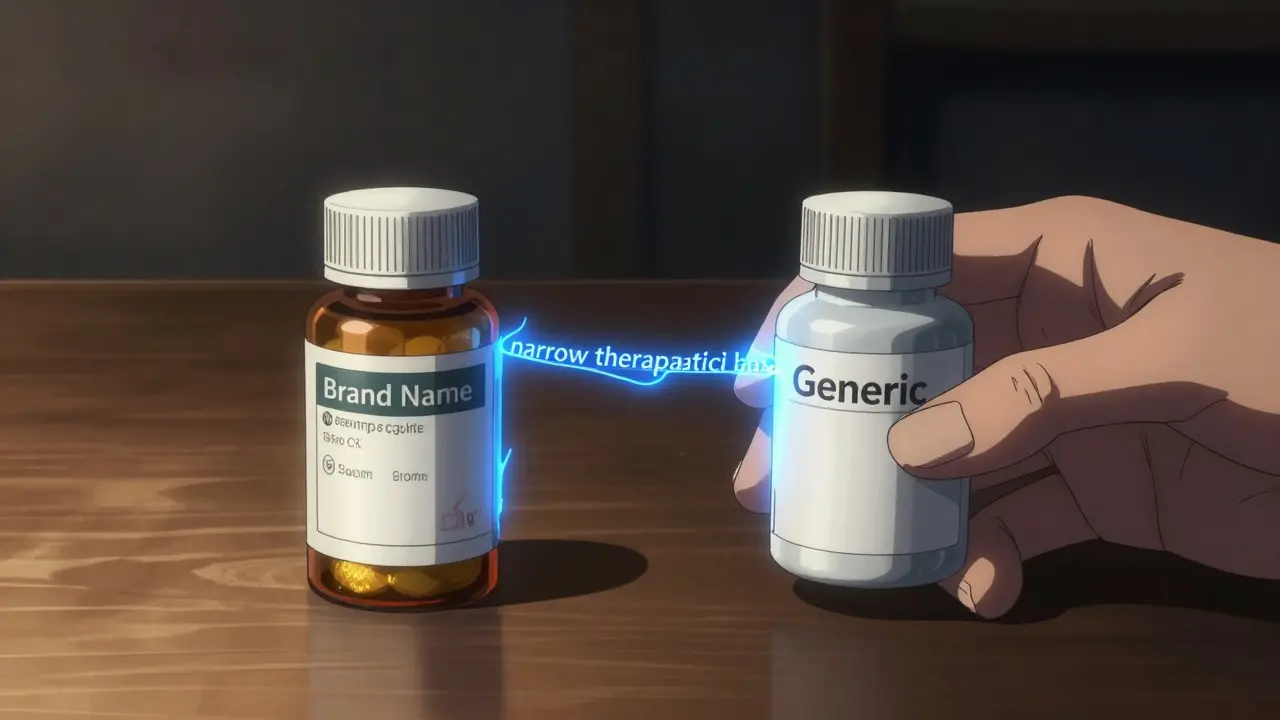
Imagine waking up to find your insurance company has switched your life-saving medication to a different generic brand without telling you. For most people, a change in generic ibuprofen is irrelevant. But for transplant recipients, switching between versions of narrow therapeutic index drugs (NTI drugs) is a high-stakes gamble. When the window between a dose that works and a dose that is toxic is razor-thin, even a tiny variation in how a generic pill dissolves can lead to organ rejection or permanent kidney damage.
The Heavy Hitters: Understanding Calcineurin Inhibitors
To understand why generics cause such a stir, we first need to look at the drugs themselves. Cyclosporine is a cyclic peptide discovered in 1971 that suppresses the immune system by binding to cyclophilin. It was the gold standard for years, especially in its microemulsion form, which helps the body absorb the drug more consistently.
Then came Tacrolimus, a macrolide compound that binds to FK-binding proteins to stop T-cell activation. While both drugs target the same pathway to prevent your body from attacking a new organ, tacrolimus is significantly more potent. In fact, it works at concentrations 20 to 100 times lower than cyclosporine. This potency is why tacrolimus has largely replaced cyclosporine in most modern transplant centers; it generally offers better protection against acute rejection.
The Generic Dilemma: Why "Same" Isn't Always Same
In a perfect world, a generic drug is a mirror image of the brand name. In reality, generic manufacturers like Sandoz, Teva, and Mylan must prove "bioequivalence." The FDA typically requires that the generic's absorption (AUC and Cmax) falls within a 80-125% confidence interval of the original brand. For a standard antibiotic, that's fine. For an NTI drug, a 20% swing in drug levels can be the difference between a healthy graft and a hospital visit.
The problem often lies in the formulation. For example, cyclosporine comes in oil-based and microemulsion versions. If a pharmacy switches a patient from a microemulsion generic to an older oil-based version, the absorption changes drastically. With tacrolimus, different generic fillers or manufacturing processes can cause "level instability," where the blood concentration fluctuates wildly despite the patient taking the exact same dose every morning.
| Attribute | Cyclosporine (Microemulsion) | Tacrolimus |
|---|---|---|
| Binding Protein | Cyclophilin | FK-binding proteins |
| Typical Dosage | ~150 mg twice daily | ~5 mg twice daily |
| Blood Level Target | 100-200 ng/ml | 5-15 ng/ml |
| Primary Risk | Higher rejection rates | Post-transplant diabetes |
| Half-Life | 5-18 hours | 12-24 hours |

Real-World Consequences of Switching
The data shows a clear divide between clinical goals and patient experiences. A landmark study by Dr. BK Krämer demonstrated that tacrolimus recipients had significantly lower biopsy-proven acute rejection rates (19.6%) compared to those on cyclosporine (37.3%). However, these benefits are erased if the drug levels aren't stable. On community forums like Reddit's r/transplant, patients have shared harrowing stories of switching from brand-name Prograf to a generic and seeing their levels plummet from 8.5 to 5.2 ng/ml in just two weeks, resulting in mild rejection episodes.
It isn't just about the drugs; it's about the psychology of trust. The United States Renal Data System has noted that medication non-adherence is 15.3% higher in patients using generics. When a patient feels their "new" pill isn't working as well as the old one, they may become anxious or attempt to adjust their own doses, which is incredibly dangerous with these medications.

How to Safely Manage Generic Transitions
If you or a loved one must switch to a generic version due to insurance mandates, you shouldn't do it blindly. The 2021 American College of Clinical Pharmacy guidelines suggest a rigorous monitoring phase. You can't just swap the pills and wait for your next quarterly check-up.
The gold standard for a safe transition involves:
- Intensified Monitoring: Request blood level checks weekly for the first month after any manufacturer change.
- The "Same-Source" Rule: Once you find a generic manufacturer that keeps your levels stable, insist that your pharmacy stocks only that specific brand. Even switching from one generic to another generic can trigger instability.
- Strict Timing: Take your dose within a one-hour window every day. These drugs are sensitive to timing and food intake.
- Dietary Vigilance: Avoid grapefruit products entirely, as they interfere with the CYP3A4 enzyme responsible for metabolizing these drugs, potentially leading to toxic levels.
The Future: Moving Beyond the Generic Gamble
The medical community is working on ways to stop the "guessing game" of dosing. One exciting development is pharmacogenetic dosing. By checking the CYP3A5 genotype, doctors can predict how a patient will metabolize tacrolimus. A 2023 study in JAMA Internal Medicine found that this approach reduced the time needed to reach therapeutic levels by 63%.
Additionally, new formulations like LCP-tacrolimus (an extended-release version) aim to smooth out the peaks and troughs in blood concentration. By reducing the volatility of the drug's presence in the blood, these newer versions may eventually make the switch between generics less perilous.
Can I switch from brand-name Tacrolimus to a generic?
Yes, but it should only be done under strict medical supervision. Because tacrolimus has a narrow therapeutic index, switching manufacturers can cause blood levels to fluctuate, which may lead to either organ rejection (if levels drop) or toxicity (if levels rise). Your doctor should monitor your trough levels more frequently during the first few weeks of the switch.
What is the main difference between Cyclosporine and Tacrolimus?
While both are calcineurin inhibitors, tacrolimus is more potent and generally more effective at preventing acute rejection. However, tacrolimus is more likely to cause new-onset diabetes after transplant, whereas cyclosporine may have a different side-effect profile regarding renal function and hypertension.
Why do some doctors refuse to use generic immunosuppressants?
Some clinicians avoid generics because of "bioequivalence" concerns. Even if a drug meets FDA standards, the slight variation in absorption between different generic brands can cause unstable blood levels in sensitive patients. If a patient has already struggled with instability, a doctor may prioritize the consistency of a brand-name drug to protect the graft.
What are the danger signs after switching to a generic?
Watch for symptoms of rejection (fever, tenderness or swelling over the transplant site, decreased organ function) or signs of toxicity (tremors, severe headaches, or sudden spikes in blood pressure). Any sudden change in how you feel after a pharmacy switch warrants an immediate blood test.
Does food affect how these generic drugs work?
Yes, significantly. Both drugs are absorbed in the gastrointestinal tract, and food can either increase or decrease their bioavailability. This is why it is critical to take these medications consistently-either always with food or always on an empty stomach-regardless of whether you are using a brand or generic version.




Mark Koepsell
2 May, 2026 . 05:32 AM
The importance of maintaining a consistent source for NTI drugs cannot be overstated. Many pharmacies use a 'lowest cost' procurement model which leads to these frequent manufacturer swaps. It is often helpful to ask the pharmacist for the specific NDC number of the medication to ensure it matches the previous fill.
Elizabeth Holden
3 May, 2026 . 20:15 PM
omg its common sense... just tell them u wont take the cheap stuff. ppl act like this is some big secret but if u just push the pharmacst they listen. simple.
Jenny X
4 May, 2026 . 06:51 AM
The bioequivalence window is basically a loophole for Big Pharma to skim profits while we deal with erratic pharmacokinetics. They push these generic substitutes to keep us dependent on the system while the AUC fluctuations essentially act as a slow-motion sabotage of the graft's stability.
bharat films
5 May, 2026 . 22:16 PM
Imagine thinking a 20% variance is 'fine' 🙄 Typical medical nonsense! Total joke 🤡
Mikaela -anonymous 😏
6 May, 2026 . 05:50 AM
Oh wow... another day, another insurance company playing god with our kidneys... how absolutely thrilling!!!
kelvin villa saab
7 May, 2026 . 15:38 PM
This is totally unaceptable. The way the system treats transplant patints is just wild. I mean, you literally have your life on the line and they switch a pill because it saves them three cents? Ridiculous.
Spencer Farrell
8 May, 2026 . 22:24 PM
One must contemplate the inherent fragility of the human biological system when contrasted with the rigid, profit-driven structures of contemporary healthcare. It is a profound irony that the very mechanisms designed to preserve life are subject to the whims of fiscal optimization.
Kartik Agarwal
10 May, 2026 . 12:53 PM
For those navigating this, understanding the CYP3A5 polymorphism is key. The inter-individual variability in tacrolimus clearance is largely driven by these genetic alleles, which makes the generic-induced flux even more precarious for 'fast metabolizers'.
Kelly Feehely
11 May, 2026 . 02:22 AM
Generic drugs are a scam and anyone who trusts the FDA's 'bioequivalence' is a fool. They don't care if your levels plummet, they just want the manufacturers to keep the money flowing. Wake up and demand the brand name or you're just a lab rat for Teva!
princess lovearies
11 May, 2026 . 23:27 PM
Sending love to everyone struggling with their meds. Just remember to be patient with yourself and your medical team during these changes.
Allison Maier
13 May, 2026 . 09:10 AM
too long didnt read but generics suck 🙄
Jimmy Crocker
15 May, 2026 . 06:04 AM
It is quite frankly an embarrassment that we are even discussing this in a developed nation, though I suppose the mediocrity of our current pharmaceutical distribution system is to be expected, and frankly, the lack of oversight regarding NTI protocols is just another symptom of a deeper, systemic rot that most people are too blind to see because they're too busy taking whatever pill the pharmacist tosses at them without a second thought as to the actual molecular stability or the sourcing of the active pharmaceutical ingredient which, let's be honest, is probably coming from a factory with zero quality control in some distant province.
Joel Bonstell
16 May, 2026 . 07:48 AM
I feel you on this. I had a scare a few years back when my pharmacy changed my stuff without telling me. My levels went haywire and I felt super shaky. Just keep a log of the manufacturer names and don't be afraid to be a pain in the neck to your pharmacist until they get the right one. It's your organ, you gotta fight for it!
Alexa Mack
16 May, 2026 . 19:20 PM
I wonder if this is as common in other countries with different healthcare systems. It's wild that insurance companies have this much sway over specific brand choices.
Andrew Hanssen
17 May, 2026 . 19:09 PM
The obsession with the 'same-source' rule is merely a psychological comfort blanket for those who cannot handle the inherent volatility of biological systems. The 80-125% range is mathematically sound, and attributing a minor rejection episode to a generic switch is often a case of correlation being mistaken for causation.