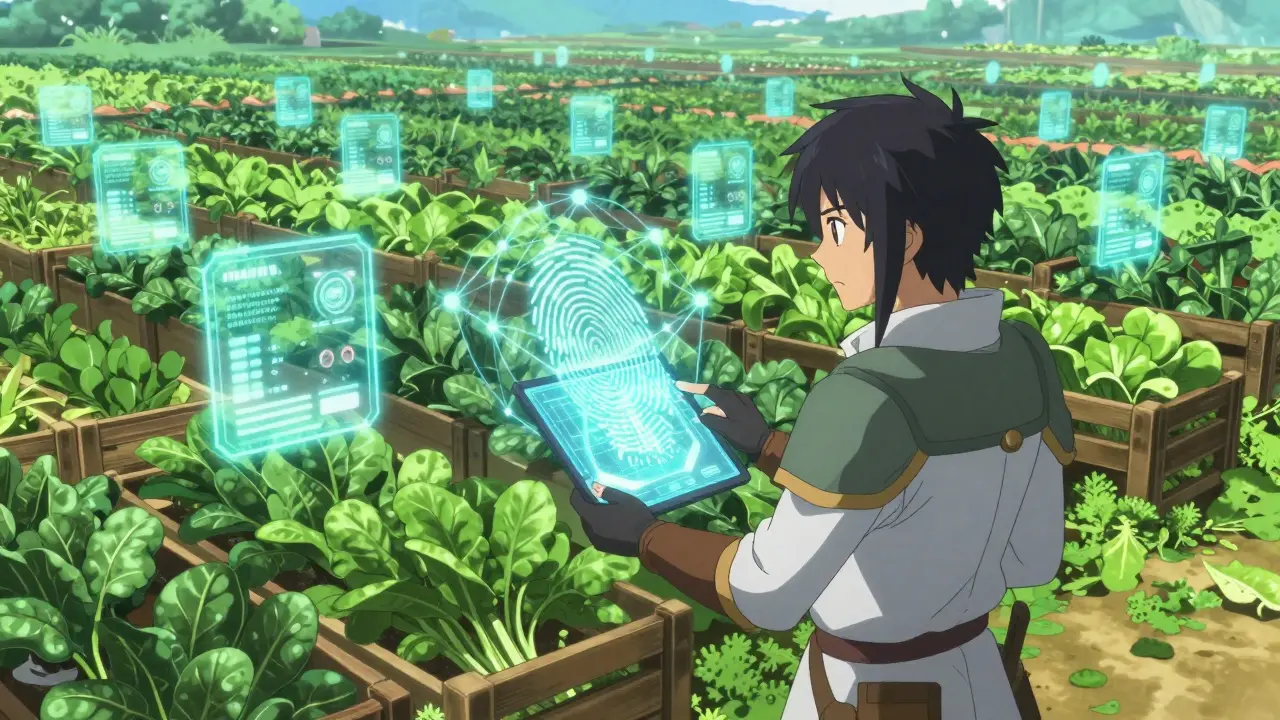
Imagine a massive outbreak of E. coli linked to bagged spinach. In the past, investigators had to play a high-stakes game of detective, manually chasing paper trails through warehouses and distributors to find the source. This "money trail" approach often took weeks, during which more people got sick. To stop this, the FDA shifted the game. Instead of searching for clues after the fact, they created a system that treats food like a digital package with a permanent ID tag. This is the core of Traceability Lot Code tracking.
The system is designed to shrink the time it takes to find a contaminated batch from weeks to nearly real-time. By forcing companies to use a standardized identifier, the FDA can pinpoint exactly where a "problem batch" started and where it ended up. For the average consumer, this means recalls are faster, more precise, and don't involve throwing away every single vegetable in the fridge because the agency can't narrow down the specific lot.
What Exactly is a Traceability Lot Code?
Traceability Lot Code (TLC) is an alphanumeric descriptor used to uniquely identify a specific batch of food within the records of the company that assigned it. Essentially, it is a unique digital fingerprint for a group of food items produced under the same conditions. While many companies already used internal lot codes for quality control, the TLC is different because it must be passed along the entire supply chain. It doesn't just live in one company's database; it travels with the food from the farm to the fork.
The TLC is the anchor for the Food Safety Modernization Act (FSMA) Section 204, also known as the Food Traceability Rule. This rule focuses on high-risk foods listed on the Food Traceability List (FTL), which includes items like leafy greens, nut butters, and fresh-cut fruits. These foods are targeted because they are more prone to contamination and often have complex supply chains.
When is a Lot Code Assigned?
One of the biggest changes with the TLC system is that the FDA now dictates exactly when a code must be created. You can't just add one whenever it's convenient. There are three specific "trigger points" for assigning a TLC:
- Initial Packing: When raw agricultural commodities (except seafood from boats) are first packed.
- First Land-Based Receipt: When seafood from fishing vessels first hits a dock or processing plant.
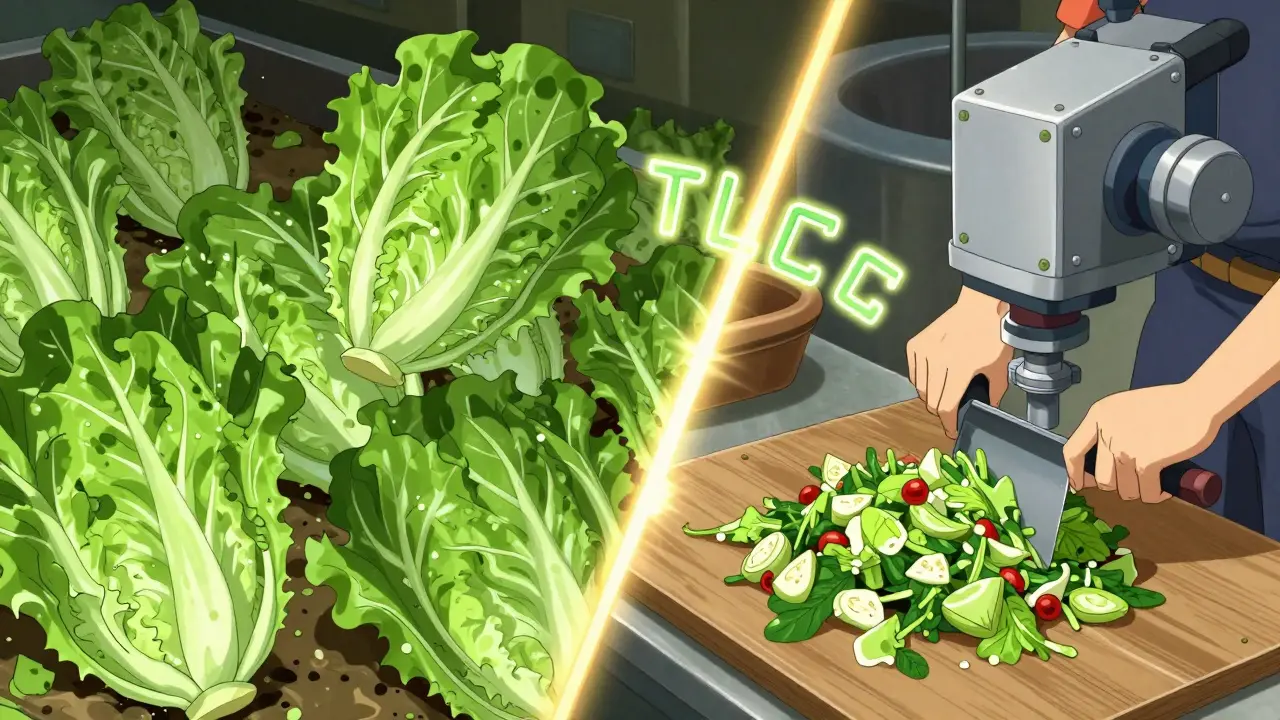
- Transformation: Whenever the food changes its physical state or packaging-for example, when whole romaine lettuce is chopped into a salad mix.
If a company transforms a product, they must create a new TLC, but they are required to maintain a link to the previous code. This creates an unbroken chain. If the FDA finds a contaminated salad bag, they can trace it back to the processing plant, and then use the linked code to find the exact field where the lettuce was grown.
The Data Behind the Code: Key Data Elements
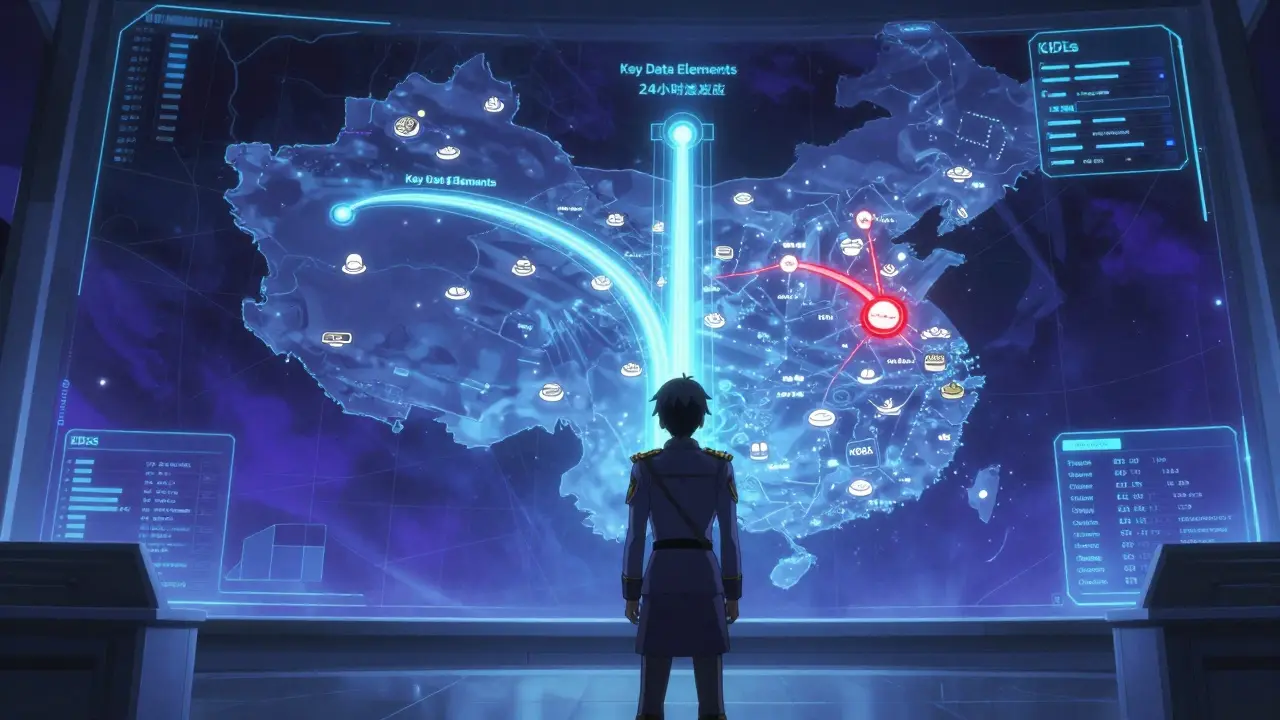
A lot code by itself is just a string of numbers and letters. To be useful, it must be paired with Key Data Elements (KDEs). Think of the TLC as the ID card and the KDEs as the personal details on that card. To satisfy FDA requirements, the TLC must be linked to information such as:
- TLC Source: The exact physical location where the code was assigned.
- Product Description: A clear definition of what the food is.
- Quantity and Unit: Exactly how much was in that lot (e.g., 500 lbs or 2,000 units).
- Transaction Details: Who sent the food and who received it.
During an investigation, the FDA can demand this data. Under the current rules, companies must provide these records within 24 hours. This speed is what allows the FDA to pull dangerous products off shelves before thousands more people are exposed.
| Feature | Traditional Industry Coding | FDA TLC System (FSMA 204) |
|---|---|---|
| Purpose | Internal quality control | Public health and rapid recall |
| Assignment | Flexible/Internal needs | Strict (3 specific trigger points) |
| Scope | Company-specific | End-to-end supply chain |
| Compliance | Mostly voluntary | Mandatory for FTL foods |
| Data Sharing | Slow, manual requests | Required within 24 hours |
How the FDA Uses This to Stop Outbreaks
When a foodborne illness is reported, the FDA starts at the end of the chain-usually the patient's home or the store where they bought the food. With the TLC system, they don't have to guess. They look at the lot code on the packaging and immediately query the KDEs. Instead of asking, "Which farm did this come from?", they ask, "Which specific lot from which farm was processed on Tuesday at 2 PM?"
This precision prevents "over-recalling." In the past, if one farm had a problem, the FDA might recall all spinach from that entire region because they couldn't prove which batches were safe. This wasted millions of pounds of food. Now, they can isolate just the problematic batches, saving money for farmers and reducing food waste.
The impact is significant. FDA economic analysis suggests that this improved traceability could reduce the overall number of foodborne illness outbreaks by 20-30%. By cutting through the "data silos" where information used to be trapped inside individual company servers, the government can see the movement of high-risk foods across the country in a way that was previously impossible.
Challenges and the Road to 2028
Moving to this system hasn't been seamless. Many companies struggle with "tandem coding," where they have to keep their old internal codes for business reasons while also tracking the official TLC for the FDA. While the FDA has stated that existing internal codes can serve as TLCs if they are passed through the supply chain, the technical integration is still a hurdle.
Legacy software is a major pain point. About 65% of companies have reported issues integrating these new requirements into their old ERP (Enterprise Resource Planning) systems. Because of these struggles, the FDA proposed extending the compliance date to July 20, 2028. This gives smaller businesses and mid-sized processors more time to digitize their records.
We are also seeing a divide in technology. While small farms might still use manual spreadsheets, giants like Walmart have already moved toward blockchain. By using a distributed ledger, they can track leafy greens in seconds, far exceeding the FDA's basic requirements. The goal for the rest of the industry is to reach a level of interoperability where different companies' systems can "talk" to each other without manual data entry.
What foods are on the Food Traceability List (FTL)?
The FTL includes high-risk foods that are frequently linked to outbreaks. Key examples are leafy greens, tomatoes, onions, fresh-cut fruits and vegetables, nut butters, cheeses, eggs, and specific seafood products. These represent about 15% of the total U.S. food supply.
Can a company use its own internal lot numbers as TLCs?
Yes. The FDA clarified that any existing lot code used by a firm can function as a Traceability Lot Code, provided that the code is consistently passed along the supply chain to the next entity.
What happens if a food item is transformed?
When food is transformed (e.g., sliced, mixed, or repackaged), the entity performing the transformation must assign a new TLC. However, they must keep a record that links this new code back to the original TLC of the raw ingredients.
How fast must records be provided to the FDA?
Under the FSMA 204 rule, companies must provide the requested Key Data Elements (KDEs) and Traceability Lot Codes to the FDA within 24 hours of the request during an investigation.
Is blockchain required for FDA compliance?
No, blockchain is not required. The FDA allows electronic records in common formats like CSV. While some large retailers use blockchain for speed, any system that can produce sortable, exportable data within the time limit is acceptable.
Next Steps for Food Businesses
If you're managing a food facility, the first step is determining if your products fall under the Food Traceability List. If they do, you need a formal Traceability Plan. This plan shouldn't just be a set of notes; it must explicitly describe your procedures for maintaining records and how you assign TLCs.
For smaller operations, the FDA's Traceability Assistance Program is a great resource for technical help. For larger firms, the focus should be on API integration. If your system can't export data into a standardized format, you'll struggle to meet the 24-hour deadline during a real-world crisis. Start by auditing your current lot-coding points-if you're assigning codes at random intervals rather than the three FDA-mandated trigger points, it's time to update your workflow.





Brittney Prince
25 April, 2026 . 14:39 PM
Sure, it's for "safety," but let's be real, this is just another way for the government to track every single thing we eat and where it comes from in a giant database. They don't care about your spinach, they care about total control over the supply chain and knowing exactly who is producing what at all times. Total surveillance state, just starting with the lettuce. 🙄
Sharyl Foster
26 April, 2026 . 08:04 AM
Actually, calling it a "digital fingerprint" is a massive oversimplification because these are just alphanumeric strings, not biometric data. People act like this is some revolutionary tech when companies have been using internal lot numbers for decades. The only real change here is the reporting window, which is basically just a bureaucratic nightmare for small businesses. 🙄
Jaclyn Vo
28 April, 2026 . 03:03 AM
Ugh, finally! Do you have any idea how terrifying it is to see a recall notice and not know if your specific bag of salad is the one that'll send you to the ER?? Like, the lack of precision in the old system was literally a crime! 😱 I've had so many near-misses with these things and it's just absolute chaos out there! 💅
Nila Sawyer
29 April, 2026 . 19:46 PM
I am just so incredibly thrilled to see such a positive move toward keeping everyone safe and healthy, because honestly, nothing is more important than our well-being and the peace of mind we get when we know our food is tracked with such amazing precision! 🌟 It is just so wonderful that the FDA is taking these steps to support farmers and consumers alike, and I truly believe that by 2028 we will see a world where foodborne illnesses are almost a thing of the past, which is just such a beautiful thought to wake up to every single morning! 🌈✨💖
Daniel Runion
1 May, 2026 . 07:29 AM
Wait... so they're basically just asking companies to do their job... but slower... and with more paperwork!!! This is just peak government efficiency right here!!! Absolute madness that we need a "rule" to tell people to keep track of what they're selling!!! Truly a joke!!! 🤡🤡🤡
James Harrison
2 May, 2026 . 23:29 PM
It's interesting to consider the balance between systemic efficiency and the autonomy of the small producer. While the safety benefit is clear, one has to wonder if the administrative burden creates a barrier to entry that favors the industrial giants over the family farm.
Michael Deane
4 May, 2026 . 09:05 AM
This is exactly the kind of common-sense infrastructure that we need to keep our American food supply the strongest and safest in the whole damn world because we shouldn't be relying on some broken paper trail from thirty years ago when we have the best technology and the best engineers on the planet ready to make this system bulletproof so that no American family has to worry about what's in their grocery cart!! Let's get it done and stop letting the red tape slow down the progress of the greatest nation on earth!!
Nikita Shabanov
5 May, 2026 . 06:33 AM
From a technical perspective, the shift to KDEs is the most critical part. Without standardized data elements, a lot code is essentially a dead link. The 24-hour requirement is stringent, but for those using modern API-driven ERPs, it is entirely manageable. For those on legacy systems, a CSV export is the most realistic path to compliance before the 2028 deadline.