
The Hidden Safety Net in Your Hospital
Imagine a patient leaving the hospital with a stack of new prescriptions that conflict with their old ones. It happens more often than you might think. One major study found that Pharmacist-led substitution programs reduce adverse drug events by nearly half. That is a massive impact on everyday safety. These programs act as a bridge between the medicine you bring from home and the care you receive in a clinic. Instead of waiting for problems to arise, trained professionals step in early to adjust therapies before they cause harm.
You might wonder why a pharmacy team handles this when doctors write prescriptions. The reality is that doctors often lack the time to review every single interaction during a chaotic shift. Medication reconciliation became a National Patient Safety Goal back in 2006, yet many facilities still struggle to get it right. By 2023, academic medical centers saw widespread adoption, reaching 87% of institutions. This growth signals a shift toward valuing the specialized knowledge pharmacists bring to medication management.
Understanding the Core Workflow
How does this actually work on the ground? It starts the moment a patient enters the system. A dedicated medication reconciliation pharmacist reviews the patient's history against the current admission orders. They look for discrepancies-missing doses, duplicate drugs, or interactions that could trigger side effects. When a medication isn't covered by the hospital formulary, the pharmacist proposes a safe alternative. This process is known as Therapeutic substitution. It ensures the patient receives equivalent treatment without delaying care due to insurance or stock issues.
The structure usually involves a tiered team. You won't just have one person doing everything. Effective setups employ dedicated pharmacists supported by medication history technicians. Research indicates a staffing ratio of one pharmacist to three or four technicians works best in high-volume settings. These technicians gather the initial data, allowing the clinical pharmacist to focus on complex decision-making. Training is rigorous; technicians complete five eight-hour supervised shifts before working independently. Competency assessments show they achieve over 90% accuracy in gathering histories after this preparation.
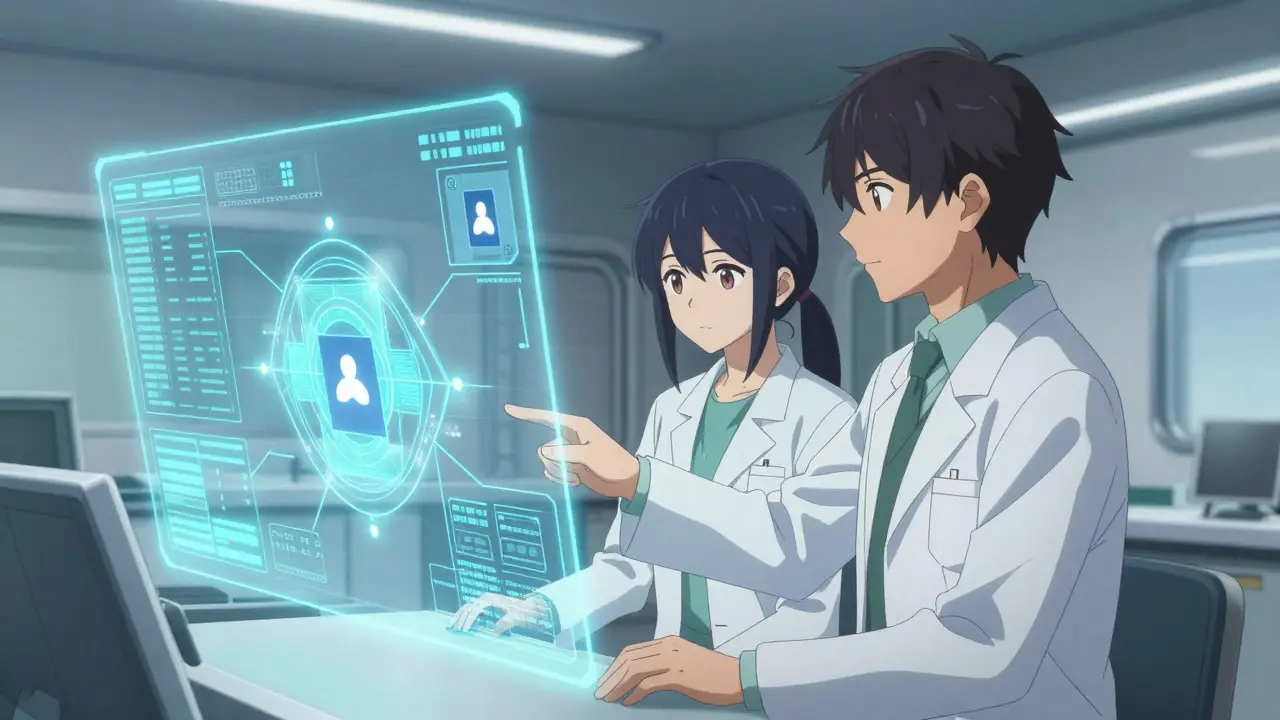
Technology plays a huge role here. Modern systems integrate directly with Electronic health records (EHR). The software flags non-formulary medications automatically. When a flag pops up, the protocol activates. Hospital data shows that 68.4% of these flagged medications get appropriately substituted at admission. Without this digital cue, manual review would miss too many opportunities for optimization. The goal is to catch errors before the prescription reaches the patient's hands.
Measuring Real-World Results
Numbers tell the story of success better than anecdotes. Participants in these initiatives see tangible benefits. We see a 49% drop in adverse drug events compared to standard care pathways. Complications decrease by roughly 30%. More importantly, hospitals track how often patients return for unplanned visits. Thirty-day readmission reductions average around 11%, which saves both money and suffering. For Medicare, reducing these readmissions means avoiding heavy financial penalties under the Hospital Readmissions Reduction Program.
| Metric | Standard Physician Model | Pharmacist-Led Program |
|---|---|---|
| Adverse Drug Events | High Frequency | 49% Reduction |
| 30-Day Readmissions | Varies Widely | 11% Average Reduction |
| Cost per Patient | Hospitalization Costs High | $1,200-$3,500 Saved |
| Formulary Compliance | Manual Review Required | 68.4% Auto-Substituted |
Cost savings aren't just theoretical. Estimates suggest a range of $1,200 to $3,500 saved per patient through prevented hospitalizations. This comes from optimizing regimens so patients don't bounce back into the emergency room because a pill combination made them dizzy or caused bleeding. High-risk groups, like those with polypharmacy or age over 65, benefit most. CMS diagnosis patients seeing pharmacy substitution services experienced a 22% greater reduction in readmissions than those who did not.
Navigating Implementation Hurdles
Despite the clear benefits, setting this up isn't always smooth. Time constraints top the list of barriers for nearly 70% of programs. Physicians might view extra checks as slowing down admissions. Some doctors resist recommendations, accepting them only about 30% of the time in certain studies. Successful programs address this by embedding communication protocols directly into the workflow. When suggestions come from the EHR interface rather than a verbal request, acceptance rates climb significantly.
There is also the question of scope. Not everyone on the team does the same work. Dr. Mark H. Ebell noted that while technicians handle data collection, they shouldn't perform comprehensive reviews without proper oversight. The distinction matters for liability and patient safety. Deprescribing adds another layer. Removing unnecessary meds requires careful judgment. Studies show that stopping proton pump inhibitors reduces C. difficile infections by 29%, but stopping anticholinergics in elderly patients cuts falls by 41%. These decisions require licensed clinical judgment.
Reimbursement remains fragmented across regions. While some states fully reimburse these services through Medicaid, others leave the cost burden on the hospital. This gap affects where you find these services. Urban academic centers have them at 89% implementation rates, but rural critical access hospitals lag behind at just 22%. Resource intensity is real; managing one patient thoroughly takes about 67 minutes of active professional time. However, the return on investment justifies the effort for most large systems aiming for value-based care contracts.

Future Directions and Tech Integration
The landscape is shifting fast toward automation and smarter support. We are already seeing pilot programs using AI-assisted tools to cut data collection time by 35%. This frees up the pharmacist to focus on the clinical logic rather than hunting for phone numbers or old bottles. Policy is catching up too. Recent proposals indicate potential reimbursement increases of 18-22% specifically for documented substitution activities. Organizations like The American Society of Health-System Pharmacists continue to push for standardized national protocols. They advocate for these services to be mandatory components of quality agreements in Accountable Care Organizations.
By 2027, the market for these reconciliation services is projected to hit $3.24 billion. This growth tracks with the move away from fee-for-service models toward value-based care. When payment depends on keeping patients healthy rather than treating sickness, these programs become essential infrastructure. The focus is moving beyond just swapping drugs to overall therapy optimization. Long-term viability looks strong given the evidence base, though rural access remains the biggest equity challenge to solve next.
Frequently Asked Questions
What exactly is a pharmacist-led substitution program?
It is a structured clinical service where pharmacists identify and replace medications to optimize therapy. They switch drugs that may interact poorly or aren't covered by insurance with safer, effective alternatives.
Who benefits most from these services?
Patients with multiple prescriptions, older adults, and those transitioning from hospital to home see the greatest gains. Polypharmacy cases often have hidden risks that pharmacists catch early.
Do doctors accept pharmacist recommendations?
Acceptance varies by facility but improves with electronic integration. Standardized protocols help overcome resistance, raising agreement rates significantly when systems auto-flag options.
Are these programs available in community pharmacies?
Community adoption is growing but slower than in hospitals. Many focus on hospital discharge reconciliation, while some skilled nursing facilities now offer post-acute substitution services.
How much does implementing this save the hospital?
Estimates range from $1,200 to $3,500 per patient saved annually. Savings come from reduced complications, fewer readmissions, and better adherence preventing ER visits.






Beth LeCours
1 April, 2026 . 22:23 PM
Just another way hospitals try to save money while cutting corners.
Mark Zhang
3 April, 2026 . 14:03 PM
I get the frustration but safety numbers really do back this up. People want to feel heard when costs come up. It is valid to worry about profit motives in medicine sometimes. The data showing fewer readmissions suggests patients are staying healthier though. That is the metric that matters most for quality of life. We should look at the long term health gains instead of just billing codes. Supporting staff helps everyone work better in the end.
Divine Manna
4 April, 2026 . 11:37 AM
The structural integrity of modern healthcare relies heavily on specialized oversight mechanisms. Clinical pharmacists provide a layer of validation that general practitioners simply cannot match under current staffing ratios. The statistical reduction in adverse events confirms the necessity of this tiered approach. Efficiency is maximized when administrative burden shifts to technicians as described. We must recognize the economic imperative behind optimizing formulary compliance rates globally. Ignoring such data would be negligent given the current liability landscape.
Jenna Carpenter
5 April, 2026 . 12:58 PM
doctors recieve bad training on med interactions most of the time. they dont hve time to read every label carefully either. pharamcits shoudl be running this stuff insted of waiting. its scary what we see in wards lately with mistakes. we need more checks like this everywhere pronto. why is it taking so long to fix basic safety things???
simran kaur
6 April, 2026 . 18:48 PM
This looks like a convenient excuse to reduce physician authority for corporate gain. Big Pharma probably funds these pilot programs to control the narrative on usage. Independent doctors know best and this centralization feels like a slippery slope. They claim safety but really want to standardize everything for easier tracking. Patient autonomy gets lost when algorithms decide your drug choices. We need to watch who controls the tech stack behind this system.
Brian Shiroma
8 April, 2026 . 05:08 AM
Oh wonderful now we have another department making rules about pills nobody understands. Doctors are busy saving lives not auditing paperwork for insurance companies. Pharmacists getting paid to swap generic names for brand ones is classic bureaucracy. Sure if you want to spend billions adding middle management go ahead. The irony of using tech to solve human error caused by tech overload is rich. At least the billing codes look nicer now.
sophia alex
9 April, 2026 . 04:06 AM
This is exactly why our system is failing us all 😱💔 Why isn't every patient getting this gold standard treatment right now??? It is heartbreaking that rural folks get left behind with zero protection 😡😭. The government needs to mandate this nationwide immediately! We deserve better than optional safety nets that depend on budget cuts 💔🚫. Stop fighting for profits and save lives first!!! 🙏🇺🇸
Branden Prunica
10 April, 2026 . 11:32 AM
I literally felt sick reading this because my dad suffered exactly these issues last year! The thought of missing a dosage warning keeps me awake at night crying sometimes 😢😭. Why do we wait until someone dies before we change anything??? These stats are tragic facts not just numbers on a spreadsheet! Everyone needs to wake up and realize how fragile our care system truly is. I will never trust hospital discharge papers again after my experience! 😩💀
Rachelle Z
12 April, 2026 . 06:47 AM
WOW!!! This is absolutely CRAZY!!! Who knew we had these tools available already???? It sounds SO complicated BUT ALSO super important for keeping people alive!!!!! Are we ignoring this enough?!?! 😲😯💥 I am shocked that rural areas lag so far behind!!! We need equality NOW!!! 💪🏻✨
Ace Kalagui
13 April, 2026 . 10:53 AM
Global healthcare systems vary significantly in approach to medication management protocols. In many regions pharmacists serve only dispensing roles rather than active clinical partners. This shift represents a fundamental change in care delivery models across developed nations. Patients often arrive with multiple complex medication lists that require expert review. Errors happen frequently during transitions between home care and hospital admission. The proposed model addresses these gaps effectively through structured interventions. Technicians gather data so experts can focus on complex clinical logic decisions. Training requirements ensure high accuracy rates in practice across different specialties. Technology integration streamlines the flagging process efficiently within electronic records. Costs decrease when readmissions drop below target thresholds set by insurers. Rural areas still face significant barriers to access unfortunately due to funding gaps. Policy changes could help bridge that resource gap soon with legislative support. Value-based care incentives drive this specific innovation forward in major markets. We should support standardized protocols for everyone involved regardless of location. Collaboration remains key to sustainable medical progress worldwide for all populations.
Goodwin Colangelo
14 April, 2026 . 00:29 AM
Therapeutic substitution is standard protocol in many VBC contracts now. Most large hospital networks have adopted similar frameworks since 2020. It helps prevent formulary mismatches that usually trigger denials. Clinicians appreciate having a second set of eyes on polypharmacy cases specifically.
angel sharma
15 April, 2026 . 08:36 AM
Imagine the impact we could have if every facility implemented these rigorous safety standards today! Think about the potential lives saved from simple interaction warnings alone! Every day counts towards better health outcomes for families everywhere! We must believe that technology and teamwork can overcome systemic inefficiencies! Enthusiasm for these new protocols should drive adoption rates upward rapidly! Keep pushing for universal access because health equity matters to everyone!
Hope Azzaratta-Rubyhawk
17 April, 2026 . 07:52 AM
We must demand immediate adoption of these safety measures without further delay! Bureaucracy is costing lives and that is unacceptable for any modern society. The evidence supports these protocols unequivocally so hesitation is dangerous. Leadership should prioritize funding for these essential roles instantly. Our collective well-being depends on proactive intervention strategies moving forward.