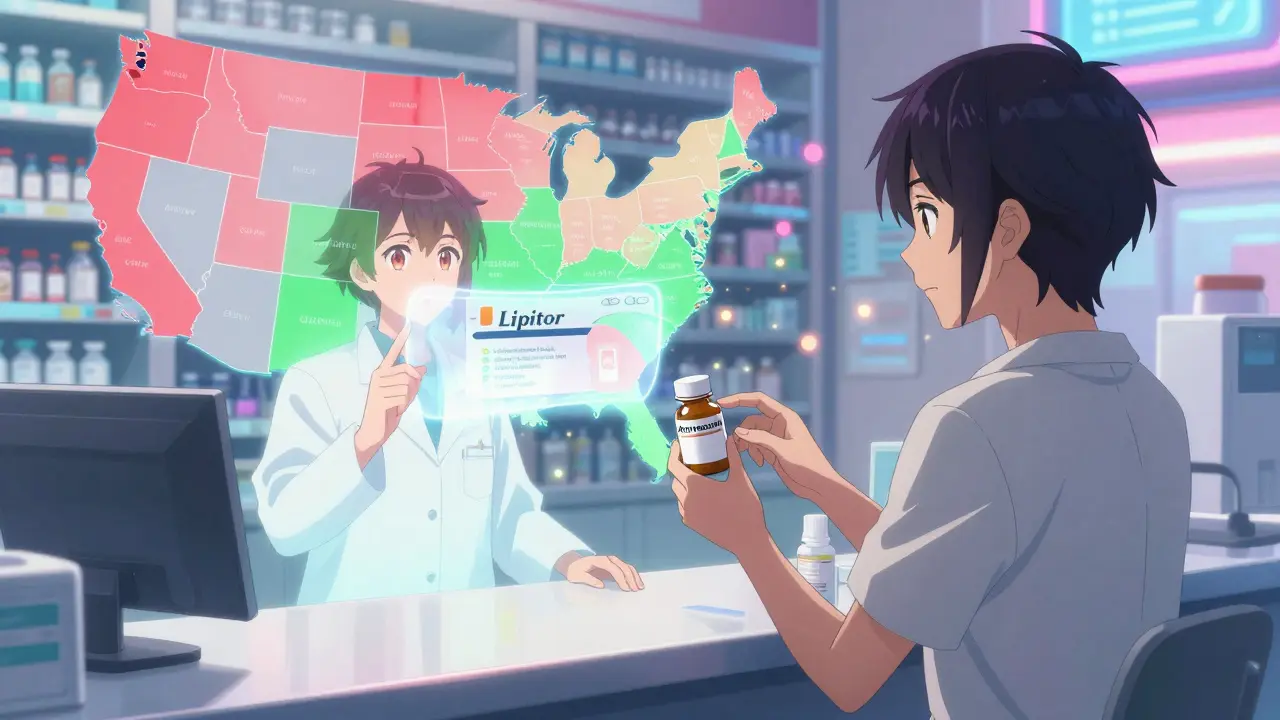
When you pick up a prescription, you might not realize that the pill in your hand could be a completely different version than what your doctor wrote on the paper. That’s because of pharmacy substitution laws - rules that let pharmacists swap brand-name drugs for cheaper generics or biosimilars. But here’s the thing: these rules aren’t the same everywhere. In one state, a pharmacist can switch your medication without asking. In another, they have to get your permission first. And in a few, they can’t substitute at all for certain drugs. If you’re trying to save money, understand your rights, or just avoid confusion, knowing how your state handles substitution matters.
What Exactly Is Pharmacy Substitution?
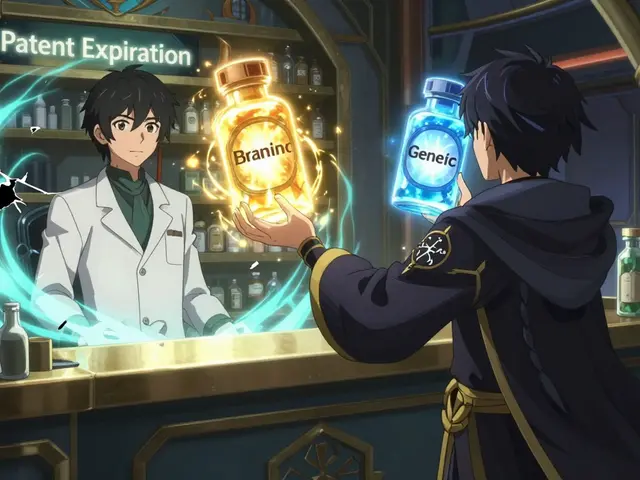
Pharmacy substitution means a pharmacist replaces a brand-name drug with a generic version - or, in the case of biologics, a biosimilar. Generics are chemically identical to brand-name drugs in active ingredients, dosage, and how they work. They’re not knockoffs. They’re FDA-approved copies that cost 80-85% less. For example, a 30-day supply of brand-name Lipitor might cost $200, while its generic, atorvastatin, runs under $10. That’s why states encourage substitution: to save billions. In 2023, generics saved the U.S. healthcare system $313 billion.
But not all drugs are equal. Some medications - like warfarin (a blood thinner) or phenytoin (for seizures) - have what’s called a narrow therapeutic index. That means tiny differences in how the drug is made can affect how well it works or even cause side effects. That’s why some states ban substitution for these drugs entirely.
How States Differ: Mandatory vs Permissive Laws
There are two main types of state laws when it comes to substitution: mandatory and permissive.
- Mandatory substitution (19 states + DC): The pharmacist must substitute unless the doctor says otherwise. States like California, New York, and Texas fall into this group. The goal is to maximize cost savings.
- Permissive substitution (31 states + DC): The pharmacist can substitute, but doesn’t have to. They’ll usually do it unless the patient objects or the prescription says "do not substitute."
But here’s where it gets messy. Even within these categories, rules vary. In some states, pharmacists must tell you after they’ve switched your medication. In others, they have to ask for your permission before doing it. Seven states plus DC require explicit consent - meaning you have to say "yes" before they swap.
What About Biosimilars? It’s Even Trickier
Biosimilars are the next frontier. Unlike generics, which copy simple chemical drugs, biosimilars mimic complex biologic drugs made from living cells - like Humira or Enbrel. They’re not exact copies. That’s why the FDA has a special label: interchangeable. Only 10 biosimilars had this designation as of late 2023. That means they’re proven to work just like the original - no extra monitoring needed.
But state laws treat them differently. Forty-five states (90%) have stricter rules for biosimilars than for generics. In 37 states, pharmacists must notify your doctor within a few days after substituting. Twelve states require your doctor’s approval before the switch. And 15 states won’t allow substitution if the biosimilar costs more than the brand - even if your insurance covers it.
States like Florida and Illinois require dual notification: you and your doctor both get informed within 24 to 72 hours. Meanwhile, states like Alabama and Mississippi have almost no extra steps beyond basic recordkeeping.
How to Find Out What Your State Allows
You can’t rely on guesswork. Every state has its own pharmacy board. Here’s how to get accurate info:
- Visit your state’s Board of Pharmacy website. Search for "drug product selection laws" or "generic substitution rules."
- Look for whether substitution is mandatory or permissive. Check if patient consent is required.
- Find out if your state has a negative formulary - a list of drugs that can’t be substituted. These usually include antiepileptics, blood thinners, and immunosuppressants.
- Check if your state requires documentation of substitutions in your pharmacy record. Most do - and they must keep records for at least two years.
Tools like Cardinal Health’s interactive map and the National Association of Boards of Pharmacy’s model legislation can help you compare states. But nothing beats checking your own state’s official rules.
What You Can Do as a Patient
You have more power than you think.
- Ask questions. When you get your prescription, ask: "Is this the brand or the generic?" If you’re unsure, ask if substitution happened.
- Refuse substitution. You can say no - in every state. Even if the law allows substitution, you still have the right to say, "I want the brand."
- Check your receipt. It should list the product name and manufacturer. If it says "atorvastatin" instead of "Lipitor," you’ve been substituted.
- Ask your doctor to write "Do Not Substitute" on the prescription. Every state allows this. In 18 states, the doctor must give a reason - but you don’t have to know what it is.
If you’re on a narrow therapeutic index drug - like warfarin, levothyroxine, or seizure meds - never accept substitution without confirming it’s allowed in your state. Even small changes can cause dangerous side effects.
Why This Matters for Prescribers and Pharmacists
Doctors and pharmacists aren’t immune to the confusion. A 2022 survey found 67% of pharmacists struggled to tell the difference between "biosimilar" and "interchangeable." That’s a problem because prescribing "Lantus" and getting "Semglee" might sound the same - but the rules around substitution are totally different.
Pharmacists in multi-state chains face daily headaches. A prescription filled in Texas might be automatically substituted. The same prescription in Hawaii might require patient consent and a signed form. One wrong move could open them to liability. Twenty-four states don’t clearly protect pharmacists from lawsuits if something goes wrong after substitution - even if they followed the law.
For doctors, the burden is administrative. In 28 states, if you write "Do Not Substitute," you must explain why. That means extra paperwork. Many doctors just skip it - which leaves patients unaware they might have been switched.
What’s Changing? Trends to Watch
The landscape is shifting fast. In January 2023, California passed AB1881, strengthening patient notification for biosimilars. New York followed with S4472, expanding substitution rights for certain biologics. More states are adopting standardized rules based on the National Association of Boards of Pharmacy’s model legislation.
Expect more biosimilars to get "interchangeable" status. As of late 2023, 38 biosimilars were approved in the U.S., with 10 labeled interchangeable. That number will grow. Goldman Sachs predicts biosimilars could make up 70% of the biologics market by 2030 - if states simplify their laws.
But the big challenge remains: inconsistency. If you move from Georgia to Oregon, your substitution rights change. Your pharmacy system might not know the rules. Your doctor might not either. That’s why awareness is your best tool.
Bottom Line: Know Your State, Know Your Rights
Generic drugs save money. Biosimilars will save even more. But none of that matters if you’re not informed. Whether you’re on a blood thinner, an insulin, or a cholesterol drug, you deserve to know what’s in your pill bottle - and whether it was switched without your knowledge.
Don’t assume. Don’t wait. Check your state’s pharmacy board website. Ask your pharmacist. Ask your doctor. And if you’re not sure, say no. You have the right to the medication your provider prescribed - even if it costs more.
Can my pharmacist substitute my brand-name drug without telling me?
In 24 states, pharmacists are not required to notify you before or after substituting a generic or biosimilar. In 7 states plus D.C., they must get your explicit consent before switching. In 31 states plus D.C., they must notify you after the fact, but you may not be told until after you’ve left the pharmacy. Always ask - don’t assume.
Are generics as safe as brand-name drugs?
Yes - for most drugs. The FDA requires generics to have the same active ingredient, strength, dosage form, and route of administration as the brand. They must also meet the same quality and manufacturing standards. But for drugs with a narrow therapeutic index - like warfarin, levothyroxine, or phenytoin - even small differences can affect how the drug works. That’s why some states ban substitution for these.
What’s the difference between a biosimilar and an interchangeable drug?
A biosimilar is highly similar to a biologic drug but may have minor differences because it’s made from living cells. An interchangeable biosimilar has been proven to produce the same clinical result as the original - and can be switched without the prescriber’s involvement. Only 10 biosimilars had this status as of late 2023. Most are not interchangeable yet.
Can I refuse a generic or biosimilar substitution?
Yes - in every state. You can say "no" at the pharmacy counter. You can also ask your doctor to write "Do Not Substitute" on your prescription. Even if your state allows substitution, you still have the right to the exact medication your provider ordered.
Why do some states ban substitution for certain drugs?
Drugs with a narrow therapeutic index - like anticoagulants, anti-seizure meds, and thyroid hormones - require very precise dosing. Small changes in formulation can lead to serious side effects or treatment failure. States that maintain negative formularies (lists of non-substitutable drugs) have seen up to 18% fewer adverse events, according to a 2018 study.
Do I need to worry if my insurance says "substitute" on my claim?
Not necessarily. Insurance companies often encourage substitution to cut costs, but state law overrides their preference. If your state requires consent and your pharmacist didn’t get it, they broke the law - even if your insurer approved the switch. Always check the drug name on your receipt.




Holley T
25 February, 2026 . 21:49 PM
Look, I get that generics save money, but let’s be real-pharmacists aren’t doctors. They’re just counting pills and scanning barcodes. I’ve had my levothyroxine switched twice in two years, and each time I felt like I was being slowly poisoned. Fatigue, brain fog, heart palpitations. My endocrinologist had to redo my labs. Turns out, the generic had a 5% variance in absorption. FDA says it’s within tolerance. Tolerance for who? Not for me. I’m not a lab rat. If you’re on a narrow therapeutic index drug, don’t let some guy in a white coat decide your health for you. Just say no. Always.
And don’t even get me started on biosimilars. They’re not even close to the same thing. It’s like saying a hand-drawn Mona Lisa is the same as a printout from Walmart. The active ingredient? Sure. The whole damn experience? Not even close. States that allow substitution without consent are basically gambling with people’s lives. And they wonder why trust in healthcare is collapsing.
Ashley Johnson
27 February, 2026 . 19:31 PM
They’re putting fluoride in the water and now this?? I knew it. Big Pharma and the government are working together to make us sick on purpose. Generics? They’re filled with fillers that cause cancer. I read a study (on a forum) that said 80% of generics have titanium dioxide-same stuff in paint. They want us weak so we’ll keep buying more drugs. And don’t get me started on biosimilars-those are made in labs with alien tech. The FDA is lying. My cousin’s dog got sick after a generic flea med. Coincidence? I think not. Always ask for brand. Always.
tia novialiswati
1 March, 2026 . 11:02 AM
YAY! So glad someone finally broke this down!! 🙌 Seriously, this is such an important topic and so few people know about it. I just switched to a generic for my blood pressure med last month and was SO relieved it was cheaper-but then I panicked and called my pharmacy. They were super nice and confirmed it was okay, showed me the receipt, even explained the difference between generic and biosimilar. You’re totally right-you HAVE to ask! Don’t be shy. Your health is worth it. And if you’re nervous? Just say ‘I’d like to stick with the brand’-they can’t say no. You’ve got rights!! 💪❤️
Christopher Brown
2 March, 2026 . 10:22 AM
Weak states. Weak laws. If you can’t handle a generic, don’t take the drug. Stop whining. We’re not in Europe. America saves billions because we don’t coddle patients. Stop demanding hand-holding. Just take the pill.
Sanjaykumar Rabari
2 March, 2026 . 22:20 PM
They are controlling us. The pharmacy system is a trap. Every generic is tracked by satellite. Your DNA is stored when you pick up your medicine. I saw a man in Mumbai get fined for refusing a generic. He disappeared. This is not about money. This is about population control. The WHO is behind it. Check the patent numbers. They match the UN ID codes. Be careful. Always ask for the original. Always.
Kenzie Goode
4 March, 2026 . 06:04 AM
This post made me cry. Not because I’m sad-but because I finally understand why I’ve felt off for months. I’ve been on warfarin for 12 years. My last refill was a different pill. I didn’t think anything of it until I read this. I called my pharmacist. She apologized. Said they didn’t realize it was on the non-substitutable list. They gave me my brand back. I’m so grateful. Thank you for writing this. I’m sharing it with my entire family. You just saved lives.
Dominic Punch
5 March, 2026 . 05:26 AM
Let me clarify something: substitution isn’t the enemy-lack of transparency is. The real issue isn’t whether a pharmacist can switch your drug-it’s whether they’re legally required to tell you. That’s a failure of regulation, not innovation. Biosimilars are a breakthrough. But if we’re going to use them, we need consistent, nationwide standards-not a patchwork of 50 different rules. I’ve trained pharmacists in 12 states. I’ve seen the confusion firsthand. The solution? Standardize. Educate. Empower. And stop treating patients like children who can’t handle the truth.
Valerie Letourneau
6 March, 2026 . 16:54 PM
While the American context is compelling, I must note that in Canada, substitution protocols are uniformly governed under provincial pharmacy acts, with mandatory patient notification and documentation requirements across all jurisdictions. The federal government maintains a centralized interchangeability database, and pharmacists are required to complete continuing education on biosimilar therapeutics every two years. While cost containment remains a priority, patient safety and clinical continuity are non-negotiable. Perhaps the U.S. could benefit from adopting a more centralized, model-based approach rather than the current fragmented state-by-state system.
Khaya Street
7 March, 2026 . 23:20 PM
Man, I appreciate the effort put into this article. But let’s cut through the noise. You don’t need a 10-page guide to know this: if your doctor didn’t say ‘do not substitute,’ they’re okay with you taking the cheaper version. And if you’re worried, just ask. Simple. No drama. No conspiracy. No ‘narrow therapeutic index’ jargon. Just talk to your pharmacist. They’re not out to get you. They’re just trying to keep the system running. Stop overthinking. You’re fine.
Brooke Exley
9 March, 2026 . 17:48 PM
Okay, real talk-I’m a nurse, and I’ve watched patients freak out because their pill changed color. I’ve also seen them die because they didn’t realize they’d been switched to a generic on a narrow therapeutic index drug. This post? Lifesaver. I’m printing it out and handing it to every patient I see. And I’m telling my coworkers: if you don’t know your state’s rules, you’re a liability. Knowledge isn’t power-it’s protection. Don’t let fear silence you. Ask. Demand. Document. You’re not being difficult. You’re being smart.
Alfred Noble
11 March, 2026 . 01:01 AM
So I just got my generic at CVS and was like ‘wait, is this the same?’ and checked the bottle-yep, atorvastatin. Cool. But then I remembered my cousin’s aunt had a stroke after switching her seizure med. So I called my doc. He said ‘you’re good, it’s fine.’ But I still asked the pharmacist to write ‘do not substitute’ on my next script. Better safe than sorry. Also, typo on the receipt said ‘atorvastatin’ but meant ‘atorvastatin calcium.’ Weird. Anyway, point is-ask. Always.
Emily Wolff
11 March, 2026 . 22:28 PM
Most people don’t need this info. If you can’t afford brand-name drugs, you shouldn’t be on them. Just take the generic. Stop making everything a crisis. You’re not special. Your thyroid isn’t magic. Your blood thinner isn’t sacred. The system works. You’re just too entitled to accept it.
Lou Suito
12 March, 2026 . 16:06 PM
Wait. Hold on. You said 31 states plus DC allow permissive substitution? That’s wrong. It’s 30 states. DC is already counted. You double-counted. And you said 45 states have stricter biosimilar rules? No. It’s 44. I checked the NABP website. And you said 18 states require a reason for ‘do not substitute’? Actually, it’s 17. Oregon changed their law last month. You’re outdated. This entire post is unreliable. I’m not even reading the rest. You should fix this. Or delete it.