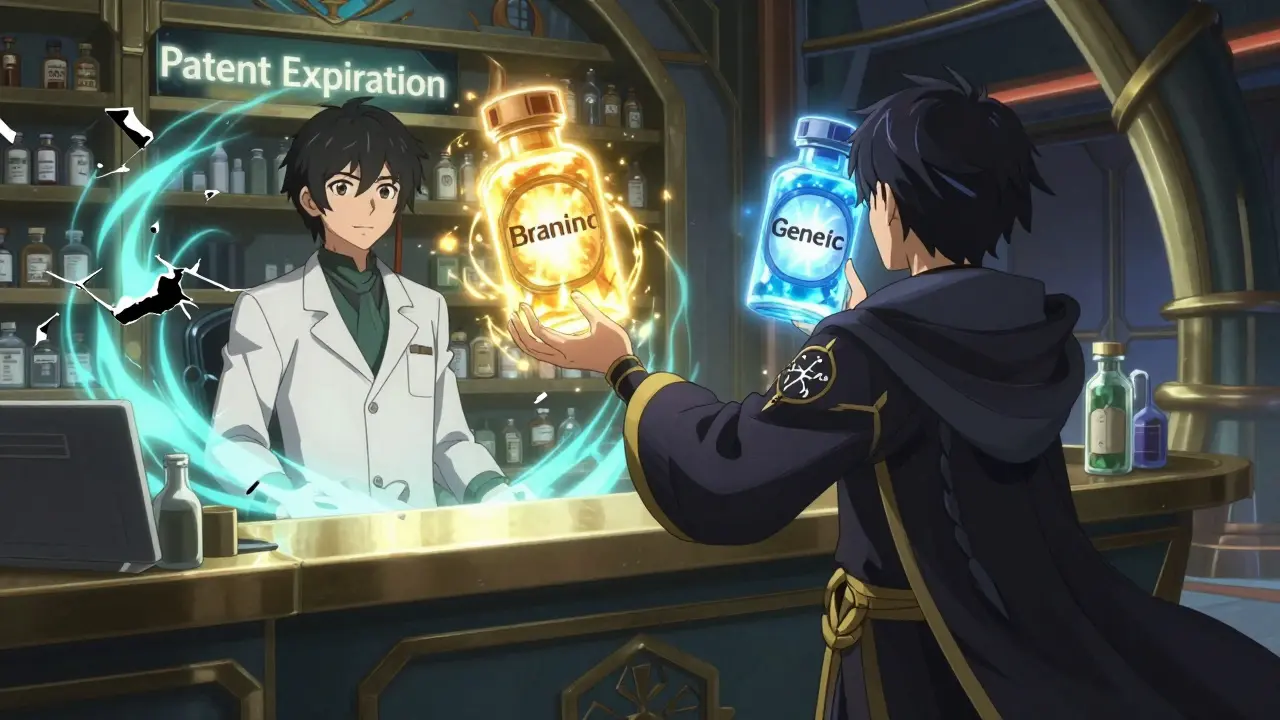
You’ve probably noticed it at the pharmacy counter. You hand over a prescription for a common medication, and the pharmacist asks if you want the generic version. The price tag is often a fraction of the brand-name cost. But why? Is the generic drug just a cheaper imitation, or is there something fundamentally different about how these medicines are made and sold?
The short answer is that generic medications contain the exact same active ingredients as their brand-name counterparts. They work the same way in your body. The massive price difference doesn’t come from lower quality; it comes from the economics of drug development, patent laws, and market competition. Understanding this dynamic can help you save hundreds, if not thousands, of dollars on your healthcare bills.
What Exactly Is a Generic Drug?
To understand the savings, we first need to define what a Generic Drug is a medication with the same active ingredient, strength, dosage form, and intended use as a brand-name drug, but sold under a different name after the original patent expires. When a pharmaceutical company develops a new drug, they spend billions of dollars and years conducting research, clinical trials, and safety testing. In return, they receive a patent that gives them exclusive rights to sell that drug for a certain period, usually 20 years from the filing date.
Once that patent expires, other manufacturers can step in. They don’t need to repeat the expensive clinical trials. Instead, they file an Abbreviated New Drug Application (ANDA) is a regulatory submission process used by generic manufacturers to prove their product is bioequivalent to the reference listed drug without repeating full clinical trials. This streamlined approval pathway was established by the Hatch-Waxman Act of 1984, which balanced the need for innovation incentives with public access to affordable medicines.
The U.S. Food and Drug Administration (FDA) requires generic drugs to meet strict standards. They must be bioequivalent to the brand-name drug, meaning they deliver the same amount of active ingredient into your bloodstream in the same amount of time. While inactive ingredients like dyes or fillers may differ, the therapeutic effect remains identical. This regulatory framework ensures that when you switch to a generic, you’re getting the same medical benefit at a significantly lower cost.
The Real Reason Generics Are Cheaper
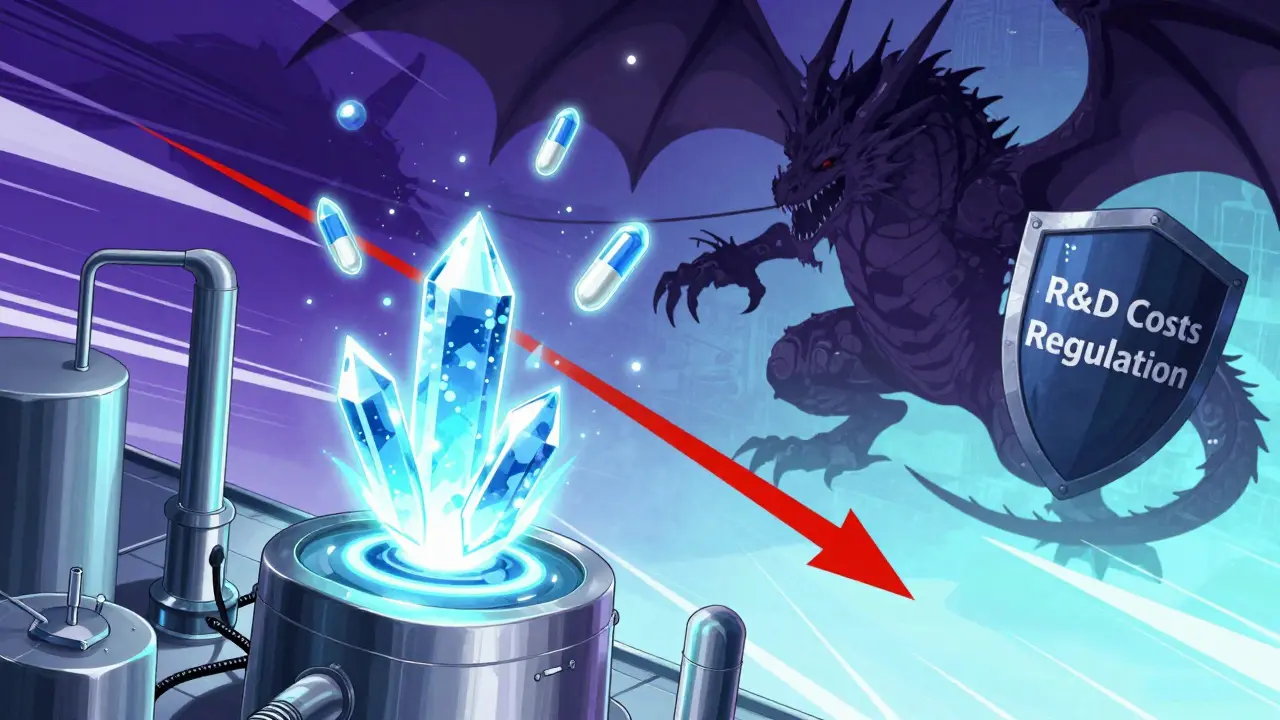
The primary driver of lower costs is the absence of research and development (R&D) expenses. Brand-name companies invest heavily in discovering new compounds and proving their safety and efficacy through large-scale clinical trials. These costs can exceed $2 billion per drug. Generic manufacturers skip this phase entirely. Their main investment is in manufacturing facilities and quality control, which is a fraction of the R&D budget.
Competition also plays a huge role. When a brand-name drug loses its patent protection, multiple generic manufacturers often enter the market simultaneously. This surge in supply drives prices down rapidly. According to FDA data, the entry of just one generic competitor can reduce prices by up to 20%. With three or more competitors, prices can drop to 15-20% of the original brand-name price within the first year.
| Factor | Brand-Name Drug | Generic Drug |
|---|---|---|
| R&D Costs | High ($1B+ per drug) | None (uses existing data) |
| Marketing Expenses | Significant (TV ads, doctor visits) | Minimal to none |
| Patient Copay (Average) | $56.12 | $6.16 |
| Market Exclusivity | Protected by patent | Open to competition |
For example, consider lurasidone hydrochloride tablets (brand name Latuda). When only available as a brand-name drug, a 30-day prescription cost around $1,400. After generic versions entered the market, the price dropped to less than $60 for the same quantity. That’s a saving of over $1,300 per patient per month. On a national scale, these individual savings add up to billions. In 2022 alone, generic and biosimilar medicines generated $408 billion in savings for the U.S. healthcare system.
How Insurers Benefit from Generic Prescriptions
Insurance companies love generics because they stretch their coverage budgets further. When insurers negotiate contracts with pharmacies and drug manufacturers, they prioritize generic drugs on their formularies (the list of covered medications). By encouraging patients to choose generics, insurers reduce their overall spending on pharmaceuticals.
This strategy allows insurers to offer lower premiums or keep deductibles manageable. If everyone demanded brand-name drugs, the cost of providing health insurance would skyrocket. Instead, insurers use copay structures to incentivize generic use. A typical plan might charge $5 for a generic pill and $50 for the brand-name equivalent. This differential encourages patients to opt for the cheaper option without compromising their health outcomes.
However, the relationship between insurers, pharmacies, and drug makers isn’t always straightforward. Pharmacy Benefit Managers (PBMs) act as intermediaries, negotiating prices on behalf of insurers. Sometimes, PBMs engage in “spread pricing,” where they charge insurers more than they pay pharmacies for certain generics. This practice can obscure true savings and has drawn scrutiny from regulators. Despite these complexities, the net effect of generic competition remains a significant reduction in healthcare costs.
Are All Generic Drugs Equally Cheap?
Not necessarily. While generics are generally much cheaper than brand-name drugs, some generic medications still carry high price tags. This happens when only one or two manufacturers produce a particular generic drug. Without robust competition, those manufacturers can maintain higher prices, a phenomenon known as “generic monopoly.”
A study published in JAMA Network Open identified dozens of high-cost generic products that had lower-cost therapeutic alternatives. For instance, some generic antibiotics or antivirals were priced similarly to brand-name drugs due to limited supplier options. Patients and providers should remain vigilant. Checking prices using tools like GoodRx or comparing options across different pharmacies can reveal substantial differences even among generics.
Additionally, some brand-name companies employ tactics to delay generic competition, such as adding minor changes to their drug formulations or engaging in legal battles. These strategies, sometimes called “evergreening,” can extend the period of high-priced exclusivity. Regulatory bodies like the Federal Trade Commission (FTC) actively monitor and challenge these practices to ensure timely generic entry.
Tips for Maximizing Your Savings
Getting the most out of generic medications requires a bit of proactive effort. Here are practical steps you can take:
- Ask for Generics Explicitly: Tell your doctor you prefer generic options unless there’s a specific medical reason against it. Many prescriptions are written generically by default, but it doesn’t hurt to confirm.
- Compare Prices Online: Use apps and websites like GoodRx, SingleCare, or RxSaver to compare prices at local pharmacies. Prices can vary significantly between chains like CVS, Walgreens, and independent pharmacies.
- Consider Mail-Order Options: For maintenance medications (like those for blood pressure or cholesterol), mail-order services often offer discounts for 90-day supplies. Check with your insurer to see if they provide this benefit.
- Review Your Formulary: Look up your insurance plan’s formulary online. It lists preferred drugs and their associated copays. Choosing a tier-1 generic will almost always be cheaper than a tier-3 brand-name drug.
- Beware of High-Deductible Plans: If you have a high-deductible health plan, you might pay cash for prescriptions until you meet your deductible. In these cases, buying generics directly with a discount card can be far cheaper than using insurance.
Remember, switching from brand to generic is safe and effective for the vast majority of patients. The FDA rigorously monitors quality, and studies consistently show no difference in therapeutic outcomes between brand-name and generic drugs.
The Future of Generic Medications
As more blockbuster drugs lose patent protection, the role of generics will only grow. The Inflation Reduction Act of 2022 includes provisions aimed at lowering prescription drug costs, partly by promoting generic and biosimilar competition. Analysts project that biosimilars-generic versions of complex biologic drugs-will generate an additional $150 billion in savings between 2023 and 2027.
However, challenges remain. Shortages of certain generic drugs can occur due to manufacturing issues or supply chain disruptions, temporarily driving up prices. Regulatory agencies continue to work on strengthening the supply chain to prevent these shortages. Meanwhile, ongoing investigations into PBM practices may lead to reforms that make generic pricing more transparent and beneficial for patients.
In summary, generic medications are a cornerstone of affordable healthcare. They provide the same clinical benefits as brand-name drugs at a fraction of the cost, thanks to reduced R&D expenses and fierce market competition. By understanding how generics work and taking simple steps to compare prices, you can significantly reduce your out-of-pocket healthcare expenses.
Is it safe to switch from a brand-name drug to a generic?
Yes, it is safe. The FDA requires generic drugs to be bioequivalent to their brand-name counterparts, meaning they contain the same active ingredient, strength, and dosage form. They must meet the same strict quality, purity, and stability standards. While inactive ingredients like colors or flavors may differ, these do not affect how the drug works in your body.
Why do some generic drugs still cost a lot?
Some generic drugs remain expensive when there is little competition. If only one or two manufacturers produce a specific generic, they can set higher prices, similar to a monopoly. Additionally, some brand-name companies may delay generic entry through legal tactics or by making minor changes to their product, extending their period of exclusivity.
Do I need a new prescription to get a generic drug?
Usually, no. Most state laws allow pharmacists to automatically substitute a generic drug for a brand-name one unless your doctor specifies “dispense as written” or “brand medically necessary.” However, it’s always good to check with your pharmacist or doctor to ensure the substitution is appropriate for your specific condition.
How much can I save by choosing generics?
On average, generic drugs cost 80-85% less than brand-name equivalents. The average copay for a generic is around $6.16, compared to $56.12 for a brand-name drug. For specific medications, savings can be even more dramatic, with some drugs dropping from hundreds of dollars per month to just a few dollars.
What is bioequivalence?
Bioequivalence means that a generic drug delivers the same amount of active ingredient into your bloodstream in the same amount of time as the brand-name drug. The FDA tests generic drugs to ensure they meet this standard, guaranteeing that they will have the same therapeutic effect and safety profile as the original brand-name medication.